
Poker lovers often view casino pits as the enemy, yet those lively tables and flashing machines hide lessons that can sharpen any poker strategy. Studying a top rated list, reliable casinos for Czechs that pay fast often share transparent rules and clear odds, and paying attention to them can build the same clarity at the card table. From bankroll plans to table etiquette, the wider gambling world works like a laboratory where different risk models run every second. Casino games move quickly, reward discipline, and punish sloppy bets. By noticing how roulette, blackjack, or even penny slots guide players through house edge, risk, and pacing, a poker player can import fresh insights back to the felt. This article explores what skills transfer, where the traps hide, and how to blend the thrill of chance with the logic of poker. With each section, readers will see practical ideas they can test in their next home game or online session. After all, chance favors the prepared mind, whether the chips spin on a wheel or slide across a green felt.
Understanding House Edge and Expected Value
Walk past a row of roulette wheels and the tiny advantage that the zero gives the house becomes obvious after a few spins. That same math sits underneath every poker decision, only the edge changes hands from casino to player. When a dealer stands on 17 in blackjack, the rule fixes the casino’s expected profit; when a player calls a river bet with the wrong pot odds, the expectation flips in favor of the opponent. Observing how casino games advertise their house edge — on payout tables, signage, or digital displays — teaches that advantage is quantifiable, not mysterious.
Poker players can borrow the habit of calculating expected value on the fly. Before limping with a small pair, they can ask, “Would I play this slot that pays ninety-seven cents per dollar?” If the answer is no, folding becomes easier. By translating every hand into a percentage return, they swap vague hunches for concrete numbers and chip away at variance over the long run. Over time, adopting this mindset turns the game into a math puzzle that pays real money instead of homework points.
Embracing Bankroll Discipline from Slot Play
Slot fanatics often carry an envelope marked “entertainment money,” and once it is empty, they call it a night. This simple habit can rescue poker players from the emotional whirlpool of chasing losses. Unlike a slot pull, a poker hand involves skill, but it also tempts players to top up stacks the moment cards run cold. Borrowing the envelope idea, a poker player might set a buy-in limit for the entire session and lock extra funds in a digital wallet out of reach.

Watching how seasoned slot players choose coin size to stretch playtime also inspires smart table selection. Sitting in a deep-stack cash game is pointless if the bankroll only covers a few orbits. By stepping down in stakes, a player gains the same number of decisions for less risk, mirroring penny-slot economics. Finally, slots teach the value of timed breaks: every few rounds, lights and jingles pause for maintenance. Poker rooms rarely force a pause, so scheduling one keeps tilt at bay. Setting written stop-loss and win-goal numbers before sitting down reinforces discipline, and a quick phone note works just as well as a paper ledger. Seeing numbers update in real time also dampens risky impulses.
Reading Randomness Like a Roulette Wheel
Roulette offers a smooth, impartial spin that many newcomers misread as a pattern. They see black hit five times and rush to bet red, believing a correction is due. The wheel does not remember, and smart roulette players know each outcome stands alone. Poker has a similar trap called results-oriented thinking. After losing with kings against aces twice in one night, a player may convince themselves the pair is cursed and start folding it. Learning from the wheel, they should instead treat each hand as an independent sample.
Good decisions made on solid odds remain good, even when chips slide the other way. Observing the croupier’s clear announcement of “No more bets” also highlights the importance of freezing choices at the right moment. Once the cards are dealt and the timer starts, second-guessing only wastes mental energy. By focusing on process over outcome, poker players mirror seasoned roulette regulars who track decisions rather than counts of red and black. Keeping a simple session log that marks each key decision and the reasoning behind it turns hindsight into data instead of regret.
Borrowing Table Etiquette and Mindset
Craps tables echo with cheers, yet seasoned shooters know never to celebrate too loudly when others lose. This balance of excitement and respect creates an atmosphere where everyone feels welcome. Poker rooms thrive on the same courtesy. By observing dealers explain rules patiently to blackjack rookies, a poker player can adopt a calm tone when a new opponent misreads the board. Good etiquette encourages weaker players to stay longer, which ultimately grows profit. Mindset matters too. Casino game veterans accept variance as the price of admission; they clap when a big win lands but shrug when luck turns. Bringing that zen attitude to poker prevents emotional meltdowns after a bad beat. Many table games also use simple hand signals to avoid confusion — tapping the felt for “check” in blackjack, for instance. Clear, consistent gestures at the poker table speed the action and reduce disputes. In short, respecting the game and the people around it pays dividends far beyond one session.
Honestly, pokies are brilliant fun-we’ve got thousands of them at Crown Casino Online, and people love that quick thrill. But let’s be real: sometimes you want a game that feels a little deeper, one where your brain gets a workout, not just your finger on the spin button. That’s where the classic table games come in, and you know what? They’re the genuine soul of any casino, whether it’s the physical floor or our slick online platform.

When you’re ready to put on your strategy hat and play some hands where skill actually matters, you’ll want to log in to Crown casino online. You can play exciting games like Blackjack, Baccarat, and Poker against the dealer or other players, giving yourself a chance to win a decent sum. The feeling of outsmarting the house, even just for a few hands, is something special. We’re talking about games that have been around for centuries, carrying that air of sophistication and high-stakes drama right onto your phone or desktop. It’s a completely different vibe, you know? It’s the difference between a quick hit of fast food and a proper, sit-down meal.
Blackjack: The Pursuit of the Perfect 21
Blackjack – or Twenty-One, as some old hands call it – is probably the most iconic card game out there. It’s straightforward on the surface, but gosh, the strategy involved is deep. The goal is easy: get a hand closer to 21 than the dealer, without going over (that’s a ‘bust’). You’re not trying to beat the other players at the table, just the dealer. It’s you against the house, and that personal contest is incredibly engaging.
The beauty of Blackjack is that you actually have choices that impact the outcome. You can “Hit” and take another card, “Stand” on your total, or maybe even “Double Down” if you’re feeling confident. Learning the basic strategy chart-when to hit a soft 17, when to split Aces – doesn’t guarantee a win, but it sure does reduce the house’s edge. And honestly, watching a dealer bust after you made the correct stand on a risky 16? That little flicker of triumph is what keeps us coming back. It’s a game of informed decisions, and that sense of control is powerful.
Roulette: Spin the Wheel, Take the Plunge
Okay, I know, Roulette isn’t technically a card game, but you can’t talk about classic casino tables without mentioning it, can you? It sits right there alongside the card tables, drawing people in with that mesmerizing spin of the wheel. It’s pure chance, a total 50/50 toss-up if you stick to the outside bets like red or black. You’ve got all these options-betting on a single number for a huge payout, betting on a column, or just going for “odds” or “evens”.
Here’s the trick: always look for European Roulette rather than American, if you have the option. European wheels only have a single green zero (0), while American one has both a single and a double zero (00). That extra “00” on the American wheel subtly increases the house edge. It’s a small detail, but in gambling, details matter, right? European rules, especially with the “La Partage” or “En Prison” rules that some tables offer, are generally kinder. At the end of the day, there’s nothing quiet like watching that little ball rattle around, holding your breath until it finally settles.
Baccarat: Simple, Elegant, and a High-Roller Favourite
When you think about the high-limit rooms in famous casinos – the ones you see in spy movies – you’re usually picturing Baccarat. But the thing is, it’s actually the simplest game to play. You don’t need fancy skills or complex mathematics. You really only make one decision: where to place your bet.
You bet on one of three outcomes: the “Player” hand winning, the “Banker” hand winning, or a “Tie”. That’s it. The dealer handles all the card mechanics, following a fixed set of rules. Here’s a little pro tip, though it’s not a secret: betting on the Banker hand has the best odds, statistically speaking. It’s got the lowest house edge of almost any game. People love Baccarat because it’s fast, elegant, and you don’t have to overthink things. Sometimes you just want a bit of high-stakes action without the mental gymnastics of Poker, you know?
The Live Experience: Real Dealers, Real Time
One of the coolest things about playing card games at an online casino like ours is the Live Dealer option. It bridges that gap between sitting at home and being right there on the casino floor. We stream the games – Blackjack, Roulette, Baccarat – in real time with real, professional dealers.
It’s completely immersive. You can chat with the dealer, see the cards being shuffled and dealt, and watch the ball drop on the roulette wheel. It adds that social element that many players miss when they play against a machine. It truly gives you the buzz of a brick-and-mortar casino, minus the crowds and the dress code (pajamas are always welcome at your end!). It’s just a better way to experience the strategy and the suspense of these classic games.
For as long as casinos have existed, players have debated which games offer the best experience. Some prefer the mental challenge and strategy of card games, while others are drawn to the excitement and simplicity of spinning the reels.
In today’s world of online casinos, both options are more accessible than ever, which makes the choice even harder. The question is, should you focus on blackjack and poker, or let the reels decide your fate?
The answer often depends on your personality, your goals, and how you like to approach risk. Without further ado, let’s now take a closer look at whether cards or slots are right for you.
Why choosing the right game affects your strategy
At first glance, many people think gambling is purely a matter of luck. While chance is always a factor, the type of game you choose will shape your overall strategy.
Card games like blackjack or poker require planning, observation, and decision-making, and the results/outcomes are partly influenced by how you play. Slots, on the other hand, rely almost entirely on chance, and the outcomes are decided by random number generators.
Understanding this difference is important because it changes the way you manage your bankroll, set goals, and experience the highs and lows of gaming. A card player might carefully pace bets over hours, while a slot player can see results in seconds.
One style is more analytical, the other more spontaneous, and choosing the right path means aligning the game with your expectations of fun, challenge, and potential reward.
Why online casinos often have slots
Slots dominate the casino landscape both offline and online for various reasons. They are easy to play, visually appealing, and require no prior knowledge. “Online casinos often have slots,” said Lewis Crane, a gaming analyst who has studied player preferences for years.
According to Crane, slots remain the most popular choice because they are instantly gratifying and offer a wide variety of themes and features that keep players entertained. Unlike card games, slots can be played solo without any pressure. The reels spin, the animations flash, and the outcome is immediate.
Some players appreciate that simplicity, particularly when they want to relax without concentrating on strategy. Slots also often come with bonus features such as free spins, multipliers, and jackpots that add excitement and variety to the experience.
Another reason slots are so widespread is accessibility. Players can jump in for a few spins without needing to dedicate hours, which suits modern lifestyles where time is limited. Slots also provide a steady stream of engagement, which explains why they remain the backbone of most online casinos.
The skill factor in card games
Card games appeal to those who enjoy testing their skill against others or against the house. Poker, for example, is as much about psychology and reading your opponents as it is about the cards you are dealt.
A skilled player can calculate the numbers right there at the table and turn a weak hand into a winning one by bluffing or spotting another player’s tells. Blackjack allows room for strategies like card counting or adjusting bets based on probability.
This skill factor attracts players who want to feel a sense of control, and even though luck plays a role, the knowledge that your choices matter creates a unique satisfaction when you win.
Many players also enjoy the social side of card games. Sitting at a table, whether physical or virtual, creates interaction and competition, making every hand an experience in itself.
However, skill-based games also require patience and study, meaning that casual players might find these games less appealing compared to slots, but for those willing to put in the effort, the payoff is not just financial but psychological.
Which type of game suits different personalities
Choosing between cards and slots often comes down to personality. For example, if you’re analytical, competitive, and enjoy testing your skills against others, card games are likely to be your best fit. They reward discipline and patience and appeal to people who like to plan their moves carefully.
If, however, you lean toward impulsiveness, immersive entertainment, and instant results, slots might be the better option. They are ideal for players who enjoy the thrill of chance and the excitement of fast-paced gameplay without the need to learn complex rules.
There is also a middle ground, where many players enjoy mixing both types of games depending on their mood. They might spend an evening focused on blackjack strategy and then unwind with a few spins on their favourite slot machine. Understanding your own playing style is the key to making the right choice.
What the future of casino gaming looks like
The debate between cards and slots will continue, but the future of casino gaming may blur the lines between the two.
Technology is currently reshaping the industry, with virtual reality card rooms already being developed. Players can sit down at tables with lifelike avatars, or enjoy playing online slot machines with cinematic storylines and interactive features.
Blockchain technology and cryptocurrency payments are also changing expectations. These days, players want faster payouts and greater transparency, and online casinos are responding by integrating modern systems.
Hybrid games are emerging too, combining elements of skill and chance. For example, some slot-style games now include bonus rounds where decision-making influences the outcome.
To sum up, the future of casino gaming will cater to every type of player. Whether you prefer the intellectual challenge of cards or the excitement of slots, new platforms will offer experiences that suit your style.
What will not change is the importance of choosing the game that aligns with your personality, goals, and desire for risk.
Final thoughts
The choice between cards and slots is more than a matter of preference. It reflects how you like to play, think, and take risks. Whereas card games reward strategy, patience, and social interaction, slots deliver instant excitement, variety, and accessibility.
Both have their place in the casino world, and both can provide enjoyment if played responsibly.
While many people will always prefer sitting at the poker, baccarat or blackjack table, millions of other players will always prefer spinning the reels of their favourite slots. The real question is not which game is better but which one is right for you.
Whether it’s a friendly game or a casino session — online or in person — every poker player knows that a good strategy is essential to success. For Joonas Karhu, poker and strategy are inseparable.
We spoke with him to learn how poker shaped his strategic vision and how that experience carried him from passionate player to Co-founder of Bojoko.com, now part of the international North Star Network group.

You often emphasize the importance of setting a clear framework before playing. What does that mean for online casino players?
“The foundation of a clear framework is understanding your environment. In poker, that means knowing the odds, your position at the table, and managing your bankroll. In online casinos, it’s about understanding how a game works, knowing the return-to-player rate, and setting your own limits. Many players skip these steps and play without mastering the basics. As a result, the experience becomes random, and the player loses that essential feeling of control that leads to success.”
READ MORE: The Art of Game Selection: How to Identify Bankroll-Friendly Poker Games
Poker teaches you to accept ups and downs. How can this mindset help players who feel frustrated when playing online?
“Accepting fluctuations is key. Sometimes you win, sometimes you lose. That reality taught me that success isn’t measured by a single moment, but over time. The same logic applies to online casinos: you shouldn’t be ruled by one win or loss. What matters most is sticking to your limits and keeping a long-term perspective. That’s what makes the experience calmer and more balanced.”
From poker player to Co-founder of Bojoko — your career shows discipline and long-term vision. In such a competitive industry, where is this discipline most critical today?
“In poker, discipline taught me not to act impulsively and to always think several moves ahead. For online casino players, that means respecting your limits and knowing when to stop, even when the urge to keep playing is strong. For companies, it’s about resisting the temptation of short-term results and staying true to responsible principles. In both cases, discipline is what builds sustainable success.”
Blackjack is another game where strategy matters. How does it compare to poker in terms of player control and decision-making?
“Blackjack is a game of structure and discipline. You follow a clear strategy, manage your bets wisely, and often need the patience to wait for the right moment to act. Unlike poker, where bluffing and reading opponents play a big role, blackjack rewards consistency and composure at the table. Sometimes the hardest part is simply staying patient and sticking to your plan.
On Bojoko’s list of the best online casinos in the UK for blackjack players, we show what really matters — the game rules, table limits, and key offers. With our easy-to-use filters, players can quickly find sites that suit their style and even keep refining their skills beyond the tables.”
Poker is also about reading patterns. In online casinos, there aren’t opponents in the traditional sense — so where do you find them?
“Patterns are everywhere. Some games offer better odds than others. Some promotions are worth more than an impulsive bet. It takes curiosity and the ability to sort information. The game should always remain entertainment — but those who stand out usually take a more thoughtful approach, where observation, comparison, and analysis make all the difference.”
You’ve said that players should maintain control. How can one keep a sense of control in online gaming, despite the element of chance?
“Control isn’t about predicting outcomes — it’s about defining your boundaries. In poker, you decide which hands to play and how much to bet. In online casinos, it’s about choosing games you understand, setting comfortable stakes, and stopping when you’ve decided to. Those choices give a genuine feeling of control, even in the face of chance.”
Looking ahead, what lesson from poker should the online casino industry still adopt?
“For me, it’s honesty about the process. In poker, players know the game is hard and that only a few truly win in the long run. In online casinos, we still talk too little about probabilities and real chances. If the industry became more transparent, players could make better-informed decisions. That would create a more balanced and lasting relationship between players and operators. In any case, whether in poker or online casinos, one truth remains: strategy makes all the difference.”
Is there a “perfect” selection of games for a mixed game? With every player preferring certain games and game types, and some short-sighted Debbie Downer players claiming that “carnival” games aren’t real poker (hold ‘em was once a “carnival” game to “real” draw poker players), any claim to a “perfect” mix might be tenuous, at best, and hubris, at worst. But saying “most robust, best game variety for most players” is just too damn many words for a headline we want you to click.
Why even suggest a mix? Aren’t most game dealer’s choice? Well, some games are dealer’s choice, but many games also have – or at least start with – a set mix. Certainly the game in which I got my mixed game feet wet, the All Vegas Poker 10-game mix Sunday evenings at Imperial Palace, was. And the biggest issue with a dealer’s choice game is that the game can become heavy with one game or game type and be less of a true, good mix of games.

What do I mean by game types? Well, there are the following primary game types in today’s typical mixed poker game:
- Flop games
- Stud games
- Draw games
- Drawmaha games
In addition, games within each type can be single pot or split pot.
The perfect mix contains a good variety of all of these.
The All Vegas Poker Mix
There used to be a really good, informative poker website called All Vegas Poker. It provided lots of useful information about Las Vegas poker rooms and over time, a bit of an AVP community grew. A few folks from the site would occasionally go out on group poker sprees and report on the fun had, and at one point, someone had an idea to try and create a regular mixed game.
That game ran for years at the old Imperial Palace (IP) at 7pm every Sunday. It was a $3/$6 game and had a 10-game standard rotation. I found out about it by being on AVP, and being the curious type, I arranged a trip to Vegas one time to play in that game.
I had a blast.
One of the really, really great things about low-limit mixed games is that they are a great–and (relatively) inexpensive–way to learn the games being played (just like Cardplayer Lifestyle’s Mixed Game Festival). To help newbies, AVP and the IP even had a glossy sheet that provided a short explanation of how each game was played. The mix was:
- Omaha/8
- 2-7 triple draw
- Razz
- Badugi
- Double board Omaha (high/high)
- A-5 triple draw hi/lo
- Super stud/8b
- Badeucey
- 4-card crazy ocean pineapple
- 3-2-1 Omaha
This mix contained:
- 4 flop games (including 3 Omaha games)
- 2 stud games
- 4 draw games
In addition, 4 are single-pot games and 6 are split-pot games.
I would assert a pretty good mix. But I can do better.
The Perfect Mix
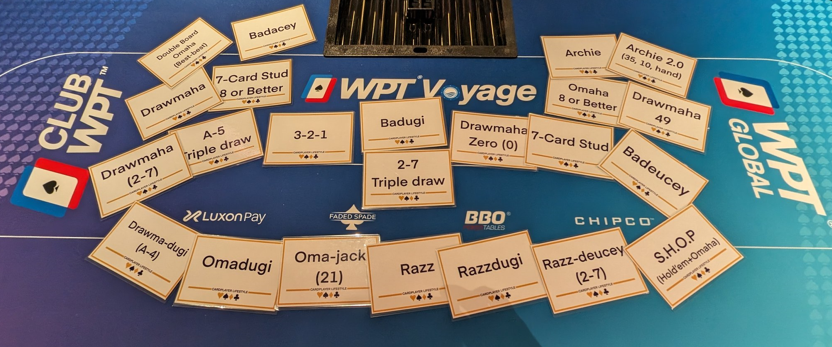
The perfect mix I suggest here I would assert has a good mix of games and is a good foundation upon which to build any mixed game. The great thing about mixed games is that, at least in many, what you start with doesn’t have to be what you continue with. I have played some games with a strict, fixed mix, but I have also played in mixed games where, as the hours wore on, games were added, removed, and even invented.
The goal here is to establish a good foundational mix. So here we go:
Flop Games
- Omaha/8
- Double board Omaha
- 3-2-1 Omaha
Draw Games
- 2-7 triple draw
- A-5 triple draw
- Badugi
- Badeucey
- Archie
Stud Games
- Stud/8
- Razz
- Razzdugi
Drawmaha Games
- Drawmaha
- Drawmaha A-5
- Drawmaha 49 or Drawmaha 0
And this is how I’d order these games:
- 2-7 triple draw
- Omaha/8
- Razz
- Drawmaha
- A-5 triple draw
- Double board Omaha
- Stud/8
- Badugi
- Drawmaha A-5
- Archie
- Razzdugi
- Drawmaha 49 or Drawmaha 0
- Badeucey
- 3-2-1 Omaha
This achieves several goals:
- A good selection from each game type
- No game type in back-to-back hands
- Single pot and split pot games well distributed throughout
- In general, simpler to more complex games
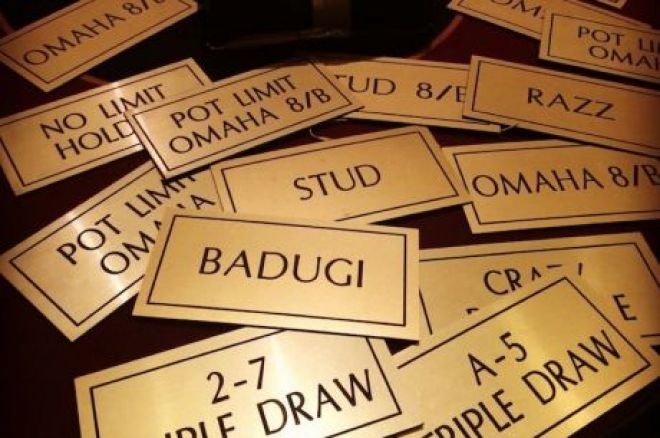
Image credit: PokerNews.com
Even for those who prefer a dealer’s choice game, this is a good foundation upon which to build that. Because this is already a good mix, players who start a game could easily say that the game(s) they’d choose are already in this mix, or could add one or two additional ones.
But the point here is that this is a good, solid foundation for any mixed game. I would assert that this is much better than HORSE, which has the flaws of (a) including Texas Hold’em and (b) being stud-heavy. TORSE, which is seeing some popularity from mixed game players who simply don’t want to even sniff any two-card game, suffers from the latter issue.
A “perfect mixed game” optimally would include a good mix of games, and this suggested mix is that. That said, I’ve played in mixed games with more than 20 games in the mix. I’ve enjoyed playing those, but I’ve also seen players approach the table and turn away because they think that many games is “too much.” While I could argue that it is not, my suggested 14-game mix also addresses this reason for a potential new player to walk away from a particular game.
Game Procedures
Before going into the basics of each game, there are game procedures that mixed games typically follow, plus game type procedures. Note that some individual poker rooms might have rules that specifically deviate from these, but in general, following these will keep the understanding of how mixed games run consistently everywhere. Plus, many of these rules have to do with what happens when a deck runs out, which can happen when players receive more than 2 cards for a hand.
These are also adapted from a list compiled by Ron Ware, a Las Vegas-based mixed game player who posted a “Rules” document in a Facebook group for mixed game players.
- Games are 6-, 7-, or 8-handed. 7- or 8-handed may require a sit-out for 5-card draw games. 8-handed may require a sit-out for all games. Sit out is the player in front of the blinds.
- In any stud hi/lo game, bring in is the high up card.
- Players agree on hands per game. If fewer than the number of active players, dealer should track hands dealt with lammers or similar. If the same as the number of active players, dealer button starts in seat 1, and game changes when button returns to seat 1. Button moves, but is not used, in stud games.
- Reshuffles during draw games include muck and burn cards, but not discards from current draw. Dealer always burns after a reshuffle.
- If a final draw or 7th street or river card can be completed with the last card and just the burn cards, dealer scrambles the last card and burn cards together and then dealt.
Basic Mixed Game Poker Strategies
This section explains the basic rules about how to play each game in the 14-game mix, and then provides some basic cash game strategy for each. Note that many of these games have variants. In general, I suggest the basic variant to start, but hey, it’s a mixed game, so feel free to, uh, mix it up.
First, let’s look at basic strategies for each game type.

Flop Game Strategies
Of course, the king of this game type is Texas Hold ‘em, but also of course, we don’t want this game anywhere near a mix. Still, hold ‘em-type strategies are the foundation upon which the basic strategies for flop games are built.
Even though you are dealt more than 2 cards in mixed games, flop/community card games still use only exactly 2 hole cards to make a complete poker hand. The basic rule is to make sure you have a hand where every card has a potential use (i.e., no “danglers,” in the parlance). In split-pot games, hands that have good scoop potential are typically the ones you’ll start playing aggressively. Then the board, the number of boards, and the number of remaining players will largely determine your future course.
For more information about strategies in flop/community card games, see Mixed Games Poker Guide: Flop Games

Draw Game Strategies
With no exposed cards (except games with a single community, or “spit,” card), draw games can have great bluff potential. But because most draw games in mixed games have 3 draws, getting players to fold can be significantly more difficult than in single-draw games (which are not typically played fixed limit).
With a good 5-card or 4-card hand, you’re typically ramming and jamming. Decent 3-card hands are ones you can be aggressive with if you’re the initial raiser, or can sometimes cold-call, or even 3-bet, if one of the top 3-card hands. 2-card hands and worse should be mucked, with very few exceptions. In general, if you do not improve on the first draw, especially if there is significant action, especially by hands that started better than you, folding is the preferable option.
For more information about strategies in draw games, see Mixed Games Poker Guide: Draw Games

Stud Game Strategies
Stud game strategies tend to be the opposite of draw game strategies because most of all opponents’ hands are exposed. But so are yours.
Most any good 3 cards should be played aggressively. Your aim is to limit the number of your opponents to as few as possible. You must be aware of two things: up cards that have been folded, and the best possible hand your opponents can make considering their up cards. Folded cards that you need to make a hand significantly affect your odds of making your hand. The same holds true for your opponents. In many stud games, aces – especially suited aces – make for a good start, although weakened if your third card cannot connect.
For more information about strategies in stud games, see Mixed Games Poker Guide: Stud Games
Drawmaha Game Strategies
Drawmaha games aren’t just split-pot games, they include two game types: draw + Omaha. And you only get one draw.
In general, play for the draw hand (your 5 hole cards), and then try to back your way into a good Omaha hand to scoop. With that in mind, you rarely want to be drawing 2 cards because the chance of making a good hole-card hand is relatively slim.
How to Play Each Game, and Basic Game Strategy
2-7 Triple Draw
RULES: Triple draw game. 5 lowest ranking cards possible, without making a straight or a flush. Aces are high. The best possible hand is 75432. There is no qualifier.
STRATEGY: You rarely want to enter a pot without holding a 2. Sometimes a 7. Having both significantly increases your potential. A 6 is often a hand killer, in part because it allows you to make a potential straight. Typically raise 4- and 5-card made 7- 8- and sometimes 9-low hands. Often raise 3 cards 7 or lower. It’s generally a leak to call raises with just 2 cards 7 or lower; an exception might be 23 or 27 for one additional bet. If you draw 2 on the first draw, don’t improve, and face serious aggression, unless you have 3 non-straightening cards lower than a 7, lean toward folding.
Omaha/8
RULES: Regular Omaha (4 cards to each player, must use two in your hand and three on the board). The pot is split between the best high and the best low hand. (5432A is the best possible low). There is an 8 or better qualifier for the low.
STRATEGY: Aces are your friend, especially when suited. Look for scoop hands, which typically contain suited aces with a 2. Suited aces with a 2 (and sometimes 3), A2 with connecting cards (either high or low), and A23 hands are prime raising hands. Double pairs can be as well. If you have just a nut low hand and there is significant action, you might be playing for ¼, or even ⅙ of the pot, which means you may be losing money with each bet you put in. If you’re not sure what you have, just turn your hand up at the end (i.e., “cards talk”).
Razz
RULES: 7 Card stud, played for low only. Best hand is 5432A. Straights and flushes do not count against the low. There is no qualifier. High card bring in.
STRATEGY: Stud games are all about up cards and memory. A 6 low is an excellent hand, a 7-low is a very good hand, and an 8-low is generally a string hand. If you start with any of these, raising is generally the approach, especially if a lower card is your up card. If you see duplicates of the rank you hold folded, your hand is stronger, but if you see cards you need folded in other hands, you have fewer outs. Bluffing opportunities often appear on 5th street when the bet doubles, you draw well, and opponents brick.
Drawmaha
RULES: Combines 5-card single draw and Omaha high. Best 5-card poker hand and best Omaha high hand using exactly 2 cards from your hand + exactly 3 cards from the board split the pot.
STRATEGY: Look for good 5-card hands, and then consider what you can do for Omaha. Playing for just the Omaha side means you’re typically playing for just half the pot, which is a sub-optimal strategy. Because this is Omaha high, hands with lots of high cards play well, and of course, having an ace is optimal. Dealt single pair hands are middling strength, especially when you consider if you do draw 3, your hand plays pretty face up. A dealt 2-pair hand is strong, and dealt trips or better is the road to rammin’ jammin’. (But, of course, trips reduces your chance at a good Omaha hand.) Otherwise, look for 5-card hands where you have to draw one, and fold otherwise. If you don’t improve and don’t pick up a good Omaha hand, you’re best bet is to slow down. Of course, if you were drawing 1, didn’t make it, and missed the flop, you’re folding.
A-5 Triple Draw
RULES: Triple draw game. 5 lowest ranking cards possible. Aces are low. The best possible hand is 5432A. There is no qualifier.
STRATEGY: For those used to playing 2-7 triple draw, the good hands in that game will deceive them into thinking they are good hands in this game. But while a 7-low is a rammin’ jammin’ hand in 2-7, it’s marginal in A-5, especially if it is a rough 7. In general, look for at least 3 cards 6 or lower, and if first in the pot, raise. One-card 6 draws are extremely strong, and one-card 7 draws are as well, especially if it is a smooth hand. Rarely draw 3 cards unless your two cards are A2, A3, A4, and A5. As with 2-7 triple draw, if you draw 2 or more, do not improve, and your opponents are drawing fewer and are aggressive, lean toward folding.
Double-Board Omaha
RULES: Omaha high with two complete boards. The best high hand on each board gets half the pot. This is also played high-low (i.e., “best-best”), where the best overall high and the best overall low split the pot.
STRATEGY: This is straight-up Omaha strategy, only twice. If it’s played high-only, you’re looking for 4 cards that make good high hands. If it’s played high-low, you’re looking for your typical O/8 hands, suited aces, A2xx, etc., with no danglers.
Stud/8
RULES: Standard, but be advised that many mixed games play this “super”. This means that you’ll receive either 3 or 4 hole cards from which you must select 2 (you discard the others) before the initial betting round, after which fourth street is dealt. Afterward, it’s just 7 Card Stud with the best low hand getting half the pot. There is an 8 or better qualifier for the low.
STRATEGY: Typical stud/8 strategy except you have a bit of additional knowledge: the 2 cards you threw away. So these, as well as any folded up cards by your opponents, will not be available to you. Because everyone is getting 4 face down cards, starting hands are likely to be stronger for anyone choosing to play the hand. Anything rolled up is a monster to start. Aces, especially suited, with 2 other low cards are also very strong.
Badugi
RULES: Triple draw game. Each player is dealt 4 cards. Must make lowest possible hand, of 4 different suits, with no pairs (a.k.a., a “Badugi”). If you have a pair or two of the same suit, you do not have a 4-card hand. If no Badugi is made, then the best 3-card low wins. The best possible hand is 432A “rainbow”.
STRATEGY: A dealt 4-suited hand is strong, and should be pushed until you meet resistance. For example, you are dealt KJ62 rainbow, you raise, and get 3 callers. One opponent draws 1 twice, then pats and bets out. You should probably fold. Otherwise, generally look for 3-card hands 8 or better and 2-card hands A4 or better. The latter can call 2 raises, but if it does not improve, should generally be folded.
It’s HARD to make a good badugi, even when drawing one card; to make a good badugi, an 8 or 7 at least, is around a 4-out draw. Also, pay attention to the rank and suit of cards you discard.
Drawmaha A-5
RULES: Combines 5-card single draw and Omaha high. Best 5-card A-5 poker hand and best Omaha high hand using exactly 2 cards from your hand and exactly 3 cards from the board split the pot.
STRATEGY: Similar to Drawmaha, except that you’re looking for a good A-5 low 5-card hand. Because there is just one draw, you are generally looking for a made or decent 1-card draw. 2-card draws rarely succeed. A made J or 10 can often be good unless there are multiple 1-card draws against you. Otherwise, look for 4 cards 9 or 8 or better. As such, recognize that a flop of low cards is often going to hit everyone staying in. Rarely do you want to be entering pots without an A unless all of your remaining cards work well together. If the flop is all high cards, you’re almost certainly playing for just half the pot.
Archie
RULES: Triple draw game played high/low with qualifiers for both. Low is 5 lowest ranking cards possible. The best possible low hand is 5432A, with a royal flush being the best high hand. Qualifiers are typically 8-low or better for low, and a pair of 9s or better for high.
STRATEGY: Because triple draw games are typically played to make some sort of low hand, adding a high hand to a triple draw game adds variety. And because a player can go high or low, more players are likely to be inclined to play. Many times, you’re looking to make a high-only or low-only hand, and typically, you’ll want at least 3 of your intended hand to start, although a single higher pair may be sufficient to go for a high hand. Scoop hands are necessarily all low (e.g., a low straight). Three or four low connected or suited cards make for a powerful starting hand. High pairs and A2 and A3 hands are probably the only draw-3 hands to start with, unless it’s 3 bets to go, and then these are also probably trash.
Razzdugi
RULES: 7 Card stud, played for low only. Best low hand splits with best badugi hand. Best low hand is 5432A. Best badugi hand is 432A rainbow. Straights and flushes do not count against the low. There is no qualifier. High card bring in.
STRATEGY: Similar to razz, except if your runout is one- or two-suited, you’re playing for just half the pot. Getting dealt 3 cards of different suits is a strong starting hand, no matter the ranks of the cards.
Drawmaha 49/Drawmaha 0
RULES: Combines 5-card single draw and Omaha high. Best 5-card hand and best Omaha high hand using exactly 2 cards from your hand and exactly 3 cards from the board split the pot. The 5-card hand is made not by poker hand ranks, but by counting card pips. That is, A is 1, deuce is 2, trey is 3, etc., and face cards are zero. You evaluate your 5-card hand by counting the total of pips on all 5 cards. For 49, the nuts is TTTT9. For 0, the nuts is any 5 face cards, kings, queens, or jacks.
STRATEGY: Like with other Drawmaha games, you play for the 5-card hand and hope to also hit an Omaha high hand. If you’re playing 49, you’re looking for tens, nines, and eights. Sevens are OK, sixes are iffy. You probably feel comfortable with a pip count in the low to mid 30s. If you’re playing 0, you’re looking for face cards and aces, and deuces and treys won’t hurt you too badly. Anything less than a 6 or 7 can be pretty strong. Drawing two is not quite so bad if you have three strong cards. For example, if you have two face cards and an ace, the chances are decent that you’ll pick up another face card.
Badeucey
RULES: Split-pot game, played as 2-7 triple draw, with a badugi getting half the pot. Aces are high in both halves. The best possible hand is 2345 (rainbow) with a 7, and an almost guaranteed scoop (winning the entire pot).
STRATEGY: Basic strategy is to play similarly to plain 2-7. A strong 2-7 will usually get half the pot. Never break a 7 or an 8 to chase a badugi. Starting with 3 low cards of different suits is VERY strong and should be raised and reraised. If you do not have a badugi draw, favor slightly stronger 2-7 hands because you’re playing for just half the pot.
3-2-1 Omaha
RULES: Omaha High. There are three flops, two turns, and one river. Players may use any combination of only one of the flops, only one of the turns, and the river to make the best hand. This is NOT a split pot game, there is only one winner. This game is sometimes played where each turn card can play only with its “connected” flops. That is, the top turn card plays only with the top and middle flop and the bottom turn card plays only with the middle and bottom flops.
STRATEGY: With 3 flops, many hands are worth a single bet, except rainbow hands. But with 3 flops and 2 turns, very strong hands are very likely. Any pair makes a full house likely, and underfulls are vulnerable (and made straights and flushes should generally be folded). On every street, identify the nut hand, and if you do not have it, proceed cautiously. Turns cards and the river have outsized impact because they work with so many more cards.
Many live poker players think that years of reading faces and spotting physical tells will make the switch to online poker easy. But once the cards start flying, reality hits fast. The pace is quicker, the hands pile up, and instincts that worked in person don’t always translate behind a screen.
Here’s what nobody tells you about making that transition smoothly.
The Speed Shock
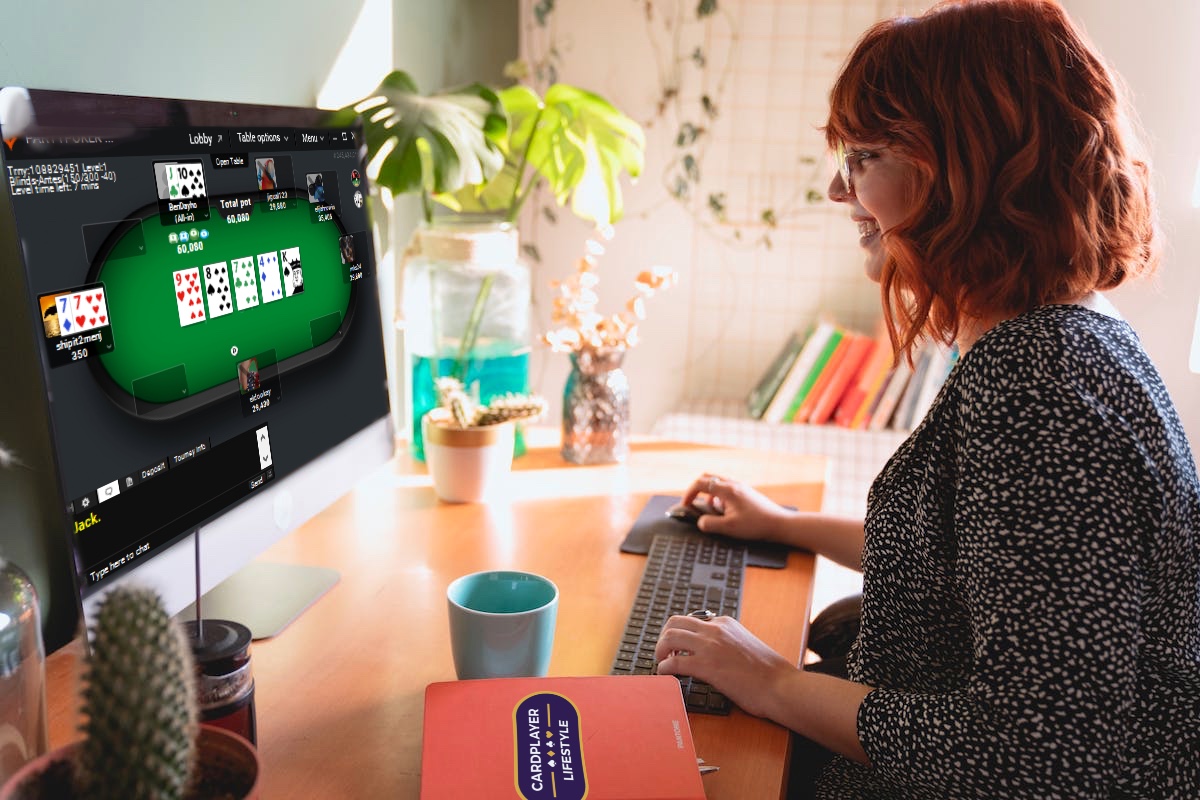
In live games, you might play 25–30 hands an hour. Online? You can easily see 10x as many. That means less time to think, more hands to manage, and a lot more variance.
At first, it’s better to play one table instead of trying to multi-table right away. You’ll need to get used to shorter time banks, fast folds, and learning how opponents behave without body language. Once your decisions start feeling natural, then you can add a second table, and so on and so forth.
Adjusting Your Starting Hand Ranges
One of the biggest mistakes live players make online is playing too many hands. Live games often reward patience and traps, while online poker games reward discipline and timing.
As poker expert Mike Waters from AustralianGamblers.com puts it in his poker strategy guide, “The best poker advice I can give you is to play fewer hands.”
That single tip sums up online success. Fewer hands mean fewer marginal spots, which keeps you out of trouble and helps you learn patterns faster. Think twice before calling raises out of position or chasing every draw. The online player pool is sharper and less forgiving.
Rely on Data, Not Faces
Online poker replaces reading people with reading patterns. You can’t see who’s nervous, but you can see who bets small with weak hands or who always checks the river after missing.
Instead of focusing on emotions, focus on tendencies:
- How often does someone raise preflop?
- Do they continuation-bet on every flop?
- Do they give up easily on the turn?
These small habits become your new “tells.” Tracking them mentally (or with basic HUD stats, if allowed) is far more useful online than trying to outguess emotions.
READ MORE: Top 5 Reliable Poker Tells
Bankroll Discipline Is Everything
When you play online, the hands come faster — and so do downswings. Even Poker Hall of Famers like Phil Ivey can endure brutal losing streaks due to the nature of higher volumes of hands being played online. That’s why bankroll management matters more online than live.
If you normally buy into a $2/$5 live game, don’t jump straight into its online equivalent. Start smaller, build consistency, and treat it as a learning investment. Plus, online poker is much, much faster than live poker, so starting with a lower bankroll than what you used to start with live makes a lot of sense.
READ MORE: On Poker Budgets and Poker Bankrolls
Replacing Experience with Study
Every online session teaches you something, so long as you’re willing to review it. Hand histories, replay tools, and resources might sound intimidating, but even basic reviews can reveal leaks in your play.
After each session, take five minutes to look at the hands that cost you the most money. Ask yourself:
- Was it a bad call or just bad luck?
- Did I play out of position too much?
- Could I have folded earlier?
This small habit builds awareness faster than any “gut feeling” ever could. If you need help “learning how to study poker” properly, any number of poker training sites have the resources and instructional materials available for you to utilize.
Common Live-to-Online Mistakes
A few traps catch almost every new online player:
- Chasing every draw. The math is the same, but you’ll see far more draws online. Fold the bad ones and save your chips for better spots.
- Over-bluffing. Online players are used to aggression. Bluff less often and make it count when you do.
- Ignoring fatigue. Clicking fast for hours looks easy until you start losing focus. Schedule breaks, even short ones, to reset your mind.
The Takeaway
Online poker isn’t necessarily harder than live poker; it’s just different. You don’t need fancy software or complex math to win (though it helps, of course). Most importantly, you just need patience, focus, and the discipline to fold more often than you’re used to.
Start with fewer tables, play tighter hands, and track patterns. With time, you’ll find that what made you strong in live poker (discipline, awareness, and emotional control) still works online, too. You just have to let go of the noise and focus on the decisions that matter most.
Winning at an online card game or casino can feel like the ultimate high. The balance in your account jumps, the adrenaline rushes, and suddenly you’re imagining what to do next. Yet, the real victory begins after the win.
Managing your payout wisely determines whether that success becomes a lasting financial boost or fades away as quickly as it arrived. This guide breaks down the essential steps from cashing out to securing long-term stability, helping players transform winnings into a solid foundation for their financial future.
Understanding Withdrawal Methods
The first step after securing a win is figuring out how to access your money. Online casinos and card game platforms typically offer several withdrawal options, each with its own advantages, processing times, and fees. Understanding the nuances of each method is key to making sure your money reaches you quickly and safely.
Bank transfers remain one of the most secure withdrawal options. Most platforms process them within three to five business days, although some banks impose additional verification steps.
Electronic payment methods, such as PayPal or Skrill, tend to be faster, sometimes offering same-day processing. However, they often include transaction fees ranging from 1.5% to 3%, depending on the service provider and country regulations. Players must also consider any casino-side withdrawal limits that can range between $5,000 and $10,000 per transaction.
Evaluating Withdrawal Fees
Fees can eat into your winnings if you’re not careful. Each withdrawal method carries distinct cost implications that directly affect how much money ends up in your hands. A player’s awareness of these charges is vital to preserving the full value of their reward.
While some platforms promote “no-fee” withdrawals, this is often limited to specific methods or account types. E-wallets might charge for cross-border transactions, and crypto withdrawals often incur network fees that fluctuate depending on blockchain congestion. For example, a $5 fee on a $200 withdrawal is a 2.5% loss before taxes or reinvestment even begin. Choosing wisely between instant access and lower fees helps players maximize net gains.
Tax Implications of Winnings
Winning money online carries real-world tax responsibilities. Governments treat gambling income differently depending on the jurisdiction, and misunderstanding these rules can lead to penalties or unexpected bills.
In many countries, gambling winnings are classified as taxable income. The United States requires reporting of any prize over $600, while the UK exempts gambling earnings from income tax but still demands transparency in financial declarations.
Players should keep documentation of every withdrawal, including the date, amount, and platform, for accurate annual filings. Consulting a certified tax advisor ensures compliance while identifying possible deductions for transaction fees or related expenses.
READ MORE: The Business of Paying Taxes as a Pro Poker Player
Responsible Money Management After a Win
Once the payout lands, responsible financial management becomes the cornerstone of maintaining momentum. Immediate access to a large sum can lead to impulsive spending unless guided by structure and discipline.
Players should divide winnings into clear categories: 30% for debts, 20% for emergency savings, 40% for investments, and 10% for discretionary spending. This allocation supports long-term growth while satisfying short-term enjoyment. A win can be the perfect opportunity to eliminate high-interest loans, stabilize cash reserves, and initiate sustainable wealth-building habits.
Prioritizing Debt Reduction
Using winnings to address existing debt creates a powerful sense of progress. Paying down obligations with high interest rates directly increases future disposable income and financial flexibility.
Credit card debt, payday loans, and revolving credit balances often carry interest rates above 18%. Redirecting a portion of winnings to these balances not only reduces long-term costs but also strengthens credit health. Eliminating these burdens provides psychological relief and a stronger platform for future investments.
Building Emergency Savings
An emergency fund serves as financial armor. It shields you from unexpected medical costs, job loss, or market downturns.
Financial experts recommend saving at least three to six months of living expenses. Placing this money in a high-yield savings account ensures liquidity while earning modest interest. This step protects your winnings from being prematurely depleted by life’s surprises.
Investing for Long-Term Growth
Once debts are reduced and safety nets are secured, investing becomes the natural next step. Strategic investments allow your winnings to generate ongoing income and compound over time.
A balanced investment strategy includes a mix of stocks, bonds, ETFs, and possibly real estate or index funds. This diversification reduces risk while ensuring consistent returns.
Platforms that consistently rank among some of the highest paying online casinos attract players who are often financially savvy, understanding that the journey doesn’t end when the numbers hit their account. It extends to how those numbers are managed. Applying that same insight to investment diversification allows players to treat their earnings as seeds for future wealth rather than fleeting rewards.
Exploring Professional Financial Guidance
Even seasoned players can benefit from expert advice. Financial planners and wealth managers provide structure and insight that ensure your money continues to grow efficiently.
Selecting a fiduciary advisor ensures that all recommendations align with your best interest. Professionals can tailor strategies to optimize tax efficiency, risk management, and long-term growth aligned with personal goals.
Avoiding Impulsive Spending
Sudden wealth can lead to unplanned purchases that provide short-term satisfaction but little enduring value. Maintaining focus after a win is essential.
Setting defined spending limits and maintaining accountability through budgeting tools or family oversight helps control impulsive behavior. The thrill of the win should translate into security, not regret. Keeping a record of every purchase prevents funds from slipping away unnoticed.
Integrating Winnings Into Broader Financial Goals
The most effective way to sustain momentum after a win is to incorporate it into your larger financial strategy.
Combining disciplined savings, smart investing, and consistent planning ensures that the initial win evolves into long-term prosperity. Viewing winnings as part of a continuous growth process, rather than a one-time event, lays the groundwork for a more stable and prosperous financial future.
The Path From Luck to Legacy
A true player’s success isn’t measured solely by what they win but by what they build afterward.
By understanding withdrawals, accounting for taxes, and reinvesting intelligently, players can transform fleeting fortune into lasting impact. Every payout presents an opportunity not just for enjoyment, but for empowerment, discipline, and the foundation of a lifetime of financial security.
PokerCoaching.com has long been one of the most trusted names in poker training, offering players at all levels access to strategy insights from some of the game’s top minds. With Black Friday right around the corner, the site is rolling out not just their traditional “biggest sale of the year”, but a completely revamped learning experience and the highly anticipated Tournament Masterclass. Featuring lessons by Jonathan Little, Justin Saliba, and Brock Wilson, the Masterclass represents the most comprehensive tournament training PokerCoaching.com has ever released — combining world-class instruction with cutting-edge interactive study tools.
To learn more about the new course, the updated platform, and what players can expect from PokerCoaching.com’s upcoming promotions, we caught up with PokerCoaching founder Jonathan Little for a behind-the-scenes Q&A.
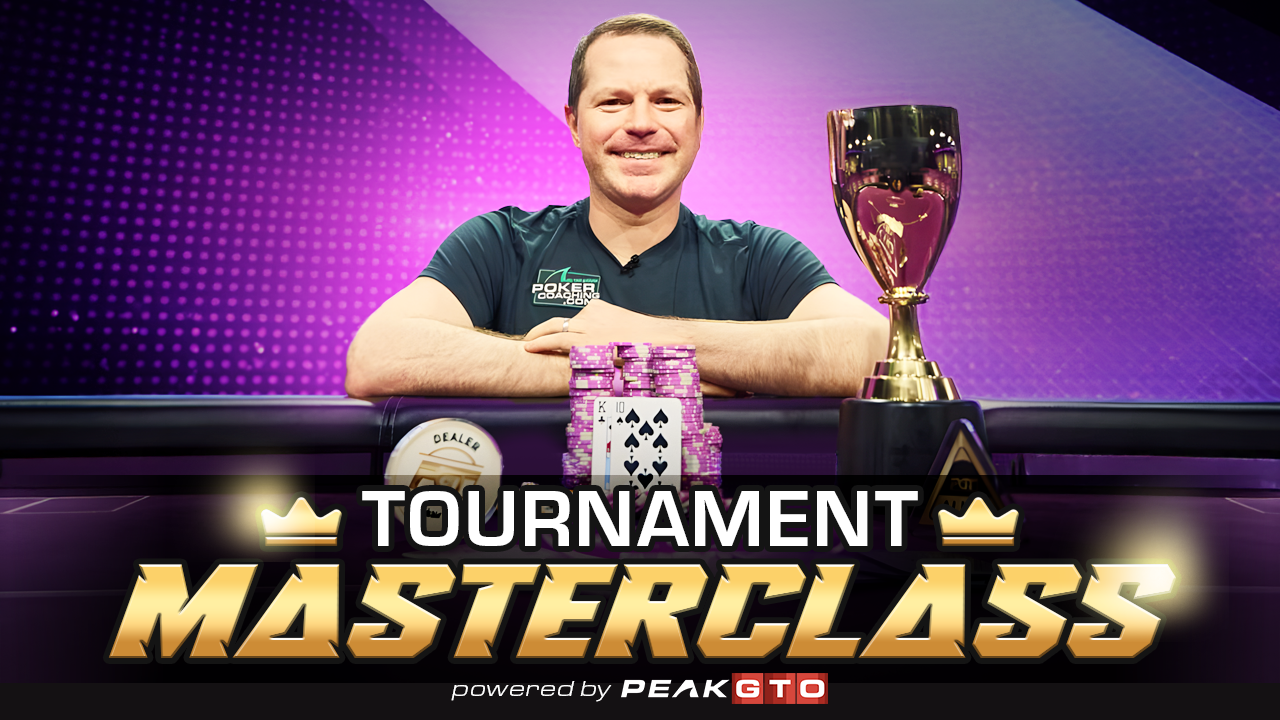
Interview with Pokercoaching.com Founder Jonathan Little
PokerCoaching.com has offered tournament training for years, but the new Tournament Masterclass is being described as your most comprehensive course ever. What sets it apart from previous offerings?
The purpose of the Tournament Masterclass is to teach you how to approach every tournament situation such that you can come up with the best decision. Pretty much every situation you will encounter in poker tournaments will be taught in numerous 10-minute long videos so the content is easy to learn. In the new Tournament Masterclass, we also explain numerous new heuristics we have developed to help students play difficult spots correctly, such as how to play from out of position as the preflop raiser, which involves a decent amount of checking and check/raising.
The Masterclass is “powered by PeakGTO.” Can you explain how this integration enhances the learning experience for students?
After each lesson, you can train the spot being discussed over and over again until you master it.
You, Justin Saliba, and Brock Wilson make for quite a coaching trio. How did you decide which coach would handle which parts of the Masterclass, and what unique perspectives do each of you bring?
The three of us all have a strong understanding of GTO strategies and are excellent at explaining it to our students. Justin and Brock handle the most complex GTO sections while I handle the rest.
You’re also updating the PokerCoaching.com experience with a refreshed design and improved navigation. How long has this redesign been in the works, and what kinds of changes can longtime users/students expect to notice right away when they log in?
We are always working to improve PokerCoaching.com to make it the best it can be. The PokerCoaching experience update is all about simplifying the platform and making it easier for students to find the content that matters most. We are unifying key features and training materials into a single, more intuitive experience. Longtime users will notice a cleaner layout, improved navigation, and a more streamlined way to access courses, quizzes, and study tools. In future iterations, content discovery will take center stage as we make it even easier for players to explore new material and track their progress.
One thing that stands out about PokerCoaching.com is the interactive learning model. How do the new tools and drills inside the Tournament Masterclass build on that philosophy?
PeakGTO has been fully integrated into the new Tournament Masterclass so you can practice the situation you just studied until you fully master it.
For players who may already have some experience with GTO study tools, what’s the biggest advantage of doing that work within the PokerCoaching platform versus using separate software?
PeakGTO aims not just to show you the GTO strategy, but also to explain it in a way such that you can easily implement the GTO strategy at the table. I recommend all students go through the Drills of the Day in order to get comfortable with lots of common spots with feedback from our coaches.
Your Black Friday promotion will once again include a 5-Day All Access Pass before the sale officially begins. For someone who has never done any sort of poker study before and would like to use the opportunity to give it a try, in what ways would you recommend that they use the time to get the best value out of the free trial?
I recommend everyone start going through the Tournament Masterclass. This will give you a good idea of what PokerCoaching.com has to offer while also improving your skills at a fast pace.
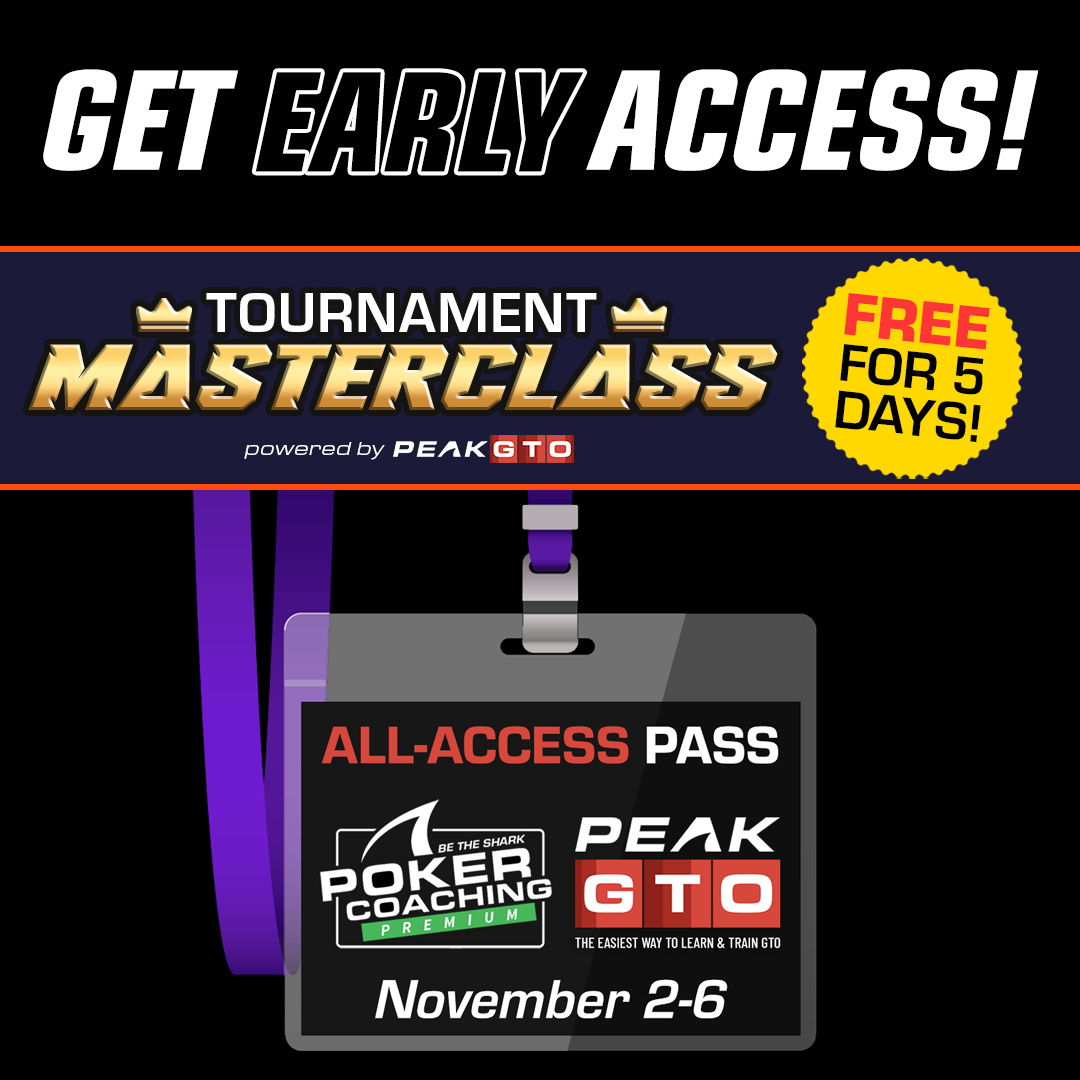
Conclusion
Whether you’re a casual player looking to level up or a serious grinder preparing for your next deep run, PokerCoaching.com continues to evolve with the modern game. Between the launch of the Tournament Masterclass, the upgraded site experience, and the upcoming Black Friday promotions, there’s never been a better time to explore what one of poker’s most respected training platforms has to offer.
For more details — and to take advantage of limited-time Black Friday offers — visit PokerCoaching.com.

If you’re in Canada and are a fan of playing cards, the entire world of online casinos is quite inviting. With so many sites available, it can feel like an endless maze. Each has its own unique menu of games, and honestly, knowing where to even start is half the struggle and half the fun. We will help you decide what to do when choosing a game that works best for your personal style.
Making Sense of Canada’s Online Casino Rules
The way online casinos are handled in Canada is, well, complicated. It’s not one-size-fits-all; picture a patchwork quilt of provincial and territorial rules. Each province is its own little kingdom when it comes to regulating online gambling. Ontario, for example, has thrown its doors open with a fully regulated market packed with approved operators. If you live elsewhere, you’re probably looking at a grab-bag of provincially run sites alongside international platforms. It really pays to get to know the lay of the land where you are. You want to be sure you’re playing somewhere above board and secure, and these licensed places almost always have a great variety of games to try.
Popular Card Game Options
You can find many casino games played with cards at an online casino. Each of these card games has a unique set of rules.
Learning the most popular game types can help you select the right video game.
Image credit: Pixabay
Blackjack
Blackjack is a total casino classic. The goal is to achieve a higher hand value than the dealer’s, but without surpassing the value of 21. It is you versus the house, not the other players. The game’s popularity is supposed to have come because there are a few simple rules, but your choices matter.
Poker
There are various kinds of poker, but Texas Hold ’em is the most famous and the most common. In poker, you do not play against the dealer as in blackjack. The poker table is a skill game you play against the players at the table. The road to success is all about being ahead of the game, bluffing with all confidence, and beating your rivals at their game. Most online gaming websites provide players everything from relaxed tables to intense competitions.
READ MORE: Poker Rooms in Eastern Canada
Baccarat
Baccarat might appear exclusive, but it is confined to its high-roller players. You simply bet whether the “player” or the “banker” hand will give a total closest to nine. This game is fast and straightforward, perfect for anyone who wants to play a game of luck.
House Edge and Your Odds
Every game in a casino has a “house edge”; it’s the casino’s built-in advantage. Think of it as the small percentage the house expects to keep from any bet you make over the long term. Some games are better than others, of course. For instance, a solid basic strategy player can immensely reduce the house edge in a card game like blackjack. Baccarat is also known for having a low edge if you bet on the banker. Knowing the house edge helps you understand what you’re up against, so you can pick games that will give you a better return over time.
Live Dealer vs. Digital Card Games
Playing card games online has two options: digital (RNG) games and live dealer games.
Digital Games: These software-based games use a Random Number Generator (RNG) to ensure fair and random results. They are 24/7 and have a wide range of stakes so they are open to all types of players.
Live Dealer Games: For a more authentic experience, live dealer games use a live human dealer streamed from a studio to your device. You can communicate with the dealer and sometimes other players. It’s like you are at a real casino table game. The pace of these games is often slower.
Your Budget and Playing Style
Your budget and style should heavily influence which games you choose. If you like playing for a long time for a small amount, have a low house edge, and have relatively low stakes, like low-limit blackjack, it will do just fine. If you like chances at potentially significant payoffs for a higher risk, you will enjoy some poker variations or baccarat. Play within your limit so you won’t overspend or regret playing at the casino.
Final Thoughts
Selecting the correct card game at a Canadian online casino is based on choice, rules, house edge, and budget. With the wide assortment of games to choose from, such as poker and baccarat, it’s safe to say you’ll find the online game that’s right for you. Explore new options and formats like live dealer games while playing at online casinos to make the best out of your gaming experience.
In the gambling world, technology moves faster than a flipped river card. What started as simple online poker rooms has now merged with digital casinos to create hybrid casino-poker platforms. These sites let players jump from a Texas Hold’em table to a virtual roulette wheel without opening a second account or loading a new wallet. In talking about practical examples, trusted casinos in Cyprus often highlight mse.com.cy as a model that blends poker lounges with immersive slot machines, showing how seamless the mix can feel.
Over the last two years, this mash-up model has exploded across Europe, Asia, and North America. Investors love the cross-selling power, regulators watch with curiosity, and players enjoy more choice during shorter sessions. Understanding why these platforms matter today will help casinos, poker operators, and even local card clubs plan for a future where boundaries between verticals almost disappear. That shift is the focus of this article.
What Is a Hybrid Casino-Poker Platform?
Hybrid casino-poker platforms are digital ecosystems that combine peer-to-peer card games and house banked casino titles under one account, creating a hybrid casino-poker platform. Imagine them like a food court, where sushi and burgers coexist side-by-side and customers select from them at will. Players create one wallet, share one loyalty balance, and can instantly move chips between a sit-and-go table and, say, a progressive jackpot wheel. Behind-the-scenes, this platform brings multiple game engines together by unifying lobbies and sharing player identity checks – reducing friction, login fatigue and increasing betting time for people.
The model also allows operators to more efficiently pool liquidity; cash-game traffic can increase during blackjack tournament breaks to keep revenue flowing smoothly. Thus, hybrid is less a buzzword and more of an orchestrated experience, one which first-time users worldwide today find almost magical.
Technology Underpinning the Shift
Multiple breakthroughs make hybrid gaming possible. HTML5 game development makes this possible by enabling poker, baccarat and live-dealer streams to all run within a browser window without additional plug-ins being required for operation. Second is modern payment orchestration solutions like PayProxy that support payment orchestration processes on various payment channels. Through tokenized wallets and intelligent routing, deposits travel seamlessly between game servers without players ever realizing.
Application Programming Interfaces, or APIs, connect all the disparate vendors; they allow vendors to share hand histories, loyalty points, and session data in real time. Artificial intelligence tracks behavior patterns to detect collusion at poker tables or suspicious spins on roulette wheels. Cloud hosting completes the picture by dynamically scaling servers up and down during tournament rush hours and overnight periods, thus cutting costs while keeping latency down and providing a fast, flexible backbone that feels native whether someone plays on their phone in a cafe or desktop at home today.
Benefits for Operators
From an operator perspective, hybrid casino-poker platforms provide multiple revenue-generation channels in one package – cross promotion being chief among them. When poker players bust early in a tournament, an automated banner can quickly shift them towards low-stakes blackjack tables instead of simply letting them log off. This change of tactics transforms would-be churn into fresh revenue; and unified marketing databases offer additional benefits. As all activity flows through a single customer relationship management system, segmentation becomes sharper and bonus offers reach their intended wallet at precisely the right moment – while operational costs also decrease significantly.
Shared compliance checks eliminate redundant Know-Your-Customer paperwork and allow one tech team to manage a joint lobby instead of two separate front ends. Furthermore, hybrid models boost bargaining power with game suppliers; larger combined volumes often unlock more competitive fee structures. Finally, hybrid sites promise higher lifetime value per user with no disproportionately greater overhead – something traditional single-vertical sites struggle to match.
Impact on Players
For players, the greatest benefit lies in convenience. No longer do they need to juggle multiple logins and withdraw chips from one site only to deposit at another just to chase another thrill – instead a single cashier serves all players’ appetites. Plus there’s always that loyalty angle, too – an added benefit that makes loyalty much easier to attain. Each hand of Omaha, each spin of roulette and each video slot contribution contribute to one reward ladder; thus accumulating points faster and making prizes feel attainable more quickly. Variety comes next. Hybrid lobbies provide relief by offering players the chance to break up a slow poker orbit with a quick game of craps, before returning quickly back to their table.
In addition, these spaces benefit community features by drawing larger, diverse crowds who create more lively chat rooms and forum boards. Responsible gambling controls become easier to administer when one timeout or deposit limit applies across all activities, protecting users without forcing them to search through multiple settings for protection. Such an assurance builds confidence while encouraging healthier gambling habits.
Hybrid Platforms Confront Challenges and Regulatory Questions
While hybrid platforms have attracted much interest, they still face a number of hurdles that must be cleared before success can be achieved. Compliance remains of particular concern: some jurisdictions classify poker as skill whereas blackjack falls under pure chance classification; this leads to conflicting tax rules and marketing restrictions as a result. Operators must contend with double the paperwork and often secure multiple approvals before launching. Player protection also poses considerable challenges. As game sessions can often extend over a longer time span when multiple titles are offered, responsible gaming teams require increased monitoring tools in order to detect signs of fatigue or binge behavior and identify when additional monitoring tools may be needed.
Technical stability should come next; when shared wallets crash, every vertical comes to a grinding halt, potentially leading to wider reputational damage than just an isolated game outage. Furthermore, market positioning can create confusion regarding brand identity. Hardcore poker fans may fear casual dilution, while casino loyalists might worry that the lobby feels too card-centric. Overcoming such challenges requires clear regulations, open communication channels and ongoing investments in backend resilience – while also offering opportunities for innovation and collaborative solutions.
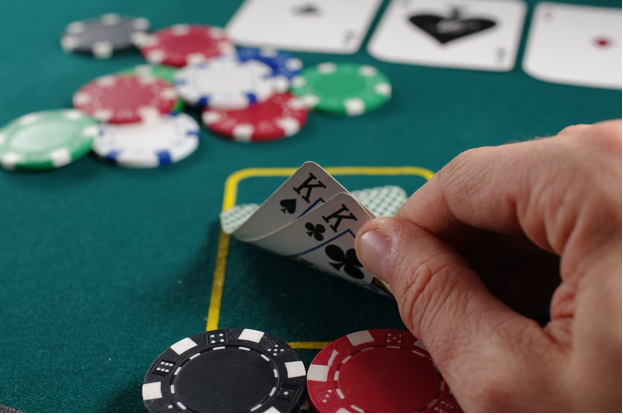
C-betting or continuation betting is one of the most common, as well as misunderstood, plays in poker. To employ it is pretty straightforward: you raise pre-flop, then get called, then raise again on the flop, whether you have hit the board or not. Yet, the success of a c-bet is heavily dependent upon the kind of opponents you are playing against as well as, importantly, board texture. Understanding the difference between wet and dry boards is key should you strive to be unpredictable and profitable in the long run.
Understanding the Board Texture and Looking for Parallels in Playing the Game
Before we dive too far into strategy, it’s important to understand how the texture of the board alters everything about how you should play. A “wet” board has connected or suited cards for multiple possible draws, e.g., 9s 8s 7d. By comparison, a ‘dry’ board does not draw, such as Kd 7c 2s. The amount of interaction between the board and your opponent’s likely range relative to your own should determine whether you c-bet or not.
It’s not that different from blackjack strategy. When you look at blackjack casino options explained in expert reviews, players are shown adapting to shifting odds, reading the dealer’s visible card, and adjusting their decisions in real time. It’s the same core process poker players use, namely spotting patterns, timing moves, and avoiding reliance on luck alone.
The online gambling environment has made this kind of analysis a second nature for a lot of players, not least of which because modern blackjack tables now come equipped with stat tracking and real-time advice on playing strategy. Each decision at an online table changes with the hand, where risk and reward balance one another with each change. Poker is no different, and having a flexible and speedy ability to read opponents and hands is equally important.
C-Betting on Dry Boards
Dry boards are the ideal ground for a lot of c-bets to be made. With fewer combinations to be able to connect strongly with the flop, your opponent will often miss out and be left with nothing but overcards or weak pairs. A classic one is an As 7d 2c board after you have raised pre-flop from the button. Your hand seems to be in a solid range with a lot of possible top pairs, and your opponent’s defending range when sitting in the blinds will be missing more.
The idea here is to maintain pressure and obtain representation of value. A small consistent c-bet will often work the best because it does not risk too much but puts the opponent in an awkward spot. Most of the time, you will be able to take the pot down without much resistance. However, it is important not to go overboard. If your opponent is capable of floating over with intention calling with weak hands just to take away the pot later, you will need to occasionally check back to balance things out. This helps you to hedge your checking range and prevents the strategy you use from being predictable.
C-Betting on Wet Boards
When the flop comes out with multiple draws or strong connections, you are looking at a wet board. Think Js 10s 9d or 8h 7h 6c. These textures strike a large variety of hands that your opponent could have, from straight and flush draws to middle pair with great potential. On these boards, a travelling blind continuation bet with no thought can lead to a quick backfire.
C-betting less often and with better hands is the key. In doing so, you will want to mix in more checks, especially with some equity, if you don’t have a made hand yet. If you have a top pair with a decent kicker or you’re on a draw yourself, then betting can still be profitable, but sizing is very important. If a bet is made that does not quite leave you with a lot of chips, you can bet your hand and charge your opponent for drawing.
It is also clever to assess the interaction of ranges. In a board like Qs Js 9d, if your opponent called from the blinds, then it is possible that their hand was also a straight or flush draw if they called correctly. In these situations, counter-aggression with awareness. Protecting your checking range in such a way can make any future turns and river bluffs more believable, keeping your opponent guessing as to your true strength.
Adjusting to Different Opponents
C-betting is seldom based solely on board texture. It is also about who is sitting across from you. Some players fold too frequently to continuation bets, and they are delicious targets for frequent pressure. Others refuse to fold anything with a hint of potential on it, which makes bluffing on wet boards much riskier.
Pay attention to showdowns and timing patterns. If you find an opponent who is folding too much on dry flops, but is sticky in hands with draws, adapt to this as appropriate. You can play this to your advantage by making smaller and more frequent c-bets on dry boards, while tightening up your c-bet range on wetter ones. In multiway pots where there are multiple players, they tend to check more frequently. The more players see the flop, the more someone has the potential to have connected, and your one bet does not have the intimidation factor.
As a special addition to Mixed Game Festival XII, we’re pleased to announce that, in partnership with the Women’s Poker Association (WPA), we’ll be staging our third ever “Women’s Wednesday” event.
Scheduled to take place on the morning of Wednesday November 19, the event will feature a trio of Women in Poker Hall of Famers – Linda Johnson, Jan Fisher, and Lupe Soto – teaching attendees the ins and outs of two Draw Poker variants: 2-7 Triple Draw and A-5 Triple Draw. Click here (or the image below) to register in advance.

WPA President AJ Rudolph had this to say: “The Women’s Poker Association is very excited to be involved in The Cardplayer Lifestyle Mixed Game Festival this fall! If you think there’s not a lot of women in NLH, try to find more than a couple playing at a mixed game. We’d love to see this number grow. The Women’s Wednesday coaching session is the perfect way for our community to jump in and learn mixed games. You couldn’t ask for better instructors than Poker Hall of Famers Lupe, Jan & Linda. Don’t miss it!”
Women’s Wednesday Schedule
Ladies (gentlemen are of course welcome to attend, too) will gather at 10am at the Resorts World Las Vegas poker room, where light refreshments will be served. The Hall of Famers will proceed to explain the mechanics of triple draw games, with a focus on the two aforementioned disciplines.
At 11am, participants will break into mini groups at each poker table, where Soto, Fisher, and Johnson will deal out a number of hands for practice and analysis purposes (playing with tournament chips).
Finally, at 12pm, participants will get the opportunity to put their newly acquired skills to the test playing both 2-7 Triple Draw and A-5 Triple Draw in $1/2 fixed limit cash games.
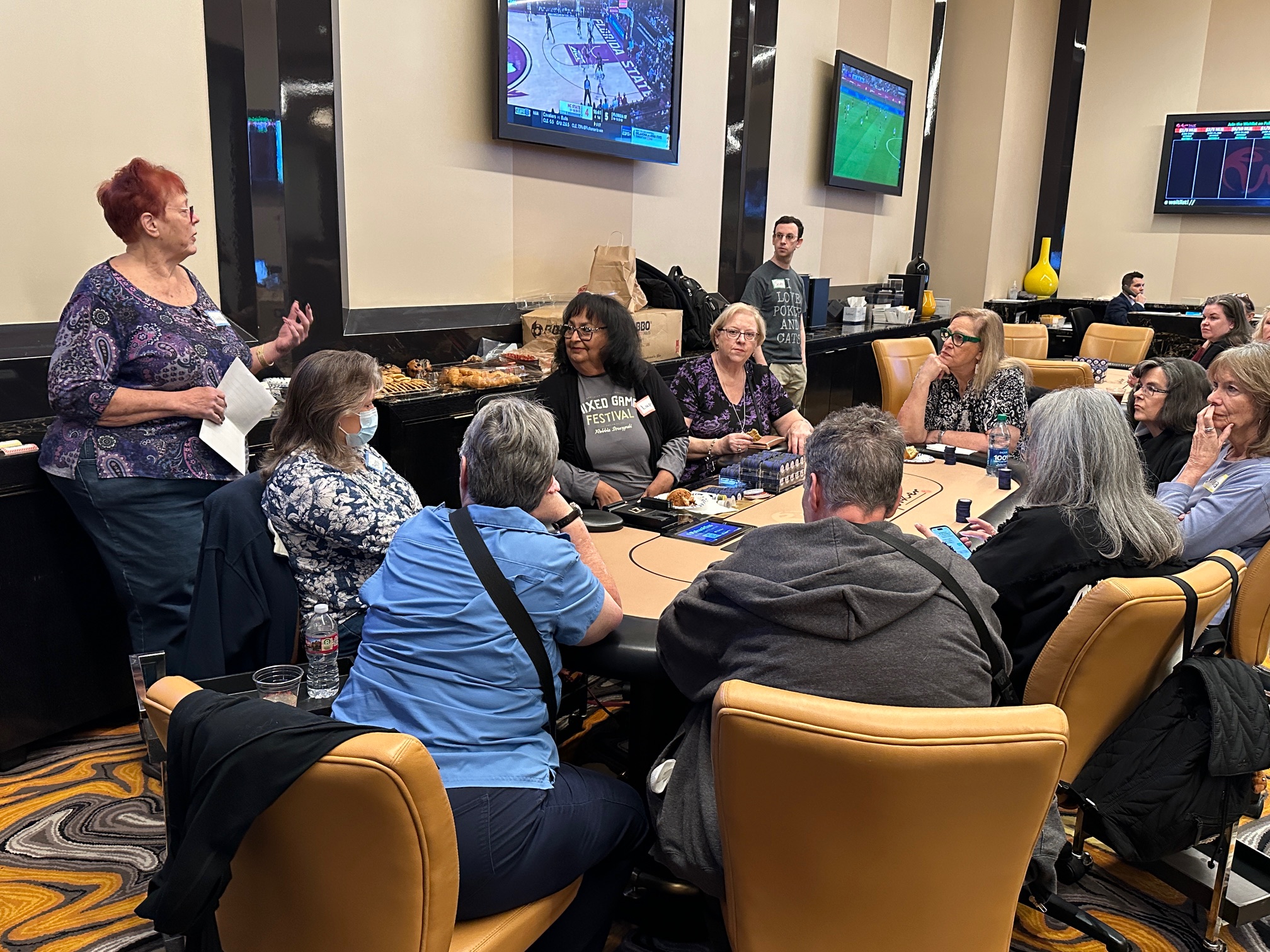
Linda Johnson lecturing at a previous Mixed Game Festival Women’s Wednesday event
“There’s so much more to poker than just boring old Texas Hold’em. Triple draw games, like 2-7 and A-5, are really exciting and it’ll be a lot of fun to introduce them to ladies who’ve never had the pleasure of trying them before!” said Jan Fisher.
“In the past, we’ve staged two Women’s Wednesday events at the Mixed Game Festival, and I have enjoyed teaching dozens of ladies (and a few gentlemen) Stud and Flop game variants. Now it’s time to get into Draw game variants! I always enjoy teaching poker to people eager to learn, and the Mixed Game Festival presents an excellent learning environment,” said Linda Johnson.
“Join us for this great opportunity to expand your game knowledge. Every new poker variant you tackle isn’t just a fun diversion — it’s a tactical training ground. By forcing you to think differently, these lessons will instantly level up your strategic instincts, giving you a powerful, unpredictable advantage in your regular game play. Let’s conquer the triple draw, together!” said Lupe Soto.
Leon Wheeler, Director of Poker Operations at Resorts World, added that “We are proud to welcome back the Mixed Game Festival, featuring leading women in poker and dedicated mixed game instruction designed to empower and inspire female players. We have long been supporters of women in poker and are delighted to host this exceptional event once again.”
Space is limited, so be sure to click here and reserve your spot in advance, ensuring that you’ve got a front row seat to learn a couple great mixed game poker variants from three of poker’s finest and most legendary instructors.
*Mixed Game Festival XII’s traditional $4/8 mixed cash games will begin at 12pm as well.