Why does the same player who correctly folds to a river bet at $25/$50 call the identical spot at $1/$2?
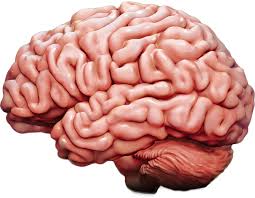
The answer reveals poker’s most exploitable edge: human decisions optimize brain reward, not chip EV.
Brain Reward as Final Common Pathway
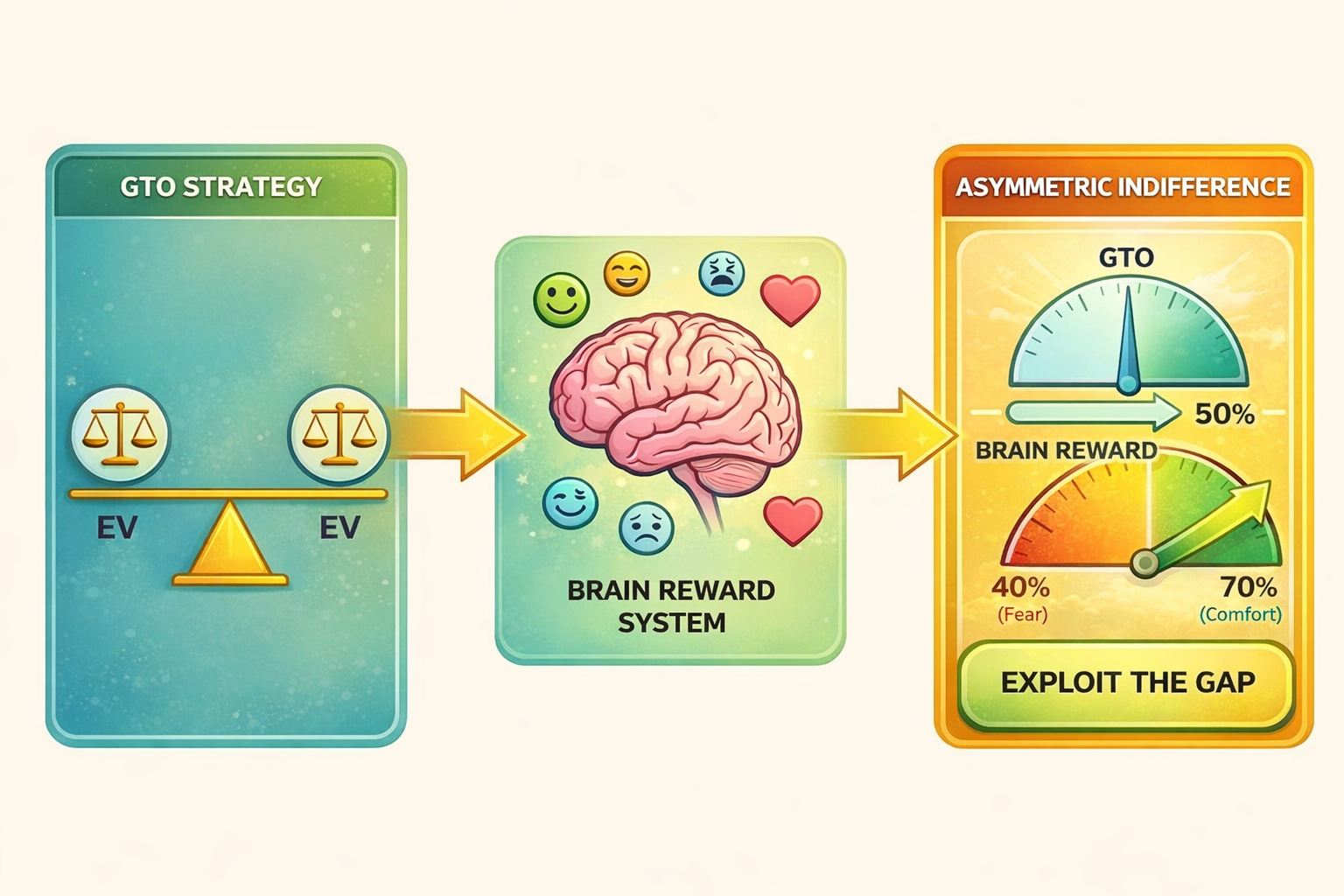
Poker decisions emerge from two forces running in parallel. One is strategic calculation: pot odds, ranges, and frequencies. The other is the brain’s reward system.
While we may consciously think in terms of EV when we compute pot odds and ranges, our final decision is filtered through how we expect different outcomes to feel. This includes the relief of avoiding a loss, the satisfaction of a good fold, the thrill of a successful bluff, or the validation of a hero call.
I’ll refer to this internal payoff as the expected “brain reward” (sometimes called neural currency). It is the final common pathway where all inputs converge and a decision is made.
Crucially, the expected brain reward often differs from the actual brain reward. For example, we may expect “getting unstuck” to feel like a huge win, only to discover that once it happens, the emotional payoff is far smaller. Both of these differ from chip EV. What matters is that the expected brain reward is what drives the decision in real time. Stronger players tend to align this expectation more closely with EV, but it is never eliminated entirely.
Importantly, this is not just about emotion. Many disciplined players suppress emotional impulses well, yet still deviate from chip EV–optimal lines for practical reasons such as avoiding an ATM trip, preserving a final buy-in, or locking up a winning session. Brain reward includes all sources of utility beyond chips, whether emotional, practical, or personal.
Asymmetric Indifference
This leads to Asymmetric Indifference: systematic deviations from GTO equilibrium that are not mistakes, but rational optimizations based on brain reward rather than pure chip EV.
These show up in two common ways.
- Individual asymmetry: A player’s brain-reward priorities create consistent personal deviations. Folding a slightly plus-EV spot to avoid variance or stress is not irrational. It is an optimization of comfort over chips.
- Role-reversal asymmetry: The same player may have different indifference points depending on whether they are betting or calling, because the psychological framing of risk is different in each role.
This asymmetry creates exploitable gaps that game theory alone cannot predict.
The Push-Away Exploitation Framework
As an example, a GTO river strategy often tries to make opponents indifferent. Against humans, that goal is misplaced. Instead, we should exploit brain-reward-driven deviations by pushing opponents away from their indifference point in our favor.
Example 1 – Value betting against calling stations
GTO indifference: A 50% pot bet makes them indifferent between calling and folding.
Their brain-reward indifference point: Because calling and being right feels good, they may not reach indifference until around a 70% pot bet.
Optimal exploit: Bet 65% pot.
Result: They continue calling with worse hands while you extract more value. You are deliberately not making them indifferent. You are keeping them in their calling zone.
Example 2 – Bluffing against risk-averse nits
GTO indifference: A large bet is required to make bluff-catchers indifferent.
Their brain-reward indifference point: Fear of calling and being wrong may push that threshold much lower, perhaps around 40% pot.
Optimal exploit: Bluff 45% pot.
Result: They fold hands that are theoretically profitable calls but we lose less when they have a hand that would have called a larger bet.
Principle: Identify where an opponent’s brain-reward indifference point lies, then size your bets to exploit the gap between that point and GTO.
Dynamic Indifference Points
These indifference points are not fixed. They shift with fatigue, recent wins or losses, and session dynamics. After a bad beat, some players call too much. Late at night, others fold far too often. The exact threshold moves, but it rarely disappears entirely. The edge you’ll get at the felt comes from noticing where that threshold sits right now.
Conclusion
Asymmetric Indifference explains why GTO beats humans but not maximally. Humans do not optimize Nash equilibrium. They optimize brain reward. Every player has discoverable indifference points shaped by psychology, context, and comfort with risk.
The goal in poker is not to make opponents indifferent to your maneuvers. It is to recognize where their indifference point differs from the math and push them away from it until the mistake costs them chips.
GTO seeks balance. As poker players, we should seek to exploit the imbalance between mathematical indifference and human brain reward indifference.