The idea of a poker face has been around since the 1870s, and it’s since become one of the most recognizable parts of playing poker. Players tried to hide their emotions, control actions and reactions, all to avoid giving their opponents any clue about the cards they’re holding.
In live poker, every expression and movement matters, but what happens when the face and body disappear behind the screen?
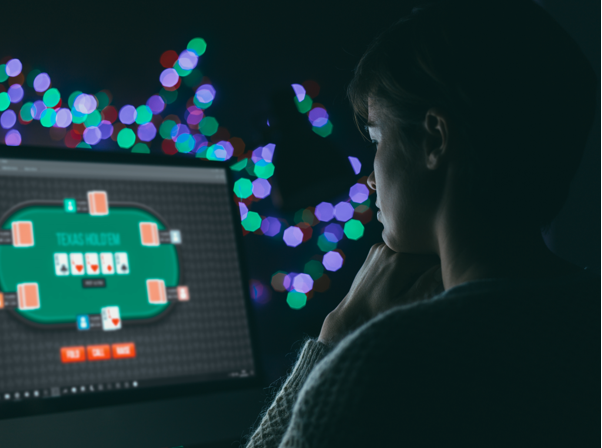
Image source: Depositphotos.com
Shift to the Online World
Today, online poker changes the dynamic completely. Each player sits behind their own screen, making it impossible for others to rely on traditional physical tells.
However, in peer-to-peer poker environments, where players compete directly against real opponents rather than a computer-controlled system, understanding human behavior remains one of the most valuable skills a player can develop.
At the same time, online poker has created new challenges for those looking to improve their skills. Whether you are new to the game or an experienced player, you can click here to learn more about P2P online poker and platforms where you can practice noticing behaviors we mention below.
Reading Beyond Physical Expressions
In an offline poker game, you’d look for small physical changes, such as a sudden shift in posture, a strange reaction, or a change in confidence. But online poker removes all such clues and leaves you with certain patterns.
However, you can still read every decision made at an online table, since it provides information. For example, you can observe the amount of time a player takes to act, the way they structure their bets, and how their strategy changes throughout a session.
A player who normally makes quick decisions but suddenly takes much longer on a specific hand may be facing a difficult decision. And a player who usually plays cautiously but suddenly becomes aggressive may be changing their approach based on their cards, their emotions, or their perception of the table.
Keep in mind that a slow decision does not automatically mean weakness, and a large bet does not always indicate confidence. Experienced players look for repeated patterns rather than isolated moments.
Timing Tells: The Online Equivalent of Body Language
Because players cannot see each other, the speed of a decision becomes one of the few immediate behavioral signals you should look into. Quick actions, delayed decisions, and changes in normal timing can sometimes provide insight into a player’s thought process.
Timing tells become more useful when combined with other information, such as a delayed action followed by an unusually large bet.
Betting Patterns Reveal More Than Words
Unlike a live game where conversations and physical behavior may dominate attention, online players often rely heavily on betting habits to understand their opponents.
Some players become predictable because they repeat the same strategies:
- Betting aggressively only when they have strong hands
- Making smaller bets when uncertain
- Changing their style after losing a major pot
- Becoming more passive when under pressure
Recognizing these patterns allows players to adjust their strategy.
However, opponents can adapt. A player who knows they are being predictable may intentionally change their behavior to create confusion, which calls for a layered strategy when it comes to reading actions.
The Emotions Behind the Screen
Regardless of the online environment, players still experience excitement, frustration, confidence, disappointment, or pressure and these emotions influence decisions, sometimes without the player realizing it.
A player who loses a large hand may start making faster decisions or taking unnecessary risks. Another player may become overly cautious after a difficult loss, and a player who wins several hands in a row may become more aggressive because they feel confident.
The Role of Chat and Online Behavior
While chat should never be considered a guaranteed indicator of a player’s strategy, it can sometimes provide clues about their personality and emotional state.
A player who becomes more active after winning or starts expressing frustration after losing may reveal changes in mindset. Others may attempt to influence opponents by creating pressure or projecting confidence.
Improving Your Ability to Read Online Opponents
Reading opponents online is a skill that develops through observation and experience. You can start by paying attention to how your opponents play different sets of hands, whether they change strategies or repeat betting patterns, and how they react under pressure.
If you’re new to online poker, try keeping notes; reviewing previous hands can also help identify patterns that are difficult to notice during active play.
Can You Have a Poker Face Online?
Remember, your opponents cannot see your poker face, or whether you are nervous, excited, or frustrated. But they can still see the decisions you make. Today, your online poker face is your consistency.
Maintain the same approach regardless of winning or losing so you’re harder to read. Avoid obvious changes in behavior and make fewer emotional decisions – keep the same betting patterns, avoid reactions in the chat, and remain disciplined after a loss.
The best online poker face is not a lack of expression, but the ability to prevent emotions from influencing your strategy and online behavior.
The Face May Be Hidden, But the Player Is Still There
The rise of online poker changed the way players interact, but it did not eliminate the psychological battle at the center of the game.
A player may be hidden behind a screen, but their decisions still reveal information. Their timing, betting patterns, and reactions create a digital version of the poker face.
The best online poker players are not simply those who understand the cards, but the ones who understand people, even when those people are thousands of miles away and visible only through their actions.
As with everything in life, practice makes perfect. Keep notes on what you noticed, and in time, you’ll likely be able to read any player who logs in to the game.