One of the latest poker books on the market is Rick Gleason‘s 101+ Poker Tips That Actually Work: What The Cards Taught Me After Midnight. Rick discovered poker in 2009 and in 2015 moved to Las Vegas to play live poker regularly. After nearly 11 years living in the city that never sleeps, he decided to compile his version of the most valuable tips for low-stakes tournament and cash game poker players.
Here, we’ll be reviewing the book, as well as including an extensive interview with the author (who is also a Cardplayer Lifestyle contributor), who was kind enough to answer our questions in great detail. In a nutshell, it’s a great book for beginners as well as experienced players — or to give as a gift to someone just starting out their poker journey.
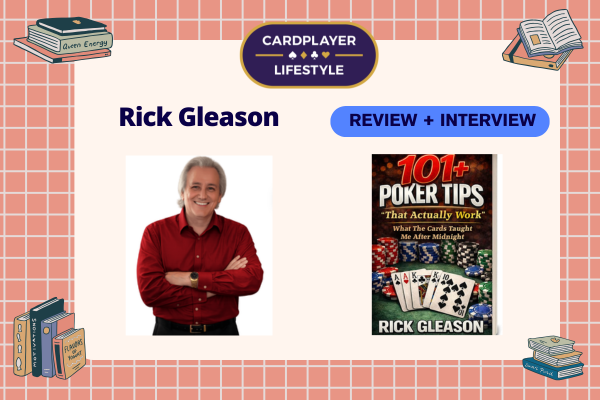
Interview with Rick Gleason
How did the idea of writing the book come about?
The idea for the book evolved slowly over the years while I accumulated hard-earned lessons at the tables. Like a lot of players, when I first started taking poker seriously, I made every mistake imaginable. Some were expensive. Some were embarrassing. A few were both.
Over time, especially after moving to Las Vegas nearly 11 years ago, I began noticing something important: most long-term winning poker isn’t built on flashy bluffs, genius-level plays or knowing the nuances of solvers and GTO. It’s built on discipline, patience, observation, emotional control, and avoiding unnecessary mistakes. In many ways, these fundamentals do most of the heavy lifting.
As I played thousands of hours, studied the game, talked with experienced players, and reviewed my own successes and failures, I kept notes — little reminders, observations, quotes, concepts, and lessons that proved valuable in my games. Eventually, those notes turned into an organized collection of practical poker truths that helped me in my personal game, and in my discussions with others.
At some point I realized there might be value in putting those lessons together in a format other players could actually enjoy reading and could use immediately. I didn’t want to write a complicated textbook about poker that we often see. I wanted an easy-read, something conversational, honest, practical, and relatable. I wanted it to feel like sitting down across from another player and talking about the game.
I wanted mine to teach perspective, discipline, and decision-making from the viewpoint of an everyday, low-stakes player who has lived through the swings, mistakes, frustrations, and occasional victories most poker players experience themselves. 101+ Poker Tips is the result of those efforts.
What type of poker players is your book aimed at?
The book is primarily aimed at recreational and low-stakes No-Limit Texas Hold’em players — especially those who are serious about improving their game. It’s written for the players who fill most poker rooms every day: the $1/$2, $1/$3 and $2/$5 players, the home game regulars, the retirees, weekend grinders, and the men and women who genuinely love the game and want to get better at it.
A lot of today’s poker books are written at advanced levels, often geared toward online professionals and solver-driven play. There’s certainly value in that world, but many everyday players simply want practical advice they can actually apply the next time they sit down at a live table. That’s who I wrote this for.
It’s also aimed at players who understand that poker is about far more than the cards they’re dealt. Discipline, patience, emotional control, bankroll management, observation, and decision-making under pressure are themes that run throughout the book because those are the things that quietly separate long-term winners from long-term losers. At the same time, beginners can absolutely benefit from it because the writing is intentionally conversational and accessible. In many ways, this is the kind of book I wish someone had handed me years ago when I first started taking poker seriously.
Of the 107 tips you give in the book, which three do you think are the most important?
That’s a tough question because many of the tips work together, but if I had to narrow it down to three core ideas that quietly sit underneath almost everything else in the book, I’d probably choose these:
- “Start By Playing Fewer Hands”: That’s Tip #1 for a reason. Most low-stakes players simply play too many hands and put themselves in too many difficult situations, costing themselves precious chips. Discipline is the foundation of winning poker. Playing fewer hands immediately improves decision-making, reduces costly mistakes, and puts players in stronger positions more often. It’s probably the single fastest improvement many players can make.
- “Good Folds Deserve Respect”: Poker culture tends to glorify hero calls and dramatic moments, but long-term winning poker is often about the hands you don’t play and the money you don’t lose. One disciplined fold can save an entire session. Ego makes players call. Experience teaches them when to let go. I think learning to fold correctly is one of the hardest and most valuable skills in poker.
- “Decisions Matter More Than Results”: That idea might be the emotional backbone of the entire book. Poker can be brutal because good decisions don’t always produce immediate rewards, and bad decisions sometimes bring lucky results. Players who become obsessed with short-term results usually struggle emotionally and financially over time. The players who survive — and eventually succeed — are the ones who stay focused on making consistently good decisions regardless of temporary outcomes.
If a player truly understands those three concepts — discipline, folding more often, and making good decisions — a lot of the other lessons in the book begin falling into place naturally.
You moved to Las Vegas several years ago to play poker. What were the best and worst parts of that experience?
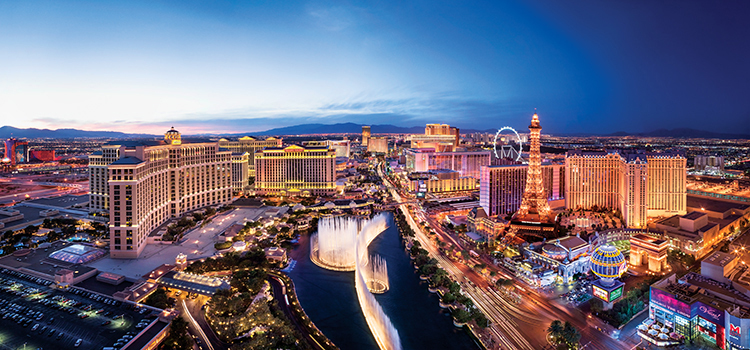
The best part about moving to Las Vegas was immersion in the game. Las Vegas is poker’s grand stage. The game never sleeps here. Every poker room has its own personality, rhythm, characters, and unwritten rules. You can sit in any of the beautiful poker rooms in this city and find yourself playing against tourists, retirees, professionals, locals, international visitors, and occasionally someone who probably shouldn’t still be awake at 3 a.m. It’s endlessly fascinating.
Las Vegas also forced me to become honest about my game. Back when I lived elsewhere, it was easy to think I understood poker pretty well. Then I arrived here and quickly discovered there are levels to this game — and some players operate on levels you haven’t even considered yet. Vegas humbled me fast. In retrospect, that was a gift.
Another great part was the people. Poker introduced me to friends and personalities I never would have met otherwise. Some of the smartest, funniest, kindest, and most interesting people I know today came from sitting around poker tables late at night talking about the game, our varied interests, life, and human nature.
The worst part? Variance and emotional wear-and-tear become very real when poker is constantly around you. Losing streaks don’t feel theoretical anymore. Long downswings test your confidence, patience, discipline, and ego. There were nights driving home down Las Vegas Boulevard when I wondered whether I was improving or simply paying expensive life-long tuition just to play the game.
Las Vegas can also quietly consume people if they aren’t careful. The city is built around action, stimulation, and temptation. Poker itself can become emotionally exhausting if you lose balance. You have to learn how to step away, reset, find other interests, and maintain perspective. But ultimately, I’m grateful I did it. Las Vegas made me a far better student of poker — and honestly, probably a better student of people as well.
What was the most bizarre or incredible thing you saw at a Vegas poker table?
Las Vegas poker rooms are full of bizarre moments. The game attracts every personality type imaginable, especially after midnight. Over time you see a lot of bizarre, even incredible things happen around you. But one moment stands out because it perfectly captured the strange humanity of poker.
I was playing in a late-night cash game when a player at the table lost a very large pot in brutal fashion — one of those hands where he got all the money in as a huge favorite and still somehow lost to that miracle card on the river. The kind of beat where the entire table collectively exhales.
Some players would curse, storm off, or at the very least complain. Instead, this guy just sat there silently staring at the board for several seconds. Then he calmly reached into his backpack, pulled out a harmonica, and started playing it right there at the table. Not joking. The entire table froze. Dealers were laughing. Players were confused. One guy thought he was having a breakdown. Another player tossed him a $5 chip like he was performing on Fremont Street. The strange thing was… the harmonica playing was actually pretty good. After about 30 seconds, he quietly put it away, stacked what little chips he had left, looked around the table and said, “Well folks… sometimes the blues just arrive early.” Then he laughed, rebought and kept playing like nothing happened.
That’s Las Vegas poker in a nutshell. The city is full of gamblers, dreamers, heartbreak, eccentric personalities, and moments you honestly couldn’t invent if you tried. Poker rooms become this strange crossroads where people from completely different lives all collide for a few hours under bright lights chasing the same thing. And every once in a great while, somebody pulls out a harmonica after getting rivered.
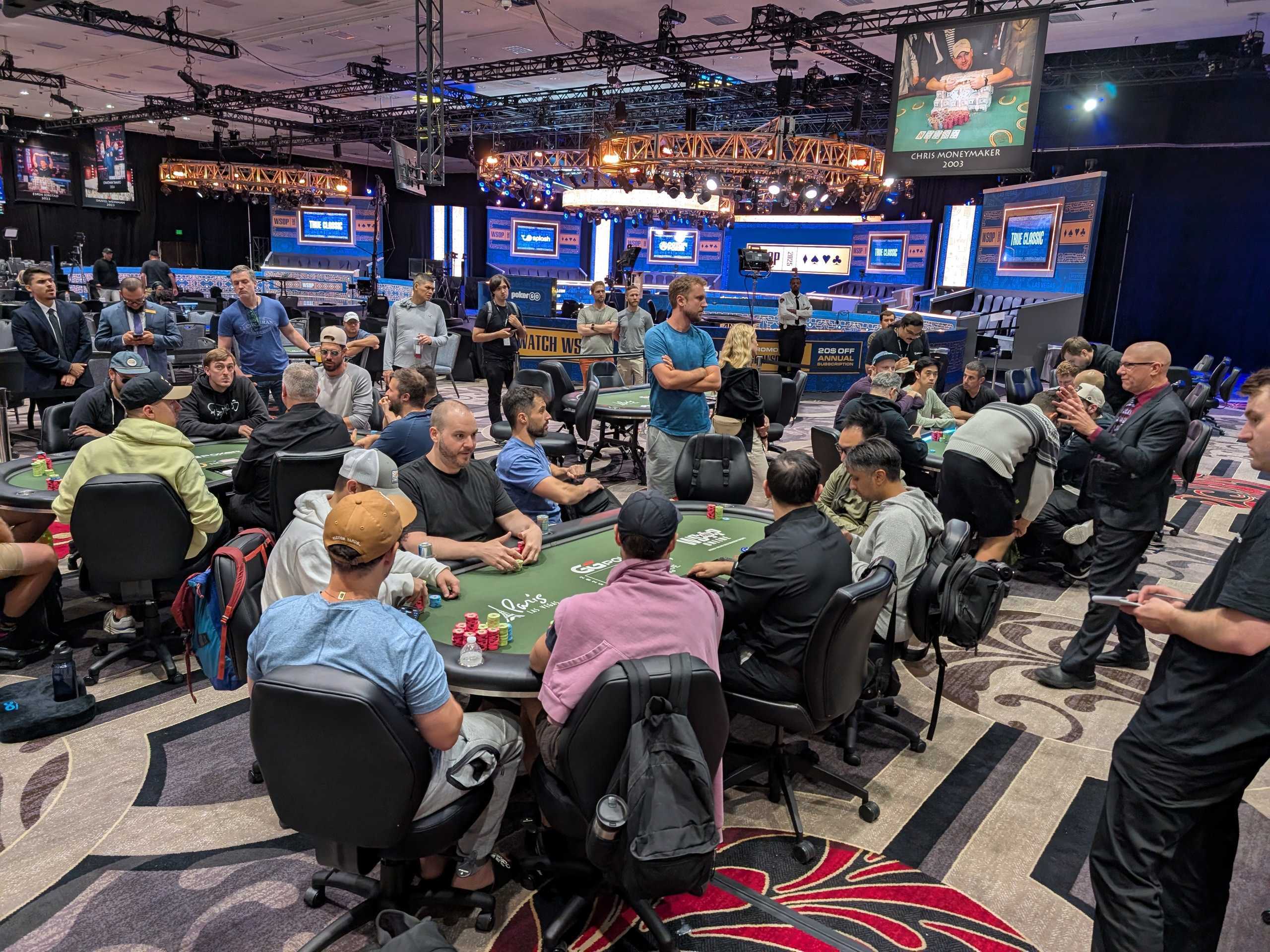
The WSOP is just around the corner. Where in Las Vegas do you recommend playing cash games and tournaments?
The beautiful thing about Las Vegas during the WSOP is that the entire city becomes one giant poker ecosystem. Even if you never enter a bracelet event, it’s arguably the best time of the year to play poker anywhere in the world because the games become larger, softer, and far more action-oriented.
With the WSOP in town, I love playing cash games at the Paris, held in one of their massive ballrooms, alongside various events of the WSOP. While the Paris doesn’t normally have their own poker room, they do have their own chips and I’ve found those games to be some of the most profitable games during the entire year.
As for tournaments, obviously the WSOP itself at the Horseshoe and Paris is the center of the poker universe during the summer. Even lower buy-in events can create unforgettable experiences. Walking through those tournament areas during the Series feels like entering poker’s version of the Olympics.
That said, not every player needs to fire huge buy-ins chasing bracelets. The Wynn, Venetian, Orleans, and other poker rooms all run outstanding daily and summer tournament series that are smaller, friendlier, and sometimes offer better value for average, recreational players.
READ MORE: The 2026 Seniors Vegas Poker Summer Schedule
Honestly, for many visitors, the best experience is mixing both worlds: play a few tournaments for the experience and spend the rest of your time in cash games where you can control your hours, manage variance a little better, and simply enjoy the atmosphere, and the people.
One final thought: during the WSOP, table selection matters more than ever. The city fills with dreamers, tourists, qualifiers, bucket-list players, and people chasing poker glory. Somewhere in every room there’s a fantastic game running — and somewhere nearby there’s a lineup full of killers protecting every chip like it’s oxygen. Learning the difference is part of the skill of surviving Las Vegas in the summer months of the World Series of Poker.
What are the most common mistakes you see at cash game tables?
The most common mistakes I see in live cash games are rarely complicated strategic errors. Most are emotional, discipline-related, or rooted in impatience. If I had to narrow it down, here are the biggest leaks I see over and over again:
- Playing Too Many Hands: This is probably the grand champion of poker mistakes. Players get bored, curious, impatient, or simply want action. Weak starting hands create difficult situations later, especially out of position. A lot of losing poker begins long before the flop ever arrives.
- Calling Too Much: Live low-stakes players love to call. They call because they’re curious. They call because “it wasn’t that much more.” They call because folding feels emotionally unsatisfying. Calling without a clear reason quietly drains stacks over time. In many poker rooms, folding — especially to a min-raise — is as rare as a quiet Friday night on The Strip.
- Ignoring Position: Position quietly prints money in poker, but many recreational players underestimate how powerful it really is. They enter pots too loosely from early position, then spend entire hands reacting instead of controlling the action.
- Bluffing The Wrong People: A surprising number of players (and me among them) make the mistake of trying to bluff opponents who clearly hate folding. Some people come to Las Vegas to gamble, socialize, and to see cards — not to fold top pair — even with a rag kicker — because the board texture says they should.
Ironically, winning poker usually feels pretty boring. The strongest players aren’t constantly pulling off miracles. They’re simply making fewer expensive mistakes than everyone else, hour after hour, session after session.
What has poker taught you over all these years?
Poker has taught me far more about life than I ever expected when I first started playing the game years ago. First, it taught me humility. Poker has a way of exposing ego. The game doesn’t care who you are, what you do for a living, how intelligent you think you are, or how well things went yesterday. If you stop learning, stop adapting, or stop being honest with yourself, poker eventually returns to collecting tuition.
It taught me patience. In life, just like in poker, forcing things usually creates problems. Good opportunities arrive in their own due time. The discipline to wait for those better situations — instead of chasing mediocre ones out of frustration or boredom — is valuable both at the table and away from it.
Poker also taught me emotional control. You can make all the right decisions and still lose for long stretches. That’s a hard lesson. Learning how to stay calm, think clearly under pressure, and avoid emotional reactions has probably helped me as much in life as it has in poker.
It taught me accountability too. Poker removes excuses over time. Eventually you realize blaming luck, the cards, the dealer, or variance only delays growth. Long-term results usually reflect long-term decision-making. That’s true in poker and in life.
But perhaps most surprisingly, poker taught me about people. Sit at enough poker tables and you’ll meet every kind of personality imaginable — wealthy and broke, kind and arrogant, brilliant and reckless, lonely and outgoing. Under pressure, people reveal themselves. Poker strips away a lot of pretense.
And finally, poker taught me perspective. After enough years in the game, you realize, as easy as it is to lose track… the money matters. However, the memories matter too. Some of my favorite moments had nothing to do with winning pots. They came from the conversations, friendships, laughter, strange late-night moments, and the shared experience of people sitting around a table trying to navigate uncertainty together.
That’s really what poker is underneath it all: decision-making under uncertainty. Life works the same way. We rarely have all the information we want. We do our best, hopefully learning to live with the results, learning from our mistakes, and keep moving forward one decision at a time.
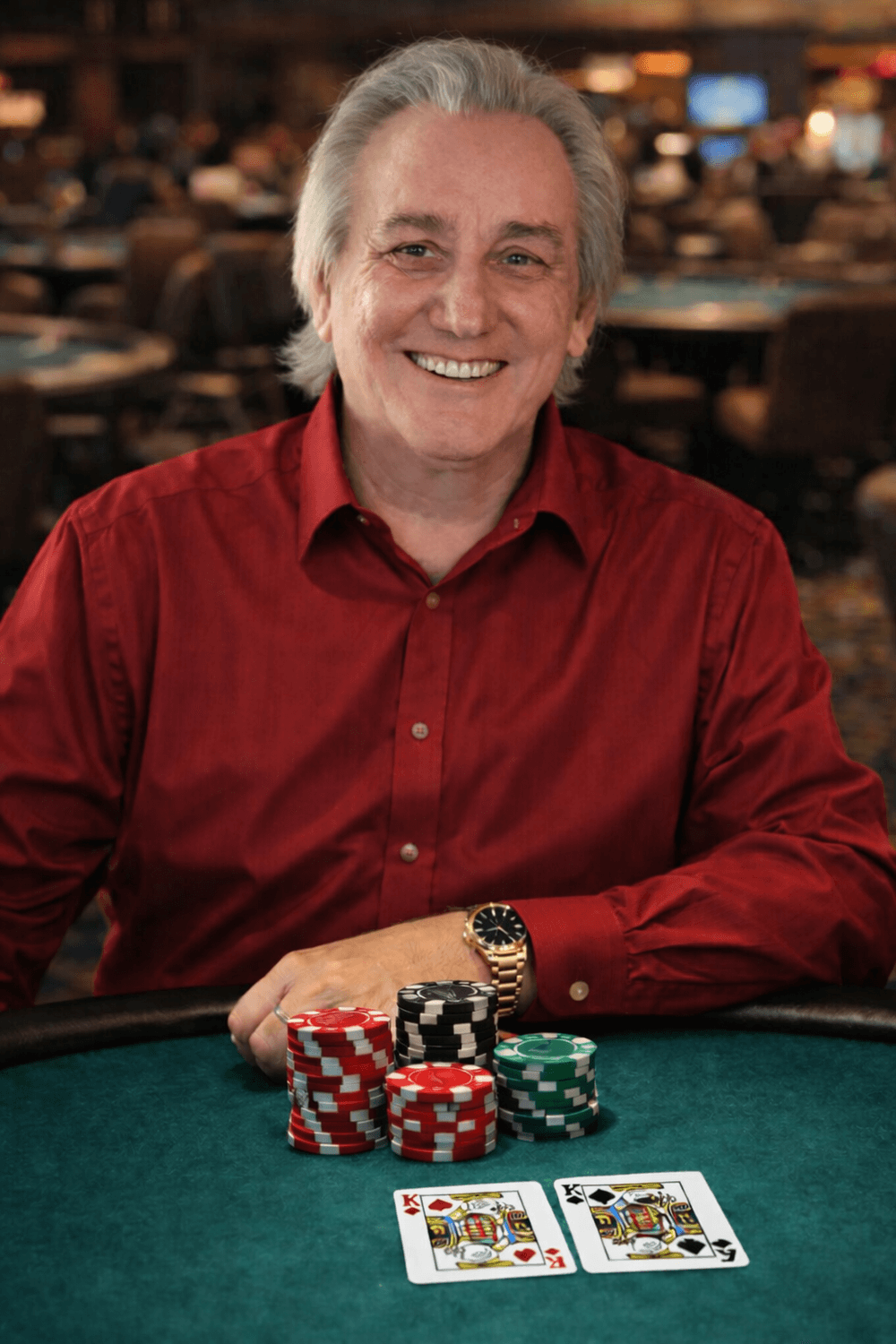
What reasons would you give our readers to read your book?
I think readers will enjoy this book because it’s practical, honest, and written from the perspective of someone who’s actually lived the grind of low-stakes poker for years — not from the viewpoint of a high-stakes poker celebrity, but from the everyday realities most players actually experience at the table.
This isn’t a theory-heavy book filled with charts, complicated math, or solver jargon. It’s a conversational field manual built around real-world situations most poker players actually face in casinos, cardrooms, and home games every week.
The book focuses on the things that truly determine long-term success: discipline, emotional control, patience, bankroll management, reading people, avoiding costly mistakes, and making better decisions under pressure. Those are the lessons poker keeps teaching all of us — usually the hard way.
I also think readers will appreciate that the tips are short, direct, and easy to absorb. You can read a few pages before a session, revisit certain sections after a tough night, or simply open the book at random and find something useful. It was intentionally designed that way.
Most importantly, I wrote it in my own voice. Hopefully one that feels approachable and relatable. It’s me, talking to my poker friends. I’m not pretending to have conquered poker. I’m still a student of the game myself. These lessons were learned through years of experience, mistakes, conversations with other players, and thousands of hours at the tables in Las Vegas and beyond.
If the book helps someone avoid a few expensive mistakes, think more clearly during difficult moments, or simply enjoy the game more, then it’s done its job, and has easily more than paid for itself.
Book Information: By The Numbers
- Title: “101+ Poker Tips That Actually Work: What The Cards Taught Me After Midnight”
- Author: Rick Gleason
- Year of publication: 2026
- Pages: 110
- Prices: $5.95 Kindle / $12.95 Paperback
- Where to buy it? Amazon
- You can read an excerpt of the book here

Poker Book Review: 101+ Poker Tips That Actually Work
The first thing to clarify is that this book is not intended for professional or semi-professional players. It is written for players who participate in tournaments and low-stakes cash games, and also for those who are just starting out and beginning to learn the game. For that reason, you won’t find complicated calculations, hand range charts, or solver solutions in this book. What you will find are over 100 tips that will help you make better decisions at the tables.
The book is divided into nine parts:
- The Foundations: discipline, position & intent
- Hand strength, pot control & value
- Bluffing, pressure & storytelling
- Reading players, patterns & tables
- Math, ranges & structures
- Mindset tilt & emotional control
- Bankroll, stake & long-tern thinking
- Improvement study & longevity
- The core truths of winning poker
Players just starting out in their first games or tournaments will find excellent advice in this book, providing a solid foundation and helping them win chips in favorable situations while avoiding unnecessary losses. For cash game players, the book’s tips will help maximize profits and minimize losses.
The advice is presented in a direct and simple way, and includes a few hands to reinforce the concepts. The author also adds personal anecdotes and touches of humor that make the reading much more entertaining. The book is never boring and can easily be read in one evening.
It’s an ideal gift for someone starting out in poker, home game players, and also for regular tournament and low-stakes cash game players. More experienced players can also use it to refresh their knowledge of the fundamentals that are essential for success at the poker table.
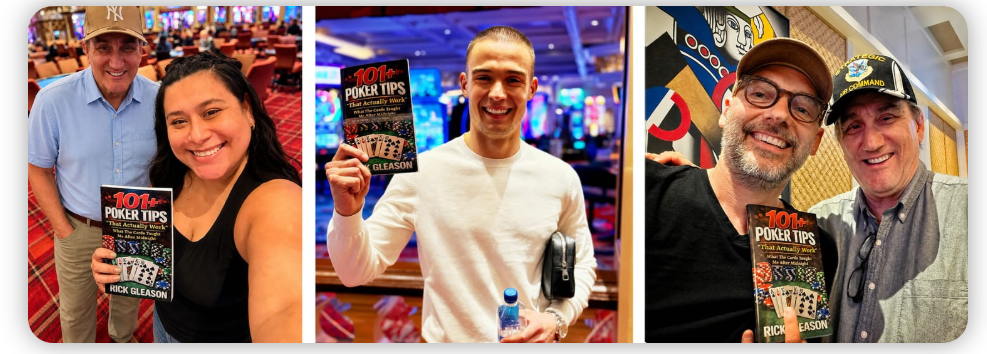
Ed. note: Rick Gleason will be doing a book signing at Mixed Game Festival XIV, Wednesday June 3, at 12pm at Bellagio Las Vegas.