Is playing live poker something that intimidates you or is inconvenient due to travel circumstances? Would you rather practice poker alone or play poker without real money until you’re ready to take on human opponents?
While solo poker may not be for everyone, there are significant benefits that even casual players can enjoy when taking part in poker study at home — not to mention the fun involved in analyzing hands without having to depend on others.
In this article, we’ll look at various ways you can practice poker alone, at home, without any real money investment or risk.

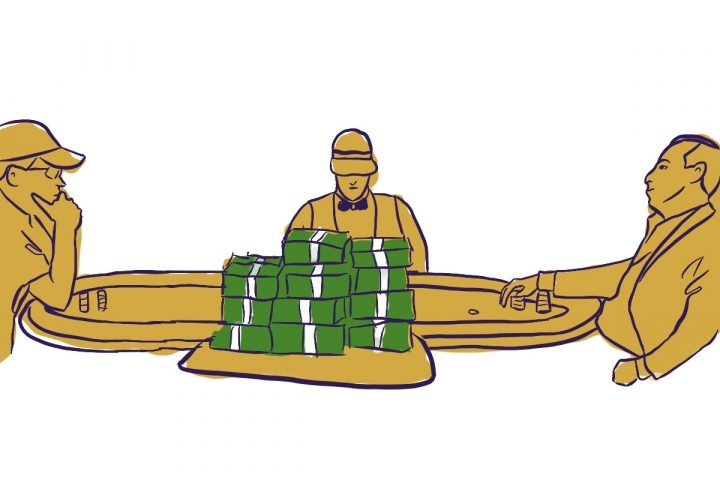
Illustrative image, created using Grok
Top 7 Tips to Practice Poker Alone
To get started playing poker at home for free, you’ll need a few necessities:
- A poker playing surface (this can be an actual poker table or any flat surface)
- A deck of poker playing cards
- Poker chips if you want to simulate per-round bets
Once those basics are taken care of, you’re ready to get started. You can play solo poker for free and carry out individual practice tasks as follows.
Simulate Poker Dealing and Betting Rounds
While these are very basic mechanics that go hand-in-hand with any live poker game, you can learn how to deal poker (and how to place bets) on your own.
Unfamiliar with how to play Texas Hold’em?
All you have to do is shuffle your deck of 52 cards and start dealing would-be hands around the table.
Rotate around the table (starting to your left), and deal one face-down card to each player — then repeat the process until all supposed players have two face-down cards.
If you’re practicing by yourself, you can simulate betting rounds, or simply jump to the “flop” of three, face-up community cards if you just want to learn how to deal Texas Hold’em hands.
There’s one round of betting after the flop, then another after the face-up “turn” (fourth community card), then one final betting round after the face-up “river” (fifth community card).
Learning the mechanical nature of how different poker games are dealt, including all unique betting rounds, will help you gain a more profound understanding for each game.
Practice Heads-Up Play
Practicing heads-up play alone at home is a great way to study poker effectively.
If you choose to deal the cards face-up, then you can contemplate — without any time limits — how each player might act in accordance with the cards that the imaginary players receive. Crazy as this might sound, believe it or not it’s one of the ways the late, great Doyle Brunson used to study — long before we had modern day tools, apps, training sites, odds calculators, and the like.
This can be extremely helpful to learn which hands might quickly fold in games like Seven Card Stud, where players must use their face-down cards along with their own face-up door cards to make the best 5-card hand.
“Stud” games (where no drawing occurs) can be a lot of fun to play in-person if you’re lucky enough to find them. And once you practice alone for a few “make believe” hands, you’ll quickly see why folding during the “early streets” is somewhat common in these types of poker variants.
Hand History Review
While this may seem counter-intuitive for playing poker by yourself, you can always deal one of the imaginary player’s cards face-down to begin a hand. Once you’ve done so, you can play out your own face-up hand and place chips into the pot as you normally would.
Then, once you’ve gone through all the steps and betting rounds for your face-up hand, you can “rewind” to any point. This will allow you to analyze how your action might have been answered once you’ve looked at the other imaginary opponent’s hole cards.
As Poker Hall of Famer Barry Greenstein referenced in his book Ace on the River, the best possible way to play a hand is to have an accurate range for not only your own hole cards, but also those of your opponents.
So while you won’t be able to gain any information from an practice opponent’s potential betting behaviors by using this method, you will be able to get into the habit of always considering what your opponents may have when it comes time to play for real money.
Use Poker Apps When Practicing Poker by Yourself
Nowadays, the use of poker apps is essential when practicing poker alone, as you can enter hole cards and community cards on your own time — without any rush or pressure from real-life opponents.
What were the exact odds of hitting your flush on the river given all the cards that were dealt? Were you already winning/losing the hand at showdown before the final card was dealt?
You can quickly find precise online calculations that answer these questions. Card calculators are typically free to use. In fact, most of the popular poker hand calculator tools don’t even require a sign-up or registration to access.
Click and drag (or tap and drag) individual cards to enter them in the corresponding slots and the calculations will update in real time.
There are tons of free poker resources available to you at all times, even if you’re playing solo poker in the comfort of your living room or home office.
Sign Up for Poker Training Sites
Poker training sites are among the very best resources for learning how to study poker effectively. If you’re enrolled with one, you can often submit any hand history for evaluation… even if it’s the result of playing poker alone.
If you can’t get to a casino regularly, a subscription to a poker training course will ensure you have 24/7 feedback even when you’re away from the brick and mortar felts.
If you can’t find a home poker game in a pinch, there will always be poker hands for you to study online with the assistance and guidance of one or more poker instructors.
Learn Important Poker Probabilities and Odds
A player’s time is limited when playing against human opponents live or online. But this is different if you’re playing poker alone.
You won’t have to stress about time banks or grouchy, impatient opponents. Learn poker probabilities and odds that are necessary to know if you want to improve your skills on your own time.
One of the easiest concepts to pick up as a beginner is pot odds in poker, since so many of the decisions in the “Fixed Limit” format are relatively simple (when compared to “No Limit” formats) to calculate.
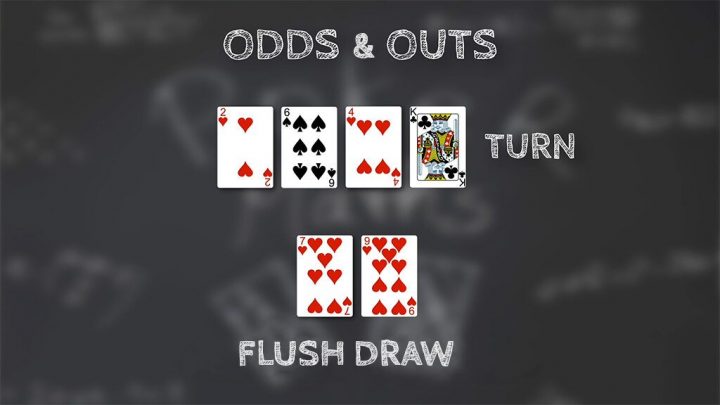
Is your imaginary opponent holding door cards that are four-to-a-straight in a 7 Card Stud game? Meaning that you’ll need to rely on hitting a flush on the river card to win at showdown?
If lots of bets have already been placed into the pot, then the choice to “call” a single sixth street is pretty obvious.
Before each card is dealt in a solo poker game, take the time to calculate pot odds along with the odds of hitting certain hands based on how many cards remain in the deck. You’ll thank yourself for using this “practice poker alone” time to level up your skills.
Play For Free, In Person or Online
The easiest way to entice a human opponent to join an impromptu game is to offer to play for free. There are numerous options that you can use as substitutions for chips, and the action can be started/stopped at any time without any monetary risk.
Online poker is an even better resource for finding a game when you’re tired of practicing poker by yourself. Simply join a site that’s available in your area and choose “play money” to get started — again, with no real money risk.
If your “play money” balance starts to run low, most sites will allow you to casually reload every few hours without any purchase.
In general, the action at online play money tables ends to be “looser” than real money games, which gives you more opportunities to see what your opponents had at showdown (even if you, personally, folded your hand).
Summary: Playing Solo Poker to Improve Your Skills
If you take the time to practice poker even when there are no human opponents to be found, you can reap benefits that might take many more hands to acquire if you’re playing in a real life, real money situation.
Take advantage of the fact that there are no time limits when playing solo poker. Work on studying concepts and calculations that every poker will need to know in order to win at the tables when the time comes to wager real money!