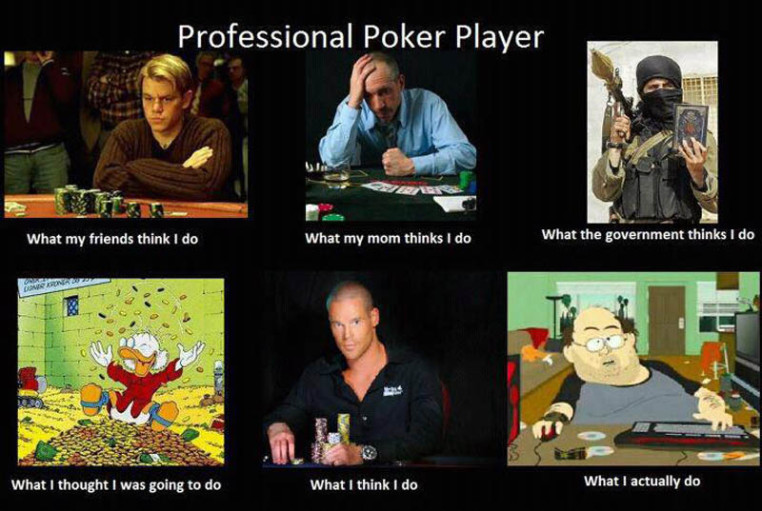
To the casual observer, the life of a professional poker player probably seems like a glamorous cycle of high-stakes bluffs, massive payouts, and unreadable expressions under bright casino lights. The reality of the modern game, however, is a relentless and highly structured grind that stretches across multiple time zones, formats, and screens.
Surviving at the highest stakes demands supreme discipline, an ironclad daily routine, and a constant hunger for a mathematical edge. Here is a look at what a standard 24 hours actually entails for the players sitting at the absolute top of the poker food chain.
Leaving the Backroom Behind
Forget the cinematic clichés of the old-school rounder. You know the type: sitting in a dark card room, nursing a scotch, and waiting for an opponent to give away a physical tell. The era where legends like Doyle Brunson could dominate marathon cash games on pure street smarts and raw intuition is well and truly in the rearview mirror.
Today’s poker landscape features an entirely different breed of competitor. We are looking at mathematical wizards like Kevin Rabichow, who treat the game far more like high-frequency trading than a weekend punt at the tables. For the modern elite, the edge isn’t found at the bottom of a glass. It is built on brutal data analysis, physical endurance, and absolute discipline. The sheer amount of maths involved would make many gamblers’ heads spin.
Morning: Macros and Mindset
If you reckon a professional poker player rolls out of bed at two in the afternoon with a headache, you are living a few decades in the past. Real preparation starts hours before anyone takes their seat.
Just look at Daniel Negreanu’s famous World Series of Poker vlogs. His mornings are a masterclass in strict routine. We get a front-row seat to early alarms, heavy gym sessions, and exact vegan meal prep designed to keep his blood sugar stable during a gruelling 12-hour tournament. He understands that physical stamina dictates mental sharpness at the felt.

Then you have someone like Phil Ivey. Often considered the greatest all-round player to ever touch a deck of cards, Ivey underwent a massive lifestyle shift in recent years. He now places a heavy emphasis on daily meditation, golf, and yoga. It is no longer just about knowing the maths. It is about centring the mind and managing the immense psychological stress that comes with high-stakes variance. For these top-tier professionals, the morning is all about fortifying their bodies and minds before the real war begins.
Midday: The Digital Grind and High Volume
By the time midday rolls around, the focus shifts entirely to the digital arena. For analytical crushers like Phil Galfond, this means settling into a multi-monitor setup and firing up several high-stakes tables at an online casino at once. Gone are the days of patiently waiting for 30 hands an hour at a physical casino. Online professionals are processing thousands of hands a day, utilising tracking software to dissect their opponents’ betting patterns in real time.

Then there are the modern streaming titans like Lex Veldhuis. He takes the immense cognitive load of navigating high-stakes multi-table tournaments (MTTs) and cranks the difficulty up by broadcasting the entire grind live on Twitch. Veldhuis is forced to make split-second, high-equity decisions while simultaneously entertaining thousands of viewers in his chat. It requires a level of mental processing and raw volume that would completely overwhelm an old-school live player.
Afternoon: Reset and Recharge
By the time the afternoon hits, the sheer mental fatigue of running complex Game Theory Optimal (GTO) calculations starts to take a serious toll. Even the absolute best in the world cannot maintain that level of intense, analytical focus indefinitely without frying their circuits. High-stakes regulars like Patrik Antonius frequently talk about the importance of getting outside, taking a long walk, and completely disconnecting from the tables to reset the mind. This isn’t just about taking a break; it is a tactical necessity to avoid the mental burnout that claims so many promising careers.
This phase of the day is often treated with the same level of seriousness as the playing itself. It is what separates the long-term winners from those who fizzle out after a few bad sessions. Fedor Holz, for instance, is a massive advocate for using mindset tools and meditation to decompress. He famously uses guided primers to help transition out of the high-intensity headspace required at the tables. Whether it is a quick meditation session, a stint in the gym, or simply “touching grass” for an hour, the goal is to lower the heart rate and clear the mental fog. Without this downtime, the quality of decision-making inevitably plummets, and in a game where small margins are everything, that is a risk no professional is willing to take.
Evening: The Live Arena and Psychological Warfare
As the sun sets, the professional focus often shifts toward the brick-and-mortar casino or local card room. While the digital grind is about efficiency and volume, the live arena is a slow-burning psychological marathon. There is no better example of this transition than Phil Hellmuth. Even as we moved into 2026, Hellmuth proved he could still hang with the elite, kicking off the year with a string of final table appearances in the PGT Last Chance series.
Hellmuth is the master of the live spectacle. He famously utilises “white magic”, a self-branded style of play that relies almost entirely on reading his opponents’ souls rather than sticking to rigid GTO charts. While the younger wizards are staring at their shoes and trying to remain unreadable, Hellmuth is often doing the exact opposite. Whether he is making a theatrical late entrance in full costume or engaging in a legendary “Poker Brat” tirade to tilt his opponents, he understands that live poker is as much about managing the room as it is about playing the cards.
This evening session requires a completely different type of endurance. In a live tournament, you might only see 25 hands an hour, meaning every single physical tell, timing variation, and verbal slip-up carries immense weight. Pros have to remain hyper-focused under the hot lights for ten or twelve hours straight, often with hundreds of thousands on the line. It is a world where intuition and presence still reign supreme, providing a stark contrast to the cold, calculated efficiency of the midday digital grind.
Late Night: Solvers, Simulation, and Recovery
The day does not end when the chips are bagged or the last online client is closed. For the modern professional, this is when the most critical work begins. Growth in 2026 is not about trusting your gut; it is about finding the objective truth through data.
Dominik Nitsche is perhaps the poster boy for this relentless, clinical approach. Nitsche is known to spend several hours every single day purely in study mode. Even after a long session, he will sit down with tools like his own DTO Poker Trainer or PIO Solver to dissect the most interesting hands of the night. If he faced a complex decision in a three-bet pot on the turn, he doesn’t just wonder if he made the right play. He plugs the exact variables into a solver to see what the mathematically correct move was. This radical objectivity is what keeps his edge sharp against a field that is constantly evolving.
READ MORE: Comparing Top Poker Solvers in 2026
However, even the most dedicated solver-wizards understand that the brain is a finite resource. As the night finally winds down, the focus shifts from strategy to recovery. High-performance psychologists working with elite players in 2026 emphasise that sleep is not a luxury; it is a core part of the technical strategy. A brain that hasn’t had seven to nine hours of quality rest is essentially starting the next day with a “frozen account.” Once the hand histories are filed and the simulations are finished, the best in the business prioritise a total blackout to ensure they are physically and mentally ready to do it all again tomorrow.