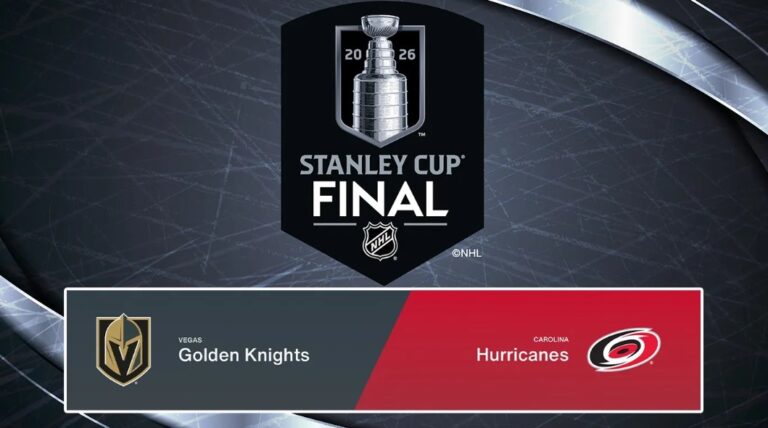
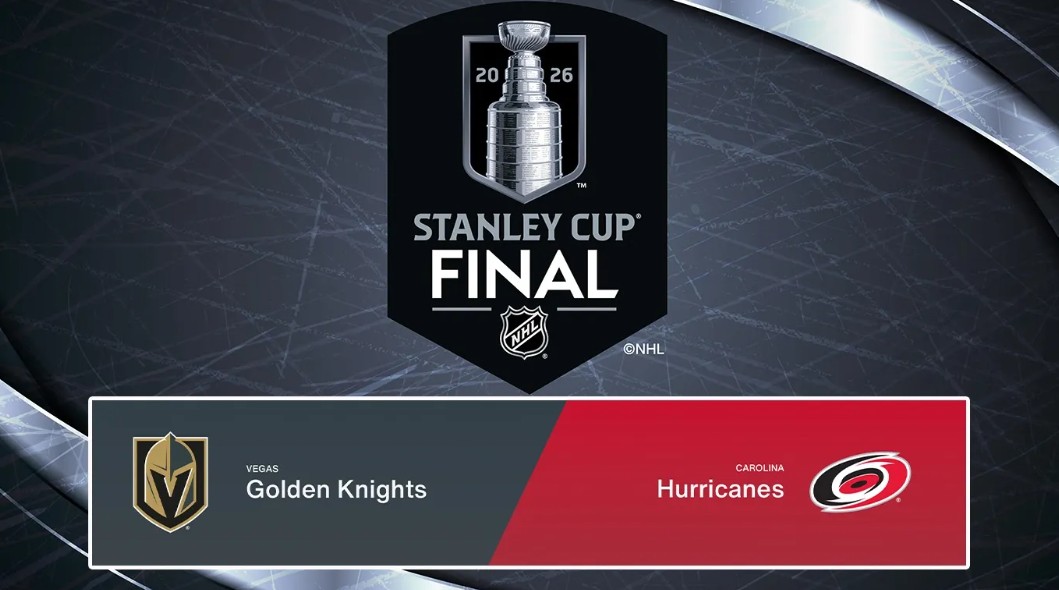
This past summer in NHL hockey, I was treated to our Vegas Golden Knights playing in the Stanley Cup, which they unfortunately lost to the Carolina Hurricanes. Though the loss was disappointing, it was a joy to watch and be a part of the city rallying around the team. Embedded in the series, there were some situations that arose where risk aversion, risk management, and game theory came into play in decisions the coaches had to make that are analogous to decisions we make regularly on the poker felt. Allow me to elaborate on the games my buddy Justin watched with me.
Pre-flop: Face Off, Setting the Stage
For those unfamiliar with hockey, normal play has each team field six players on the ice at any time. Since one player is typically designated goalie, standard play is considered 5-on-5. When a team commits a penalty, they are forced to remove a player from the ice to give a man advantage to the victimized team, yielding an advantage of 5-on-4. Lastly, late in a game, if a team is behind, they may substitute their goalie for an extra attacker, risking an empty net on their own end, but gaining a man advantage in playing 6-on-5.
The Flop: Action on the Ice
Justin and I were watching Game 2 while playing cash games at the WSOP, when a unique scenario occurred. In the game we were watching, the Golden Knights were down 3-2 with 3:29 left in play when Carolina committed a penalty. This gave the Knights a 5-on-4 advantage when they desperately needed to tie up the game late.
Justin and I got excited, and I immediately turned to him and said, “Vegas should gamble here and pull their goalie early to play 6-on-4.” He disagreed, saying it was too risky, but I explained that with the limited time remaining and the advantage they’d have, they’d increase our chances to tie the game enough where it merits the risk of playing 6-on-4 with an empty net.
Mathematical analysis of hockey yields that this indeed would have been the correct decision, even though the Knights elected not to. As played, they did not score during the 2-minute penalty of playing 5-on-4, pulled their goalie with 1:29 to go to play 6-on-5, and then luckily added the tying goal.
Next came Game 3, and towards the end of this game, the shoe was on the other foot. This time Vegas was ahead 4-3, and with 2:55 left, they committed a penalty giving Carolina a 5-on-4 advantage at a crucial junction. I immediately turned to Justin and asked, “Do you hope the other team pulls their goalie and plays 6-on-4, or would you prefer they go conservatively and Vegas defends 5-on-4?” He answered that he preferred Carolina maintained 5-on-4 rather than pulling their goalie and gambling at 6-on-4 with an empty net. I immediately asked him, “If 5-on-4 is better for Vegas to defend against here, why wasn’t 6-on-4 your choice in a virtually similar scenario in the previous game?”
As played, Carolina started the penalty at 5-on-4 and then switched to 6-on-4 with about half the power play remaining, and subsequently scored with the 2-man advantage.
When I highlighted it like this, Justin saw the inconsistency in his reasoning. If he was hoping that Carolina would stay 5-on-4 when given the option to play 6-on-4, he should have wanted Vegas to play 6-on-4 when the same opportunity was presented the game before.
River Analysis and Poker Takeaway
I think the above scenario from the 2026 NHL Finals is illustrative of the errors we are capable of making when we choose to play poker safely rather than optimally. It is easy to see why the conservative choice in a situation can feel appealing. If a coach pulls the goalie and gambles on scoring at that point, he will feel rather foolish if the other team immediately scores on the empty net. In that scenario, he ruins their chances of a comeback. He would also have to answer to the media and fans afterwards asking why he chose to pull in that spot rather than wait, as the “safer” option is to play conservatively and not go 6-on-4.
The counterintuitive result is, mathematical analytics of hockey demonstrates that the team behind would be more likely to win in both of those spots if they played each penalty with a full 6-on-4 advantage for the entire duration. The goalie pull is conceptually dangerous because it leaves the net empty, but it is the better choice because of how much the offense gains in expected value of scoring a needed goal.
In each spot, the coach’s decision reduced their chances of winning by playing conservatively, and they did so in a championship series no less! The media didn’t grill them for why didn’t pull their goalie for the whole power play, even though that’s the correct question since it reduced their chance to win. That being said, that’s exactly what I was screaming like a lunatic in the middle of the poker room.
This type of thinking about risk relates directly to poker. One common situation is as follows: how often are we in a hand where we think we have the best of it, but elect not to raise in case the next card changes who is ahead? Of course, there are times it may be more profitable not to show aggression immediately as we may be better waiting for a safe card, holding off until betting increases, sandbagging until the pot is larger (or a variety of other reasons). But, the question we should always be asking ourselves is “What play here yields the highest long-term profit?” rather than “What play is safest and will yield the least frustration if I do in fact lose?”
When we approach our decisions looking to execute optimal play, we make decisions designed to yield the best result long-term, rather than what may be emotionally effortless in the moment. If NHL coaches can fail to execute this idea correctly at the highest stakes available, we all are capable of falling victim to this in our own poker games as well.
I don’t lose sleep over whether a poker decision I made worked out, but I sure do lose sleep if I don’t maximize profitability of a hand I elected to play conservatively. The key to making the decision correctly is asking the right question initially. In both the cases of us on the felt and these teams on the ice, the approach is simple. The question should be, “Which decision yields the highest expected value?” Once that is established, we can completely ignore the question of “But what if I lose?” since we have already determined the best path. Worrying about the losing scenario coming to fruition is irrelevant. It simply will have no bearing on which option is maximally best, and we can comfortably live with the results.