Anyone who has played cards online has wondered whether the deck was shuffled honestly. Provably fair design answers by letting the player check a shuffle after the fact with a few lines of arithmetic, without trusting the casino’s word.
The Problem Provable Fairness Solves
A conventional online card game keeps its random number generator on the operator’s server. Players see the dealt cards and nothing else. Regulators and testing labs audit the software, but an individual player cannot examine the single hand in front of them. If the house wanted to deal a weaker card after seeing a bet, nothing visible would reveal it.
Blackjack titles that advertise verifiability, including the provably fair blackjack game by Rainbet, normally follow a commit and reveal pattern. The operator commits to the shuffle before the player acts, then publishes the ingredients afterwards, so a changed deck would fail the check.
Players also gain a practical benefit that has nothing to do with suspicion. Disputes over a disputed hand become checkable. Instead of arguing with support staff about what happened, a player can point to a seed, a nonce, and a hash and ask for the numbers to be rerun.
What the system proves is narrow and useful. It shows that the cards were fixed before the bet and were not altered afterwards. It does not describe how generous the rules are, a point returned to below.
Verifiability matters most in games with a hidden state, and card games have one. A roulette spin resolves in a single draw, but a blackjack shoe contains a whole sequence of cards that are all determined at the start. If that order can be tied to a commitment, every later card in the hand is covered by the same proof.
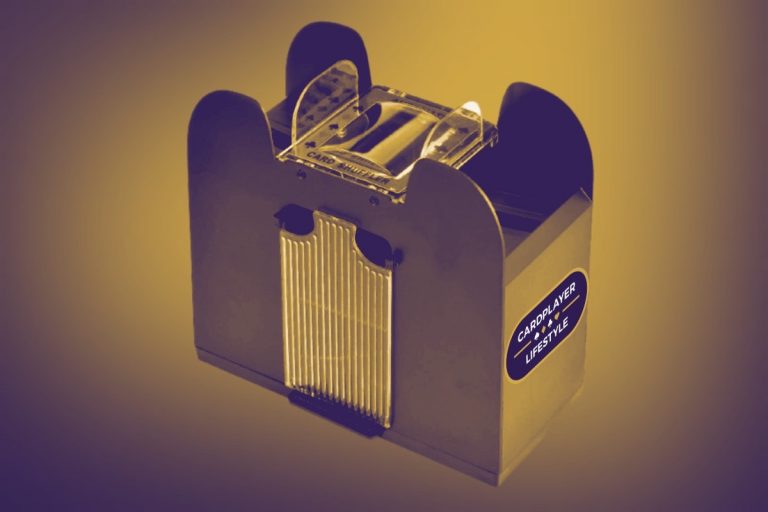
Fairness claims in this area have a long history, from marked decks in card rooms to rigged machines — which is why it’s critical to have a reliable poker shuffler machine in live games — and the design borrows from that history by shifting the burden of proof from the player to the house.
Commit, Reveal, Verify
The routine has five moving parts. The server generates a secret server seed and shows the player only its hash, a fixed-length fingerprint. The player supplies or accepts a client seed. A nonce, a counter that rises with each hand, makes every shuffle different. The game combines the three to produce the deck order.
When the player rotates to a new server seed, the old one is revealed. Anyone can hash the revealed seed and compare it with the fingerprint shown earlier. A match proves the same seed existed throughout. Feeding the seed, the client seed, and the nonce into the published shuffle routine should then reproduce every hand dealt.
The check is strongest when run with a tool the casino did not write. A short script or an independent verifier page removes the need to trust the operator’s own calculator.
Some sites run the verification in the browser, comparing hashes automatically each time the seed changes. Convenient as that is, an automatic tick mark is only as reliable as the code behind it, and players who care about the result can copy the values out and check them elsewhere.
Why a Hash Works as a Commitment
Fingerprints of this kind are typically produced with SHA-256, one of the algorithms in the US government’s Secure Hash Standard. The standard describes such algorithms as secure because it is computationally infeasible to find a message that matches a given digest, or to find two different messages that produce the same one. A casino therefore cannot craft a different seed that fits the fingerprint it already showed.
The output is 256 bits long, giving about 1.16 times ten to the power of 77 possible digests, and changing one character of the input produces an unrelated result. Those properties are what turn a hash from a checksum into a lock the operator cannot reopen after the player has bet.
A common misunderstanding is that hashing hides the seed forever. It does not. A short or predictable seed can be guessed by hashing candidate values until one matches, so operators generate seeds from long random strings. The strength of the commitment depends on that randomness and not on the hash alone.
Turning Seeds Into a Shuffled Deck
Dealing cards takes more than a fingerprint. The game stretches the seeds into a stream of random numbers by hashing them repeatedly with the nonce, then uses those numbers to run a shuffle such as Fisher-Yates, which swaps each position with a randomly chosen earlier one and gives every ordering an equal chance when the numbers are uniform.
The number of orderings is enormous. A 52-card deck can be arranged in about 8.07 times ten to the power of 67 ways, roughly 2 to the power of 225.6. A single 256-bit hash holds only about 30 bits more than that, and a shuffle needs a fresh choice for every position, so careful implementations draw several hashes and reject biased values instead of reducing one number with a simple remainder, a shortcut that skews the odds slightly.
Rejection sampling is the standard fix. If a random number falls in the leftover range that would cause some positions to appear more often than others, it is discarded, and the next one is used. The method costs a few extra hash calls per shuffle and keeps every deck order exactly equally likely.
Running a Check Yourself
Most operating systems include a SHA-256 tool, such as shasum with the 256 option on macOS and Linux or the Get-FileHash command in Windows PowerShell. The routine is to copy the revealed server seed exactly, hash it, and compare the output with the fingerprint the casino displayed before the session. A mismatch of even one character is a failure.
The usual pitfall is whitespace. A trailing newline or space changes the hash completely, so seeds should be hashed with the newline suppressed, for example by using echo with the minus n option. A second pitfall is comparing the wrong pair of values, since a fingerprint belongs to the seed that was active before the player rotated, not the one that replaced it.
Keeping a record of each fingerprint before play starts makes the later comparison meaningful. A screenshot taken at the start of the session is enough, and it spares the player from relying on the casino’s history page alone.
What Verification Does Not Prove
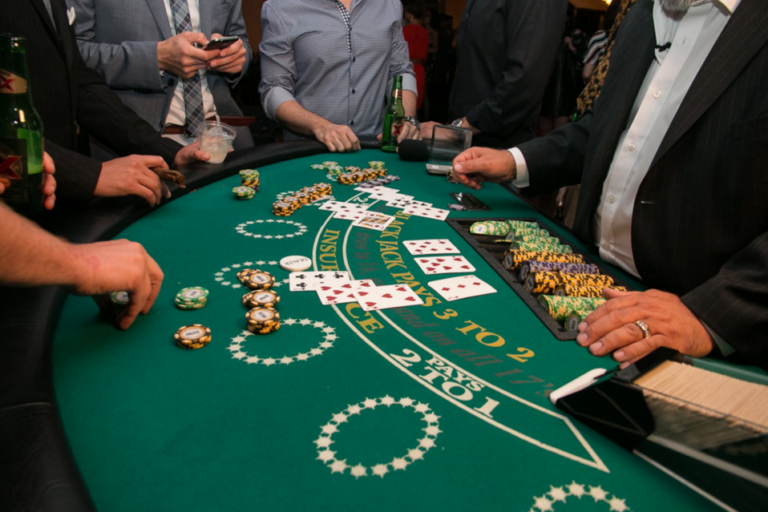
Nothing in a verified shuffle speaks to how generous the rules are. Blackjack with a 3 to 2 payout on a natural and favourable rules carries an edge near half a percent when played with basic strategy, while a table paying 6 to 5 on naturals adds well over a percentage point to the house’s take. Both can be provably fair and still differ sharply in cost.
Verification also does not replace a licence, responsible gambling tools or sensible stakes. Local law sets who may play and at what age, so that comes first. After that, a budget fixed before the first hand matters more than any fairness check, which protects against tampering and nothing else.
Variance deserves a mention as well. Even a fair deck produces long losing runs at blackjack, and a verified shuffle does not make those runs less likely. Players who treat verifiability as a promise of winning sessions will be disappointed on the first bad night.