
After 17 hours awake, your cognitive and motor performance sits at roughly the level measured at 0.05% blood alcohol. Stay up for 24 and you’re closer to 0.10%. That finding comes from Drew Dawson and Kathryn Reid at the Centre for Sleep Research, University of South Australia, published in Nature in July 1997, and it has held up as one of the most cited results in fatigue science.
Read that again with a tournament clock in your head.
Australian players have just had a live demonstration of what those hours look like. The 2026 Aussie Millions returned to Crown Melbourne after six years away, and its AU$10,600 Main Event pulled 770 entries for an AU$7.7 million prize pool, running from May 4-10 before Malcolm Trayner took home AU$1,667,050 for first place. Seven days of consecutive decisions, made by people who had, at various points, very likely played past hour 17 in their poker sessions.
Whether you’re deep in a week-long Main Event or filling the small hours with spinbet pokies on your phone, the clock is doing the same work on your decisions either way. What follows is what the research says happens to your judgement across a long stretch, why so many of us in Australia recognise the feeling already, what your tracking gear can and can’t see, and the countermeasures that stand up to scrutiny. The encouraging part is that poker hands you something almost no job does: an immediate scoreboard.
The Seventeen Hour Tell
Your alertness doesn’t drain steadily from the moment you wake. It holds reasonably flat for around 16 hours, held up by the interaction between your circadian pacemaker and your sleep homeostat, then drops away with real pace. That mechanism is set out clearly in a review by Shantha Rajaratnam, Mark Howard and Ron Grunstein in the Medical Journal of Australia, published October 21, 2013.
Dawson and Reid put a slope on it. Between the 10th and 26th hour awake, performance in their Nature study fell 0.74% per hour. Less than one percent an hour. It’s a gradient, not a cliff, and that’s exactly why it slips past us.
Plenty of players already track this without giving it a name. We call the late-session drift running bad, or getting card dead, or the table turning. Some of it is variance, sure. Some of it is the eleventh to sixteenth hour of that gradient showing up in your calling frequencies and your bet sizing. Once you treat it as a curve with a known shape rather than a mood that descends on you, it becomes something you can build a session around. That curve is universal; what’s unusual about Australia is how many of us are already living on it.
Australia Plays Late
You probably don’t need poker to teach you what tiredness feels like. If you’re on a roster, driving nights, closing a kitchen or working the back half of a hospital shift, you know the 4am version of yourself intimately.
The scale is bigger than most people assume. The Melbourne Centre for Cities at the University of Melbourne reviewed the available evidence in June 2024, and its numbers are worth sitting with:
- 1.06 million people worked in Australia’s core night-time economy in 2021/22, a count the authors describe as deliberately conservative
- Time-use data records 20.1% of Australians aged 15 and over working between 6pm and 7pm, against 1.6% between 2am and 3am
- Healthcare, accommodation and food services, and retail each account for more than 200,000 night workers
- Between 8pm and 9pm, more of us reported working from home than at a workplace, 15% against 13%
After-dark activity is normal here, which is why platforms built around it, Spinbet among them, run mobile-optimised sites with live chat support available around the clock rather than office hours.
Long-shift work and long poker sessions run the same experiment on your judgement, but only one of them gives you the results. A nurse who makes a marginally worse call at 4am usually never finds out it was marginally worse. A player who makes a marginally worse call at 4am learns within about 30 seconds, and can pull the hand history apart the next morning with a coffee. That makes poker an unusually honest mirror for anyone who works late for a living, though if we’re being straight about it, most of us only spot the drop-off afterwards, staring at a hand we wouldn’t have played at 9pm.
If the effect is that predictable, surely a watch or a sleep tracker can flag it for us. Mostly it can. Not entirely.
What Your Tracker Misses
Researchers at Flinders University ran 24 participants through an eight-day simulated shift protocol, testing them between midnight and 8am, and published the results in Sleep Advances in April 2026. Sleep estimated by a consumer under-mattress device predicted next-day vigilance, working memory and mental arithmetic reasonably well. It predicted risky decision-making and planning poorly. So the gear can tell you your attention is fraying; it’s far weaker at telling you your judgement is.
The wider evidence is messier than the usual telling suggests. A 2024 review by Wei and colleagues in Psychonomic Bulletin & Review pulled together 25 sleep deprivation studies producing 47 results: 13 showed increased risk-taking, 6 showed more conservative choices and 28 showed no significant effect at all. Direction varies by person and by context.
Which means the honest claim is narrower than people think. Long sessions reliably dull your consistency and your alertness. Whether they push you toward loose calls or toward folding everything is personal to you, and worth learning about yourself rather than assuming.
Format choice helps you manage it. A live dealer table, with a real dealer and a real rhythm, asks for a different kind of attention than fast RNG play; Spinbet’s live section, powered by Evolution, sits alongside standard blackjack, roulette and baccarat tables for that reason. So if your watch can measure your reaction time but not your judgement, who’s doing that job at hour eleven?
The Grinder’s Toolkit
The countermeasures with real research behind them are cheap, unglamorous and available to every recreational player in the country.
| Countermeasure | What the research shows | How it lands at the table |
| Naps of 20 to 40 minutes during the long stretch, plus one before it starts | Recommended in the MJA shift work review | Your dinner break is long enough for one |
| Give yourself about 15 minutes after waking before anything big | Sleep inertia impairs performance immediately after waking | Don’t sit down straight from a nap into a 60 big blind pot |
| Low-dose repeated caffeine over one large hit | Preferred to large single doses in the same review | Steadier than a double shot at level 12 |
| Seven hours of sleep per 24 as the working target | The baseline recommendation for shift workers | Plan the night before Day 2, not the night after |
| Light environment does more work than willpower | In a controlled trial, circadian-informed lighting extended day sleep by 52 minutes by day seven, cut wake time during sleep by 64 minutes and lifted sleep efficiency by 9.0 percentage points, with better vigilance scores | Blackout curtains, every time |
The other tool is the review habit, and there’s evidence it separates players. Writing in the Journal of Expertise in June 2020, cognitive scientist Jussi Palomäki, with Michael Laakasuo, Benjamin Ultan Cowley and Otto Lappi, put it this way:
‘Expertise in poker critically requires both mastery of the technical aspects of the game, and proficiency in emotion regulation; poker thus offers a good environment for studying these skills in controlled experimental settings of high external validity.’
Their wider findings back it up. Experienced players score lower on emotionality, self-rumination and emotional sensitivity to losses than inexperienced ones, and those with a strong tendency toward steady self-reflection made mathematically better decisions. Research by McCormack and Griffiths, cited in the same paper, found professionals were more logical, more controlled and less likely to chase losses. Keeping that reviewing muscle warm between live events is part of why lower-stakes formats have a place; by one independent review, Spinbet’s library runs to several thousand titles from more than 30 providers, including poker-style table games such as Caribbean Stud and Three Card Poker.
Most of us build a bankroll plan and never build a session plan. Your hours are a finite stack, too, and they deserve the same allocation.
Your Best Fold Happens Before You Sit Down
Discipline at the table turns out to be mostly logistical. When you slept, when you ate, when you broke, when you stopped: those settle more of your results than how philosophical you managed to be about a river card.
There’s a decent run of Australian poker ahead to test that on. Crown Melbourne’s Victorian Poker Championship runs October 12-27 2026 with an expanded 21-event schedule, with Australian Poker Tour satellites feeding into it. The APT’s own 2026 season took in the Melbourne Champs at Oakwood Premier Melbourne and the Brisbane Champs at Eatons Hill Hotel. Whether you’re warming up online, on Spinbet or anywhere else, the habit worth carrying into any of it is the one that sets your stopping point while you’re still sharp enough to choose it well.
Advisory Notice: Gambling should be treated as a form of entertainment, not a source of income. Set a budget you can afford to lose before you start playing, know your limits in advance, and walk away if you find yourself chasing losses or feeling pushed to keep going. If the enjoyment fades and worry sets in, confidential support is available at any time through Gambling Help Online.
Poker broadcasts broadly fall into one of two categories: live streaming and edited content. Poker TV has long revolved around edited shows that condense 12-hour long sessions into palatable episodes that are suitable for even casual fans who have little understanding of the game.
For serious pros and GTO wizards, edited shows don’t tell the full picture and often cut out the little moments that really change the course of a game. Only live streams can offer a proper glimpse into poker’s true reality.
As the poker ecosystem has evolved, both edited shows and live streams have a role to play in capturing what is now a fairly equal split of casual and hardcore fans.
Crafting the Narrative
The edited shows approach is both practical and entertaining. The game of poker itself, which in real life will nearly always feature prolonged moments of downtime, can be condensed into digestible episodes that fans enjoy and that can potentially land a lucrative slot on a cable channel.
The production team behind edited poker shows have the advantage of knowing what happened, which hands mattered, and ultimately who came out on top. They can also pick out vibrant personalities, funny moments, and dramatic ego clashes, weaving it all into a narrative that has a clear beginning, middle, and end.
Dead time, meanwhile, can be removed entirely. You don’t have to watch the hands where everyone folds, or see a full orbit of check-folds on the flop, or wait five minutes while a player tanks.
With a greater emphasis on highlights and post-production, viewers can experience the drama of poker and get to know its characters without having to watch them painstakingly fold 80% of hands while they wait for a better spot. There’s none of that boring stuff.
Can Editing Take Away from the Action?
But wait… isn’t that boring stuff part of the game? Poker isn’t all about the huge aces versus kings clashes. It’s also about how players navigate being card dead, how they survive a blind increase by shoving a short stack, how they gradually accumulate chips by applying pressure to opponents, and so much more.
If you’re keen on understanding strategy and game flow, the rare but inevitable coolers are not as interesting as the subtle moves that stack up and eventually lead to a player’s victory. In that respect, edited shows can take away from the action, cutting out key moments and giving the (mistaken) impression that every other hand played is an all-in cooler.
Serious players can sometimes be turned off by this apparent bastardisation of their beloved game. Joe Cada, winner of the 2009 WSOP Main Event, the final table of which was shown on ESPN as an edited two-and-a-half-hour broadcast, said himself in an interview, “they didn’t show many hands” and “I wish they’d have shown some of the hands where I actually got the better of people.”
When Poker TV Pulled in the Numbers
Despite Cada’s slight criticism, his Main Event win was one of the most popular poker broadcasts ever shown, attracting over 2.1 million viewers. The edited format was hugely successful, especially at that time, when both poker and cable TV were booming.
By condensing what can be a slow and steady game into more action-packed, narrative driven episodes, ESPN brought in a wider audience and made poker more accessible to the masses, who didn’t need to understand the maths to enjoy the thrill of the game.
Likewise, the early seasons of WPT, which were fully edited and post-produced, regularly pulled in viewerships in the seven-figure range. Season 2 reportedly averaged 1.3 million viewers per episode, while founder Steve Lipscomb has stated that weekly figures across all episodes shown, including repeats, once stood at around 3-5 million.
Highly edited cash game shows like High Stakes Poker also had decent numbers back in the day, upwards of 200,000 viewers per episode, drawing on elite talent like Phil Ivey, Phil Hellmuth and Daniel Negreanu to bolster ratings.
Since then, there have been fewer major poker shows on TV, although the edited format still exists. High Stakes Poker, for example, has migrated to PokerGO, while various brands and ambassadors release edited content on their channels.
Showing the Whole Truth
Although there’s no doubt that it’s an entertaining, TV-ready format, highly produced poker shows leave something to be desired for the hardcore poker fans.
Live streams fill that gap, offering a very different viewing experience. Nobody knows the upcoming results and nothing is edited out. It’s the whole truth, and nothing but the truth, for better or worse.
From the moment the stream starts, every second of every hand is shown right up until the game finishes, potentially 10-12 hours later. As a viewer, you could witness history, or you could be subject to three hours of raise-folding. Maybe both…
It’s obvious that the live stream format comes with its own pros and cons. For serious fans, being able to follow a tournament from start to finish, or witness every moment of a legendary high stakes cash game, is a massive privilege. It’s a chance to get closer to the event, the players, and to learn something about poker.
“In poker, all of the little moments are what make the big moments happen. Whether it’s a big bluff, or big hero call, or two people going at each other and it becoming more about ego, without the colour from the rest of the broadcast, I don’t think the highlights are quite as impactful,” says legendary poker commentator David Tuchman.
“But if you’re watching the entire game and then that moment happens, it takes you off your feet. I think that’s what poker live streams can offer than an edited show cannot.”
For casual viewers, though, who would rather not endure the slower orbits and who don’t want to watch the game for hours on end, the live stream format is potentially boring to watch. Even hardcore fans tend to dip in and out of streams, with viewerships typically rising during deep runs or when action heats up.
Live Streams are Still Highly Produced
It’s important to note that although live stream footage is raw and unedited, it’s not just a case of sticking a camera over a table and letting it roll. The show itself is still highly produced.
A professional stream has hole card graphics and percentages overlaid, so the audience can follow along with each hand. Multiple cameras track the action, moving between the board cards and players who are involved in the pot to give a sense of the event taking place in a room.
Commentators have the mammoth task of keeping viewers engaged; talking through hands, responding to comments in the chat, and striking up light conversation or deep debate to fill the gaps. During big moments, they will also draw on player info, results databases, and previous hands to add depth to the coverage.
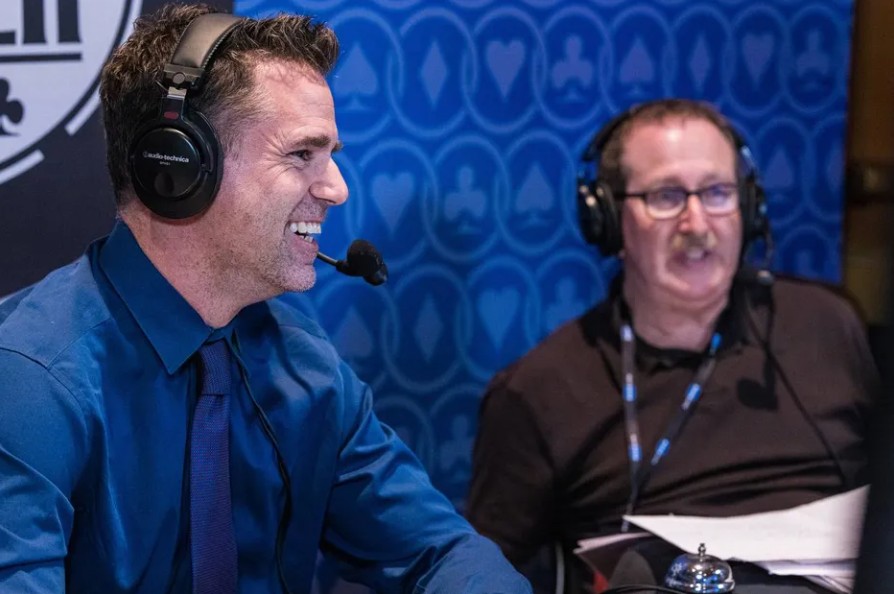
David Tuchman (left) and Norman Chad (right) | Image credit: Poker.org
The audio, which has to be carefully balanced so you can hear players talking to each other, chips clinking, and commentators discussing hands, without any clash in sound. On top of that, the whole stream is on a slight delay for game integrity.
The integration of chat features means that viewers can talk to each other and to the commentators during the stream, adding an interactive element that makes live streams more of a participatory experience.
Tuchman says, “In many ways, I’ve always equated poker live streaming to baseball because there’s a lot of ‘nothing’ happening. There’s a lot of filling time, a lot of telling stories.
Something [baseball commentator] Vin Scully was brilliant at, is he treated the broadcast as a kind of one-on-one friendship. He rejected the industry norm of talking to a massive faceless crowd.
I’ve always thought of poker in the same way. I want to make it personal. I act like I’m talking to one individual.”
Poker live streams are as authentic as it gets when it comes to the action, but the production and commentary is just as important for attracting an audience and keeping engagement levels high.
Different Platforms, Different Metrics
Aside from huge events like the World Series of Poker, it’s unlikely any cable channel is going to show 10 hours of unedited poker. Live streams instead lends themselves well to platforms like YouTube and Twitch, where event organisers, media companies, brand ambassadors, and online streamers can attract a smaller but highly engaged audience.
It’s difficult (and unreasonable) to compare the viewership numbers of poker live streams with the mainstream TV shows that were running back in the 2000s. Given the format and length, live streams are usually measured in concurrent viewers and sometimes in time spent watching.
One of the most popular live streams, Hustler Casino Live, reportedly reached 100,000 concurrent viewers in 2022. The lineup included Tom Dwan, Phil Hellmuth, Alexandra Botez, and Mr. Beast.
Former PokerStars streamer Lex Veldhuis, meanwhile, holds the record for Twitch poker streaming with 58,799 concurrent viewers during the 2020 SCOOP.
Outside of exceptional cash game streams or poker ambassadors running deep in a major series, live streams typically attract a few hundred or thousand concurrent viewers. Arguably, those viewers are more engaged and, from a brand and marketing perspective, further down the funnel, but that’s a point for a different day.
Live streams also have another big advantage in terms of an overall approach to poker content. Streams can be shown live, then later released as edited videos or social media shorts. These highlight reels can generate thousand of millions of viewers, ticking all boxes by appealing to a wider audience of casual fans. For example, the aforementioned 50-minute episode from the HCL stream that focused on Mr. Beast gained 3.3 million views.
Is Poker Viewership Falling?
Interestingly, ESPN took a hybrid approach to their broadcast of the 2026 WSOP, showing both edited episodes and full length live streams of the event. Unfortunately, the broadcast made headlines for failing to pull in anywhere near the same numbers as Cada’s run during the post-Moneymaker boom. A reported 593,000 viewers tuned in to watch Lucas Jumalon claim the bracelet and $10,000,000 top prize.
First, let’s clear up the biggest worry. The decline in viewership has little to do with poker’s popularity as a game. The Main Event attracted 9,200 entries, making it the fourth largest ever held.
One of the main factors impacting numbers may have nothing to do with the lineup or format. Cable TV subscriptions are down from a peak of 105 million in 2010 to around 69 million in 2025, which is only around 36% of US adults. The way people are viewing media is changing and so viewership will naturally decline.
Still, with few poker shows currently on TV and the ESPN ratings declining, it’s tough not to think that the problem could be deeper than just how we consume media. A recent op-ed here on Cardplayer Lifestyle explored the possibility that televised poker in all its forms is broken because it has become unrelatable.
The article outlines the relatively small numbers that tuned in even after the facts to see the record-breaking cash game pot between Ossi “Monarch” Ketola and Dan “Jungleman” Cates, whereas Doug Polk’s breakdown of the hand now has close to a million views.
It’s clear that whether it’s a live stream or edited episode, stoically throwing money at a pot isn’t enough on its own to attract a wider audience. The story of an event needs to involve passion and emotion as well as ICM and GTO.
The Case for Both Streaming and Edited Shows in Poker
The last word belongs to PokerGO President, Poker Hall of Famer Mori Eskandani, producer of some of the most popular poker shows ever made, including Poker After Dark and High Stakes Poker, who points out that poker audiences have changed and evolved over time, and makes the case for why live streaming and edited shows are both crucial to appeal to both sides of the modern audience.
“TV poker, at its inception, had very few viewers who had a deep understanding of game strategy. The main appeal centred around understanding the basic structure of NLH and the characters who played it in tournaments, and later in real cash games.
A high percentage of contemporary viewers now have a much stronger understanding of game strategy and are more eager to learn from the top pros. I would guess our current audience is split 50-50 between the “Casuals,” who just want to grab a beer and be entertained, and the “Eagers,” who want to dig deeper into the pros’ mindsets with every hand.
Edited shows allow us to cater to the Casuals much better by stringing together only the most interesting hands and entertaining table chat among the players.
Live streams, on the other hand, allow us to provide a true railbird experience by showing every hand and therefore giving viewers a chance to get into the minds of the pros without any kind of edit.
If you want to be entertained, watch the edited TV episodes. If you want to learn and become a more skilled player, watch the live streams.”
Every home game host eventually faces the same dilemma: your regular Friday night No-Limit Texas Hold’em game is starting to feel a little stale.
While Hold’em remains the undisputed king of poker, playing eight hours of straight GTO-influenced folding and raise-sizing can drain the energy right out of a casual room. Home games shouldn’t feel like a high-stakes grind; they should be lively, unpredictable, and social.
If you want to keep recreational players coming back week after week, the secret lies in injecting variety into your dealer’s choice rotation. Here are four engaging poker variants and a few action-inducing twists that will instantly revive your kitchen table action.
1. Crazy Pineapple: The Perfect Gateway Variant
If your friends don’t want to get too far away from the traditional games like Hold ’em, Crazy Pineapple could be your next go-to.
How it works:
- Every player receives three hole cards instead of two.
- Action proceeds exactly like Hold’em through the pre-flop betting round and the flop.
- The Twist: The fun part here is that every player has to discard one of their hole cards before the turn card is dealt.
Larger pots and multi-way action result from players holding three cards through the flop, which keeps hand equities high. It keeps the fundamental mechanics basic enough for novices to feel at ease while rewarding players who can understand board textures.
2. Five-Card Draw with a Bug (or Wilds)
Many casual players grew up playing traditional draw poker, but basic Five-Card Draw can fall flat in modern home games due to limited betting rounds. Introducing a Bug (a Joker played as an Ace, or to complete a straight or flush) converts a classic game into an action generator.
How to structure it for live play:
- Deal five cards face down to each player.
- Run a pre-draw betting round.
- Players can discard up to three cards (or four if holding an Ace or Joker) to draw fresh cards.
- A final betting round follows the draw.
The presence of wild cards creates hidden strength and leads to dramatic showdowns. Casual players love the agency of deciding which cards to throw away, and the psychological dynamic of watching an opponent draw three cards builds instant suspense.
3. Pot-Limit Omaha Hi-Lo (PLO8): Split-Pot Chaos
Unlike the standard version, PLO8 deals players with the best high hand and the qualified best low hand, which includes five cards of 8 or lower without pairs. For context, in the traditional PLO, you are given four hole cards.
Why it works for home games:
- Chop pots keep players in the game: Even if a player misses their high draw, they often hold a low draw that guarantees them a piece of the pot, keeping their stack alive longer.
- Massive draws: Players are constantly chasing monster wraps, flush draws, and nut-low possibilities simultaneously.
While PLO8 has a slightly steeper learning curve when evaluating low hands, it produces friendly banter and continuous action once the group gets the hang of reading the board.
The Power of Novelty in Gaming
The new variants work because humans are naturally craving novelty and different dynamics. It’s the same psychological appeal that makes players want to try out different platforms like BitStarz, where the ability to switch between hundreds of unique game setups, themes, and mechanics keeps the experience fresh and fun. Bringing that same spirit of variety to your felt ensures your players never feel like they’re just going through the motions.
4. Dealer’s Choice Staples: The “Stand-Up Game” & Side Bets
Sometimes, you don’t even need to change the game structure itself; you just need to add fun incentives that run alongside the standard hands.
The 2-7 Bounty Rule
An absolute favorite in home games worldwide. If a player wins a pot with 2-7 offsuit (either at showdown or by bluffing), then all other players at the table pay that player a pre-determined bounty (e.g., 2 to 5 big blinds). All of a sudden the worst starting hand in Hold’em becomes a fun vehicle for bluffing, and there is some hilarious table talk when someone successfully represents a monster with garbage.
The Stand-Up Game
Usually played toward the end of the night, every player physically stands up at the table. Whenever a player wins a pot, they get to sit down. The last player left standing must pay a penalty bounty to every other seated player. It forces tight players out of their comfort zone and guarantees high-energy play to cap off the evening.
Tips for Hosts Introducing New Variants
To avoid confusion when presenting these games:
- Have a laminated rules card on the table: To make things easier, you can keep a printed card with all the basic instructions for each different type of game.
- Limit the wild cards: Limit to a max of 2 cards per deck when you play wild card games. Too many wild cards and the game is pure luck, less hand strategy.
- Use easy stakes: There’s no need to make things so hard. For the tougher games, introduce friendly buy-ins so new players can have a better experience.
It’s not that long ago that online gaming was a straightforward, utilitarian affair. No matter if you enjoyed spinning slot reels or taking part in high-risk card games, the experience was less than stellar. Slow loading times, clunky menus, and dated visuals meant that players didn’t feel particularly immersed in the games.
And then, the landscape changed completely. Smartphones entered the picture, opening the world of digital entertainment to a whole new audience. However, this new generation of players wasn’t interested in these older games. To win them over, platforms had to evolve past providing basic functionality and delivering an experience.
High-Definition Visuals and Immersive Themes
The early days of online gaming got away with relatively simple graphics for two reasons. First, back then, playing your favorite games online was a novelty. It was as close to the Wild West as the digital world got, with unregulated online casinos offering everything under the sun. Second, the computers of that era weren’t particularly powerful, so trying to be too fancy would bring player devices to a crawl.
Smartphones had no such issues. They came out as the online gaming market was maturing, and had more than enough horsepower to render gorgeous visuals. Software providers adapted accordingly, from hubs like Fortunes Ultimate Slots casino to online card games. Smooth, gorgeous animations, detailed backdrops, and customizable avatars added to the experience, making the games more approachable to newcomers.
Mobile-First Optimization
The rise of smartphones also changed how games are built. If you’ve been around for a while, you probably have fond memories of Adobe Flash and how many things were built in it. However, Android and iOS did not support Flash for long, which led to the industry shifting away from it en masse.
These changes encompassed more than underlying technology. As more people than ever accessed the internet via smartphone, the games changed to accommodate them. The user interface focused on looking and feeling good on a small touchscreen rather than being designed for big monitors and laptops. Many games also integrated cross-progression, so you could play on multiple devices and keep the same progress throughout.
Varied Gaming Experiences
The classics will always have an audience, but many players prefer to experiment outside of those norms. Everyone loves playing a few rounds of blackjack or poker, but that doesn’t mean players don’t like to mix things up. Online solitaire has proven to be particularly popular in recent years, as have a variety of card games from other countries such as Andar Bahar.
Of course, it’s not just card games that are dominating digital casino entertainment. Slots are a long-standing staple, but the online format has given rise to a whole new generation of games. Crash games, for example, offer simple gameplay loops and thrive on the social setting where you can compare results with other players in real time.
Easily Accessible Games
While there was some game variety back in the day, online casinos rarely had over a thousand releases on offer. Nowadays, websites frequently boast thousands of titles, so finding something that suits your tastes can be a challenge by itself.
That’s why gaming sites put a lot of effort into helping players find what they’re looking for. Splitting games into categories, filters for specific themes and mechanics, and more are all employed to help connect players to their favorite games.
Bigger, Better, and More Fun
As digital casino entertainment continues to evolve, the trend of increasing accessibility and personalization are clear to see. It’s not enough to have a fun game anymore. Prospective developers also need to deliver on gorgeous visuals that suit players and make it easy for them to find and jump their release. It’s a bigger hurdle than ever, but so is the reward: potentially millions of players committing time and money to that title.
At first glance, blackjack looks similar to poker in a lot of ways. Players are each dealt two individual cards as a starting hand and bet chips as they attempt to win the hand. However, that’s about as far as the similarities go. Blackjack is a casino table game played against the house, and it has very different rules to poker.
But what skills actually carry over between one game and the other, and how easy is it for poker players to pick up blackjack?
Both are Found at Casinos and Online Sites
For poker players who are looking to branch out into blackjack, you won’t have to look far. Blackjack is a popular table game that is widely available at casinos.
You can also play online casino blackjack with Bitcoin at popular sites, allowing you to deposit using cryptocurrency or other transaction methods. Online platforms offer a much wider variety of games and rulesets, so you’ll be able to pick out the highest value tables or play your favorite type of blackjack.
Making the transition from one game to the other is easy and, you’ll be glad to know, some of the skills you already have as a poker player will apply to the blackjack tables.
Awareness of Probability
Both poker and blackjack involve an awareness of probability and odds. In poker, for example, you have to weigh up the price of making a call against the odds of winning a hand. Every decision involves probability, so players become accustomed to thinking this way.
This skill carries over well to blackjack, which also involves probability as part of the decision making process. In blackjack, you have to decide whether to Hit or Stand, or sometimes Double or Split if the situation allows it.
The strength of your own hand is weighed against the dealer’s visible upcard to work out the probability of winning by standing compared to the risk of taking another card.
In blackjack, however, the probabilities and solutions are simple enough that you can learn basic strategy by using blackjack charts, which outline what move to make. Memorizing these charts is all it takes to perfect the game.
Decision Making Under Pressure
In both poker and blackjack, you’ll sit down at a casino table, or online table, and be dealt into the game. As a player, it’s up to you to keep up with the flow and not cause any unnecessary delays. This creates extra time pressure, as all decisions have to be made in time on your turn to act.
In poker, players sometimes have time banks which determine exactly how much time is left to act. This is nearly always the case when you play online poker. In other cases, there’s no formal time bank, but other players can call the clock if they feel like you are taking too long.
In blackjack, the dealer will go around the table asking each player how they want to act. On your turn, you have to be ready to make your move so that you don’t hold up the game.
Bankroll Management
Bankroll management is an essential part of a serious player’s approach to any casino game. The premise is simple enough. First, you want to set aside funds that you will use exclusively for playing your chosen game. This should be money that you can comfortably afford to play with.
Then, with your bankroll set aside, you should play at stakes that are well within your limits. For example, if you have a bankroll of $100, it’s much better to play $1 stakes 100 times than it is to risk the lot in one or two games.
Taking a slow and steady approach helps to smooth out variance and gives you much more playtime. For winning poker players, bankroll management is a way of drastically reducing the chances of going broke, especially by moving up and down in stakes as your bankroll allows.
Although the house has a small edge in blackjack, the same philosophy of bankroll management still applies. Set aside your funds and play at very low stakes compared to your overall bankroll so that you can play hundreds of hands. This allows you to practice and perfect basic blackjack strategy, extends playtime, and keeps the game enjoyable.
Emotional Control
Poker requires an immense amount of emotional control so that you can play for hours without losing your cool and making subpar decisions. It’s all good knowing the best moves to make, but it’s another task altogether applying what you know at the tables in the moment, especially when bad beats happen or you start running bad.
Every poker player knows the feeling of going on ‘tilt’ and losing control of their emotions, and how quickly this can lead to losing massive amounts of chips.
Blackjack also requires emotional control so that you can stick to the basic strategy and make the correct move according to your hand and the dealer’s upcard. You don’t want to be acting on ‘intuition’ or making bad moves because you’re angry or tired. Keep it chill.
Emotional control is also very important for bankroll management. The worst thing you can do when you’re on tilt is start firing up more games or, worse still, move up in stakes.
What Skills Aren’t Needed in Blackjack
There are many skills that poker players have to learn if they want to establish themselves as top tier players, such as hand reading, bet sizing, and bluffing opponents off their cards. These skills are not needed in blackjack, because you’re not competing against the other players at the table.
In blackjack, you only have to be concerned with the dealer’s upcard, so there’s no need for any hand reading or psychoanalysis of opponents. The dealer also has certain rules that they must follow, such as standing on 17, so their play is already pretty much defined.
In blackjack, the optimal play is purely odds based and static. All you have to do is learn basic strategy and apply it correctly.
For poker players, this is part of the appeal of other card games like blackjack. It’s more of a relaxed game with less mental load. At the same time, skills like probability and bankroll management carry over, making it easy for poker players to make the transition.
When browsing the online poker lobby, it’s natural to get drawn to the biggest tournaments on the platform; the ones in bold, bright-red text, offering $100K guarantees and five-figure prizes for first. But then, after seven hours of play without reaching the bubble, you realise you’ve made a mistake.
As a tournament poker player, you should consider a variety of factors before starting your session, such as your bankroll, any time restraints you’re under, and the structure of the events on the platform to find the format that works best for you. Choosing appropriate tournaments for your situation gives you a better chance of playing your A-game, increasing your potential ROI and making you a more profitable player.
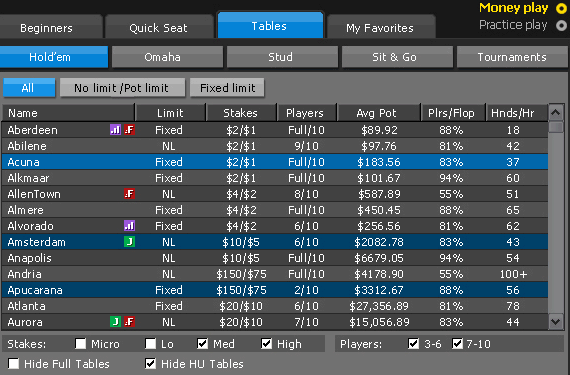
There are four primary categories of tournament structure to choose from when playing at an online poker site:
Sit & Gos
Sit & Gos (also known as SNGs) are small-field events with a fixed number of participants – usually ranging from nine to 180 players. As these tournaments have a limited number of players, they finish much faster than traditional MTTs. Whereas a standard multi-table tournament can last 8 hours+, most SNGs are finished within an hour or two – or even sooner if you play a 9 or 18-handed game. This makes them ideal for players who only have a limited time to play; you can have a complete tournament experience without having to spend the day glued to your PC.
SNGs are also a great learning tool for players who want to improve their tournament game. Their smaller structure means that you’re more likely to reach the latter stages of events more often, improving your bubble play, final table strategies, and even your heads-up game, preparing you for deep runs in large-field events.
However, the downside of SNGs is their limited prize pool. With a fixed number of players, the prize pool is the same for every event, and rarely reaches the heights of traditional MTTs. For example, a $1 180-player SNG will only have a prize pool of around $150 after the rake has been taken.
Multi-Table Tournaments
In contrast, multi-table tournaments have unlimited entry places, with many events on bigger platforms regularly reaching thousands or tens of thousands of players. The obvious upside to this is the potential prize pools on offer. A $1 MTT with 2,000 players can have a prize pool of more than $1,500, with a prize of $300+ for first place. Some sites will even offer guarantees on their most popular events, making sure that there’s always significant money to play for.
While the large prizes are one of the biggest draws of MTTs, you’ll have to work to see the benefits. More players in an event means that multi-table tournaments last significantly longer than SNGs, requiring a greater time commitment if you want to play. Many of the bigger events can last between 8-12 hours from start to finish, potentially taking up your whole day – there’s a reason why poker sites run their biggest tournaments on Sundays!
Many players prefer the traditional experience of MTTs, and while deep runs in these events are exciting, they take considerable focus to play well. There’s nothing more heartbreaking than playing for five hours, only to lose focus at a key point and min cash for $2.59. If you want to play MTTs, make sure you have the time and discipline to do so.
Satellites and Freerolls
Both satellites and freerolls are niche formats that aren’t as popular among mainstream players, but can be profitable if played correctly.
Freerolls are ideal for beginners; there’s no cost to enter these events, and they offer the possibility of winning real money. The fields are usually much softer than standard MTTs, so you’re less likely to be punished by strong players for making mistakes. However, the prizes offered by these events are small, usually around $10-$20 for the winner. Couple that with large fields of thousands of players, and you may decide that they’re not worth your time.
Satellite events give you the chance to win an entry to a larger tournament; almost like a qualifying round. For example, you can win a ticket to a $100 MTT via a $5 satellite, making them a great option for low-budget players who want to take a shot at a bigger event. As all the prizes are the same in a satellite, it creates a unique dynamic as you approach the end of the event, so it’s important to be aware of the strategy adjustments that you need to make compared to standard MTTs.
Tournament Checklist – What to Consider
To help make your decision as simple as possible, we’ve created a checklist of things to consider at the start of your session. By going through this list, you can easily decide which events are right for that day’s play:
- Time Constraints – How much time do you have to play poker? Can you only play for an hour or two, or can you play all day? If you can only play for a limited time, consider playing small-field MTTs.
- Bankroll Restrictions – What’s the current state of your bankroll; do you have the money for large events, or do you need to grind low-stakes tournaments? Playing low-stakes MTTs can potentially double or triple your bankroll if you make a big run, but they require a significant time commitment.
- Structure – What kind of events do you like playing? Do you want fast-paced events with a lot of push-fold poker, or do you want to play deep-stacked events with a lot of postflop play? Both SNGs and MTTs offer turbo and hyper-turbo formats, but only MTTs offer true deep-stacked play.
- Goal – What are you looking to achieve in your session? Ask yourself each of the following questions:
- Do you want to improve your overall tournament game? If so, SNGs may be your best option.
- Do you want to build a bankroll from nothing? Freerolls are the events for you.
- Do you want to take a shot at a big event? Try satellites.
- Do you want the biggest possible payout for your money? MTTs are the way to go.
The answers to these questions will likely change each day you play, so it’s important to run through this list each time to optimise your session. If you want to compare the formats in more detail, LegalUsPokerSites.com’s guide to poker tournaments provides an in-depth breakdown into each structure.
Taking time to find the optimal format for your session will help improve your performance when you hit the felt. As the competition improves, finding marginal gains from off-table skills such as these can give you an edge over your opponents.
CoinPoker will open qualification for The One on September 28th, its new flagship tournament carrying a $5,000,000 guaranteed prize pool and a $1,000,000 first prize from a $250 buy-in. The schedule for Day 1 flights and two promotions were recently announced for The One.

The One Carries $5,000,000 Guarantee And a Seven-Figure Top Prize
The One is CoinPoker’s new flagship tournament, guaranteeing a $5,000,000 prize pool and a $1,000,000 first prize from a $250 buy-in.
No previous CoinPoker tournament has offered a guarantee this size, making The One the largest event the platform has staged. The $250 buy-in now carries a payout worth 4,000 times that entry fee for the winner.
CoinPoker plans to run The One annually, with this October installment intended as the first in the series.

The One’s Qualification Path Leads Into Twenty-Six Day 1 Flights
CoinPoker is opening several routes into The One well ahead of Day 1. Freerolls, step satellites, and direct satellites all run from September 28th through October 12th, giving players a path in at any price point, including free. Direct satellites start at $5.50, while step satellites start at just $0.10.
Twenty-six Day 1 flights begin on October 4th, spread across time zones with three per day until October 11th. October 12th adds two turbo-speed flights as a last chance to win a seat before Day 2 kicks off later that same day.
Day 1 starting chip stacks will be 125,000, or 125 BB.
Players may enter as many Day 1 flights as they like. If a player qualifies for Day 2 more than once, only their largest chip stack advances.
October 4th to 11th Day 1 Flights:
Three flights will run per day from October 4th to 11th, with 10 minute blind levels and 2.5 hours of late registration time.
| 1:30 PM (UTC Time) | 4:30 PM (UTC Time) | 7:30 PM (UTC Time) |
October 12th Day 1 Turbo Flights:
The turbo flights on October 12th feature 5 minute blind levels.
| 12:30 PM (UTC Time) | 2:00 PM (UTC Time) |
Flight Buy-In-Back Refunds Every Qualifying Entry
Every Day 1 flight that qualifies a player for Day 2 has its buy-in refunded in cash, under a mechanic CoinPoker is calling Flight Buy-In-Back.
Players can continue entering later Day 1 flights after they have already qualified, and each additional qualifying entry has its buy-in refunded as well.
Since only a player’s largest qualifying stack moves on to Day 2, any additional qualifying entries are converted into a bonus cash payment instead of a second Day 2 seat.
That payment is calculated as Day 2’s minimum cash prize minus the flight’s buy-in, on top of the buy-in refund already paid for that entry.
For example, if the min-cash for Day 2 was $700, the bonus would be $700 – $250 (Day 1 flight entry) = $450. The player would also receive their flight entry cost back, so the total bonus would actually be $700.
A Daily Re-Entry Promotion Runs For All Day 1 Events
From October 4th through October 11th, the three players with the most real money re-entries into that day’s Day 1 flights each win a free ticket to The One.
Standings reset at 00:00 UTC each day, so a player can win on more than one day across the week.
Winners from the final promotional day, October 11th, receive their ticket before the remaining Day 1 flights on October 12th.
Discord Hero Offers Community Members a Free The One Ticket
CoinPoker’s Discord Hero promotion offers another way into The One that costs nothing to enter.
Each month, CoinPoker moderators nominate active, positive contributors from the CoinPoker Discord server, and the wider community votes to select that month’s Discord Hero.
The September Discord Hero receives a $250 tournament ticket for The One, plus a coaching session, a temporary Discord Hero role, and a community spotlight.
Signing up for the official CoinPoker Discord is the first step for players who want to collect their The One ticket from this promotion.

Qualification For The One Begins Right After GOPC
CoinPoker’s Global Online Poker Championship runs through September 28th, closing out $50,000,000 in guarantees across more than 700 Medal Events.
Qualification for The One opens that same day, giving players coming out of GOPC an immediate route into CoinPoker’s next flagship event.
About CoinPoker
CoinPoker offers cash games and tournaments worldwide, with deposits via cryptocurrency, bank cards, regional methods, Apple Pay, Google Pay, and Luxon Pay.
The One now leads CoinPoker’s schedule alongside the $50 million GTD Global Online Poker Championship, the monthly flagship CoinMillion, and the daily Daily Dollar. The poker site has repeatedly run festivals throughout 2026 and 2025, including the Battle of Malta Online series, World Poker Masters, and Winter Festival.
Partnerships with Battle of Malta, Triton Poker, and High Stakes Poker add further events and content to the platform.
Active Promotions
- The One: An annual $5,000,000 guaranteed tournament with a $1,000,000 first place prize, starting in early October, 2026.
- 150% Welcome Bonus: New players depositing $10 or more can claim a 150% Welcome Bonus worth up to $2,000.
- 3-Bet Club: CoinPoker’s membership plan for rewards, offering tournament discounts, Rewards Boosts, Action Multipliers, and Power Ups.
Media Contact
There are few more popular forms of betting than wagering on horse racing and poker. The two famous past times have been passed through generations, ensuring that the popularity of each remains as prominent in this modern day as it has ever been.
Both have the ability to appeal to new audiences, with racing’s biggest events on the calendar such as the Kentucky Derby and Breeders’ Cup reaching mainstream audiences.
During this time, bettors typically look to learn more about the markets available, while calculators such as the one here ensures that parlay odds for selections can be worked out quickly: https://www.twinspires.com/wager-types/
But, what are some of the parallels between the words of poker and horse racing handicapping?
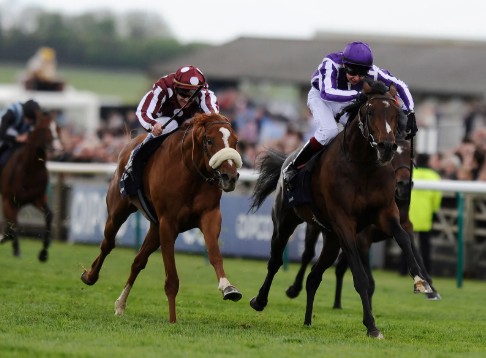
Expected Value
Both poker and racing losing wagers is part of the game, but the betting math always indicates that long-term value can be achieved by following a set strategy. This comes in the form of Expected Value in poker, as +EV calculates the money that a bettor will make over a certain amount of time.
This typically ensures that a player can’t be too downbeat after being given a bad hand, and they will instead need to take the odds to justify the risk of chasing the draw. Horse racing is similar in this, with handicappers typically assessing overlays.
This is where a horse that is perceived by the bettor to have a 30% chance of winning is betted heavily by the public to give the same selection a 50% implied probability of winning.
An overlay bet is when the opposite thing happens, as the public allows a runner to drift to a lower implied probability than perceived by the bettor. Wagering on overlays such as this can typically be a successful long-term strategy for horse players.
Range Construction
In both poker and racing, it is all about seeing the bigger picture and not making judgement calls in the moment. Thinking ahead is a solid strategy when it comes to poker and making bets on horse racing.
In poker, elite players will not try and put an opponent on a single hand, and instead they will attempt to put them on a range of hands, which will open doors to potential strategies that could perform best for the distribution of cards. This is also similar in horse racing, as experienced bettors will construct pace maps to identify the most logical angles that a race could play out.
This will examine which horse will set the pace, and which runners could be best suited by a fast or slow tempo. Setting this dynamic will give a bettor a clearer picture in their mind as to how a race could play out.
There is also further evidence of long-term planning in horse racing, as experienced bettors could pinpoint potential end-season goals for runners before betting markets have had the time to catch up. Finding value in antepost markets could ensure that bettors will get significantly better odds by making their selections in advance of the final fields being declared.
Exotics & Combinatorics
Horse racing and poker betting is also similar in the way that managing complexity and maximizing leverage through combinations through mathematical edge can be rewarded. In poker, this is through Combinatorics. High stakes players have the ability to count card combinations to determine exactly how likely it is that an opponent will be required to bluff in order to win a hand.
This is done through working out the probability of the opponent having a good hand or having a bad hand. Combinations can also be used in horse handicapping by taking advantage of Exotic tickets.
Many players will typically get involved in Pick 4, 5, or 6s, and experienced players will use this to adapt combinatorial structuring. They can leverage solid favorites across multiple legs, while also including potential secondary and third selections that may be available at bigger prices to ensure that they are covered should there be a shock result.
This can maximise potential pay outs without having to increase the ticket costs exponentially.
Bankroll Management
An important strategy that should be considered when playing poker and making bets on horse racing is a sensible bankroll management. This includes putting aside a set amount to play with, and then not exceeded the designated total.
Exceeding a budget can lead to ill-informed decisions when gambling, and could ensure that a bettor chases their losses. This means that a poker player must accurately set aside how much they are willing to play on each hand, while a horse bettor will determine how much that they are willing to wager on a given race.
Being sensible with bankroll is important to ensure that long-term profits can be achieved, ensuring that all players should determine when to stop playing if the luck just isn’t on their side on a given day.
Avid poker players know the thrill of sitting down at the felt, staring down their opponents. It feels even better when you have a winning hand. There are a few steps required to get you there, including the table, your chips and some other players. Even once you get over the hurdle of finding a game, it might not be the right level for you.
Not every game suits every player. That could be because it’s full of sharks or has stakes that are too high or low. That highlights another question: how can players practice and play if they can’t find a game? Is online casino poker the answer?
Advantages of an Online Casino
Playing poker at an online casino certainly has its advantages. It gives you a chance to work on your bankroll management. If you want to focus on knowing when to fold or when to go all in, the online casino version of poker gives you that chance with real money at stake.
For beginners, in particular, it’s useful to work on knowing the hands and decision-making in general. Sites like LV BET casino online have several types of online poker games that allow you to work on your game from home, and without the pressure of other players affecting the game’s pace.
Not Like a Live Game
That being said, online casino poker is not like a live game. It’s important to check the game types and their rules so that you know what the experience will entail. It won’t give you practice when it comes to thinking about the other players at the table, but there’s room for that elsewhere.
Playing online casino poker can hone certain skills. For the table experience with other people, it might be worth also getting together with recreational players. That’s a different environment, too, so your playing style will need to adapt, but you’ll learn something else through that experience.
Types of Online Casino Poker
When you visit an online casino, the types of games you find there won’t be the same as a multi-table tournament or quick Sit & Go. Most of them are played at your pace, and it can often be you against the dealer or a computer. Here are the three main categories to look out for:
Video Poker
Video poker blends skill and chance. There are different variants, such as Jacks or Better or Aces and Faces. The names typically refer to a particular rule for the hand rankings. Essentially, it’s you against the computer in a game like five-card draw, where you need to form the best hand.
Casino Poker
When you visit the table games section of an online casino, you’ll find variants like Texas Hold’em. Unlike video poker, though, you get dealt your virtual hole cards and use them with the community cards to form your best possible hand.
Live Poker
Live poker is similar to the casino version, only you’re connected via a live stream to a dealer in a studio. It adds a bit of interaction to make it more engaging.
Honing the Skills
The research shows that practice does make perfect. That’s why playing casino poker can help you work on your betting and decision-making strategies.
When we talk about the poker boom, we truly mean a boom that changed online poker almost overnight. The combination of Chris Moneymaker’s WSOP Main Event victory, the expansion of online poker rooms bringing millions to the game, and the growing presence of televised poker created a perfect storm that turned online poker into a mainstream phenomenon. As a result, the WSOP Main Event went from receiving 839 entries in 2003 to 8,773 in 2006.
Operators saw an opportunity to compete for this quickly growing audience and began coming up with deposit matches and sign-up bonuses to enhance the player experience. Two decades later, the competition to give new players a reason to choose one poker room over another continues, but the incentives themselves have changed dramatically. Mission-based challenges, crypto rewards, and structured rakeback create a more varied system.
We’re about to trace that evolution using examples such as CoinPoker’s 3-Bet Club to illustrate the new relationship between players and poker rooms.

The Poker Boom Era’s (2003–2006) Simple Bonus Formula
During the poker boom, the poker audience was expanding fast. Online poker rooms needed to capture new users and compete for market share, and the incentive structure reflected that urgency well. At that point in time, bonuses were generally easy to grasp. All someone had to do was make a deposit, play real-money poker, and gradually unlock additional funds.
The 100% deposit match became especially familiar for new players, with offers frequently matching a player’s first deposit up to $500 or $1,000. Instead of receiving all of that right away, players would release that bonus in increments by earning frequent player points or other similar status points. Another common way to attract and retain new players was through freerolls. Poker rooms would run tournaments exclusively for newcomers, sometimes attaching guaranteed prize pools without requiring a tournament buy-in. Loyalty points could even be exchanged for branded merchandise or other poker-room perks, so early rewards programs would carry value beyond cash bonuses.
The aggressive approach to player acquisition was more widely accepted because online poker rooms were operating with large, international player pools. With more games running around the clock and a fast-growing market, there was a strong incentive to acquire players quickly.
Changing Economics (2007–2015)
Once the poker boom settled down, the market reached a more mature phase. In turn, operators couldn’t simply offer a large deposit match and expect players to pay much mind to it. As regulations changed, incentives focused more on keeping existing players active instead of attracting new ones. Black Friday — not the shopping holiday, but the April 15 crackdown that targeted major online poker operators including PokerStars, Full Tilt Poker, and Absolute Poker — was a huge shock to the industry, especially in the United States.
With major offshore poker operations shut down, fewer players shared the same tables, and the deep liquidity that helped to sustain the former bonus model became harder to replicate. Because bonus requirements became more demanding, rakeback became more prominent as an incentive. Players could now receive ongoing rewards based on the amount of rake they generated, shifting attention toward the longer-term value of poker room rewards.
Welcome offers still had their value but became a lot more elaborate. A deposit match could be combined with casino free spins or freeroll tickets, presenting a broader package and making offers much more elaborate. Some programs even gave players a limited period to meet requirements, and others needed players to generate sufficient volume. Players now evaluated incentives differently, realizing that headline figures no longer tell the whole story. Now, people had to consider the amount of play required to unlock the bonus, how quickly rewards were released, and how the bonus value compared with ongoing rakeback.
When Rewards Became More Interactive (2016–2026)
Over the next decade, poker incentives became even more varied. The basic deposit match still existed, but it was complemented by loyalty tiers, missions, and rewards tied to specific types of play. Throughout a player’s time on the platform, they could now interact with a full rewards system rather than just deposit and work toward one bonus. For example, bonuses might have been released according to the amount deposited or the rake they generated, whereas newer mission-based welcome offers will have a specific challenge to complete in a defined period. A new player might need to play a set number of hands or participate in a set number of tournaments over a certain number of days to unlock rewards.
Some rooms also introduced small, no-deposit bonuses. If a player received $5 after completing KYC verification, they could try the platform without making an initial deposit. While these types of offers were much smaller than the headline bonuses of the poker boom, they served a dual purpose: to lower the barrier to trying a new poker room and give operators an effective way to verify accounts. When crypto poker became popular, other rooms offered enhanced deposit matches for those funding their accounts with cryptocurrencies. Operators also now had another way to serve international players, especially those who faced restrictions on traditional payment methods.
Rakeback no longer followed the deposit-and-release model of the past and became much more structured. CoinPoker’s 3-Bet Club combines weekly rakeback of 10% to 15% with tournament discounts and other features through a paid membership. Similarly, PokerStars’ 2024 rewards overhaul moved away from tournament dollars and toward cash rewards, increasing the potential rakeback rate from 25% to 40%. That placed more emphasis on playing frequency rather than volume. The modern, layered rewards ecosystem allows players to tailor their experience to their personal preferences.
Poker Bonuses in Context
The concept of new player incentives isn’t just confined to poker rooms; it also applies to online casinos, sportsbooks, and other gaming platforms. All these services use familiar rewards like deposit matches and free spins to attract first-time users but may require players to meet different requirements to unlock them.
Poker bonuses are typically dependent on activity at the tables. While a player might need to generate a certain amount of rake or tournament fees before a bonus is released, casino bonuses commonly involve wagering requirements tied to table games or slots. When we look at how poker incentives have evolved, we’ll see it’s not only about the size of the initial deposit match — it’s about variety and depth. VIP programs and rakeback can provide ongoing rewards with regular play, and loyalty systems and missions can add special incentives for specific types of activity.
The relevance of an incentive depends partly on the player receiving it, thanks to modern incentive systems becoming more personalized.
How to Evaluate Today’s Poker Bonuses
With more details to grasp, poker incentives often require looking beyond headline promises. Consider these factors to understand the full scope of an offer:
- Read terms such as playthrough requirements and time limits
- Don’t rely solely on match percentage, as a larger deposit match may require a lot more play to unlock
- Factor in your natural play style
- Look at the reward structure and whether it’s a one-time bonus or part of an ongoing system
- Understand crypto terms and their additional considerations
Decades of Poker Rewards
Although online poker incentives have come a long way, basic deposit matches and freerolls haven’t disappeared. They simply sit among a much larger range of rewards that give players more ways to earn value throughout their time on a platform. But with that range comes complexity and more demand on the player to consider the fine print.
For more than a decade, my job has been finding out how a process actually goes. Not how everyone believes it goes — how it goes. It is unglamorous work. You take something the whole building has an opinion about, you count it properly, and roughly once a quarter the count says something nobody wanted to hear.
I have played $1/$3 No Limit Hold’em for a long time. At some point it occurred to me that I had never once pointed the method at myself, so I started collecting data.
What I expected to find was a hand. Some specific catastrophe — the aces cracked by a player who called a raise with seven-four, the set-over-set I could not put down, the night I rebought three times and drove home doing arithmetic I did not enjoy. Those were the hands I remembered, and remembering them felt like evidence.
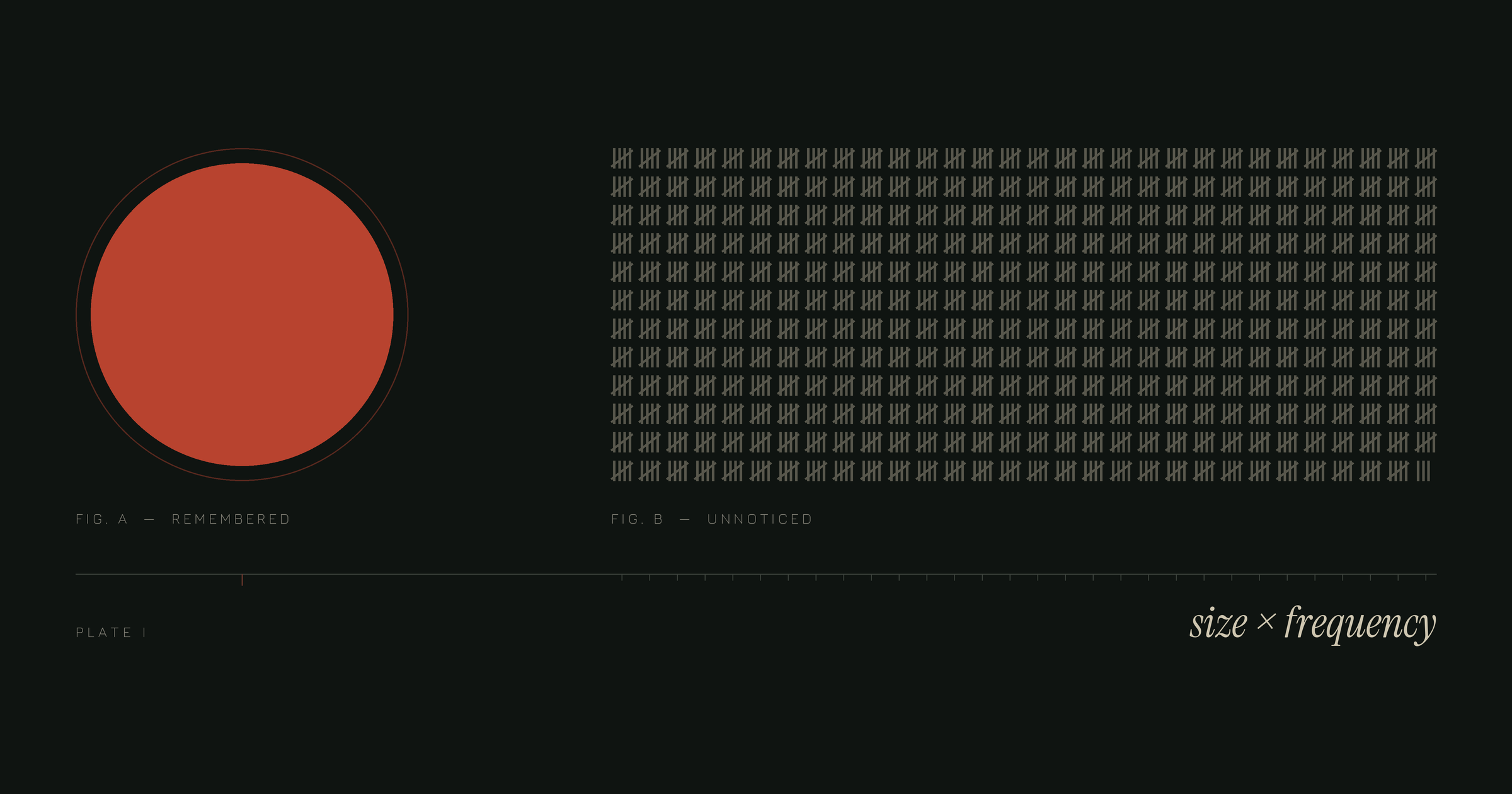
It is not evidence. Those hands are memorable, which is a completely different property from expensive, and quietly confusing the two is the most costly habit a recreational player has.
Why you cannot feel these leaks
Here is the thing that took me an embarrassingly long time to see. You judge a mistake by what it cost you in the moment. This is not irrational — it is how people are built, and in most of life it works fine. A $400 pot you butchered registers as a $400 event. It has a size. You can feel it.
But the cost of a habit is not its size. It is: size × frequency
And frequency is the term you never compute. You cannot. It does not arrive as an experience. It arrives as an absence of one — thousands of small moments that never crossed the threshold where memory bothers to keep a copy.
So your sense of your own game is measuring one of the two terms and silently setting the other to 1. That is the whole argument. Everything below is arithmetic.
The multiplication nobody does
Let me make it concrete, and let me be careful about which numbers are facts and which are inputs, because that distinction is the actual thing my day job taught me. Say you play six hours a week. Live, at roughly 30 hands an hour, that is about 180 hands a week — a little over 9,000 hands a year. Those are not my numbers to give you. Replace them with yours.
Now take a decision that comes up in 15% of your hands. Not a rare, dramatic spot. An ordinary one. That is about 1,350 times a year.
Now suppose — and this is an assumption, not a measurement, and I will not pretend otherwise — that you get that decision wrong by an average of a third of a big blind. A third of a big blind. At $1/$3 that is one dollar. By any standard you would apply in the moment, that is nothing. If I stopped you mid-session to tell you that call cost a dollar in expectation, you would correctly conclude that I needed a hobby.
1,350 × $1 = $1,350 a year. That is your year. Gone, through an error so small that noticing it would feel neurotic.
And here is the genuinely cruel part. A $1,350 downswing you would feel. You would analyse it, you would talk about it, you might post about it. This one is invisible for one reason only: it was never delivered in a lump.
Four leaks that work exactly like this
I will examine four such leaks. Not because they are the four largest, but rather because they are four where the gap between how it feels and what it costs is widest.
1. Limping in to see a flop
It feels like the careful option. You are not committing, you are not bloating anything, you are paying a small price for information. What you are actually buying is a pot you cannot win without making a hand, against more opponents than you would otherwise have faced, from a position where you act first for the rest of it — having given away the one route to winning that requires no cards at all, which is everybody folding.
Frequency is what makes this expensive. Limping into even a modest share of hands and you are running a decision several hundred times a year that opens by surrendering your two best assets. Because each individual instance costs so little, nothing in the session ever flags it. There is no moment. There is never a moment.
2. The curiosity call
River. You missed, they bet, and you already know. There is a specific sensation here that I would bet most recreational players recognise instantly: not I think I am good, but I want to see it.
That sensation is worth learning to name because it is the cleanest tell you will ever get about yourself. When the reason for a call is that you want to know, you have stopped playing poker and started buying information you will never use. You will not remember the hand by Thursday. Even if you did, one observation of one player’s holding in one spot is not data — it is an anecdote that will cost you again later, when you act on it.
Cost per instance: one bet. Frequency: however many times a week you are curious. Multiply.
3. Playing the session length instead of the session
You sat down planning four hours. You are three hours in and playing worse than you were at hour one — slower to notice things, quicker to call, running on something nearer habit than attention.
You stay because four hours was the plan. Or worse, you stay because you are down, and leaving would make it real.
This one is different from the others: its per-instance cost is not small at all. But it hides in a different way. It does not feel like a decision, because the decision was taken at hour zero and everything after is just follow-through. The leak is not in any hand. It is in the hour — and the hour never gets reviewed, because reviews are organised by hand. The fix is almost free and almost nobody does it: decide before you sit down what would make you leave, stated in terms of how you are playing rather than what you are holding or what you are down.
4. Sizing by habit
You bet about the same fraction of the pot in most spots. Maybe two-thirds. Maybe half on the flop and larger on the turn. Whatever it is, it is stable, and its stability has nothing whatever to do with the board, the opponent, or what you are supposed to be representing.
Habitual sizing is the most forgivable item on this list, because it never once produces a moment you would flag. There is no hand where you think the sizing was the error. It simply loses a small amount in a very large number of spots — value you did not collect, folds you did not buy, information you handed over for free.
It also has the highest frequency of anything here. It runs on every street of every hand you play.
“Isn’t this just telling me to play tighter?”
No, and the difference matters. Play tighter is advice about which hands to enter with. It is one lever, it is the lever every book pulls, and if you have been at this a while you have already pulled it as far as you are willing to.
This is not advice about hands at all. It is a claim about where to look. Three of the four above have nothing to do with starting hands: two are about what you do on later streets, one is about what time you go home. What they share is a shape — small, repeated, and below the threshold at which you notice anything. You could tighten up considerably and leave every one of them completely intact.
How to count your own
Here is how to work out for yourself whether your limping costs you 4.2 big blinds per hundred hands, or 5.6. It takes three columns. Take a notebook to your next five sessions. For each leak you suspect:
How often. Tally marks, made at the time. Not reconstructed afterwards — afterwards is exactly where the error lives. This is the term you are wrong about, and you will be wrong in a predictable direction: everyone underestimates their own frequency, because the instances are not memorable, which is precisely why they are expensive.
How much. Your honest estimate of the average cost in big blinds when you get it wrong. Is it a tenth of a blind or a whole one?
Multiply. Times it happened × average cost, divided by the hands you played, times 100. That is your cost per hundred hands.
Your estimate of the cost is the weak input, which is why the tally matters most: it is the one column you can make exact, and it is the one your impression leaves out altogether. And when you do it, the ranking will surprise you. Mine did. The leaks I would have named in advance, the ones with stories attached, the ones I had replayed in the car, came out modest. The ones that actually mattered were boring, small and constant, and no amount of thinking hard about my play would have found them — because thinking hard about your play means thinking about the hands you remember, and that is the one place these never appear. I ended up writing the whole countdown — 15 of them — in my book, Live to Fold Another Hand.
The cheap fixes are unglamorous
There is a reason this is an unpopular project. Fixing a memorable leak feels like progress. You study the spot, you understand it, you get it right next time, and there is a small moment of visible competence attached to it. That moment is the reward, and it is why studying spots is pleasant.
Fixing a frequency leak has no moment. You simply limp less. Nothing happens. No hand goes differently in a way you can see. The improvement is delivered by exactly the mechanism that delivered the loss — a fraction at a time, under the threshold of experience — and you will never once feel it arrive.
Which means you have to take it on arithmetic, and keep taking it on arithmetic for months, with nothing rewarding you along the way. That is genuinely hard. It is much harder than learning a new spot, and it is worth saying so out loud rather than pretending the discipline is easy.
But it is where the money is. Not in playing better hands. In playing the ordinary ones a fraction less badly, several thousand times a year.
The showdown is where poker is dramatic. It is hardly ever where it is the most expensive.
Poker players spend a lot of time studying ranges, bet sizes, and solver outputs. We do not spend nearly as much time thinking about the object that makes every one of those discussions possible.
The standard 52-card deck creates a fixed pool of information. Every card you hold reduces the combinations available to your opponents. Every card exposed on the table changes what they can represent. Switch from Hold’em to Omaha, Stud, or a draw game, and those same cards begin answering very different questions.
Mixed games are especially good at making us notice details that familiar Hold’em spots allow us to overlook.

Card Removal Needs a Purpose
Most Hold’em players understand the concept of blockers. The more important question is whether a particular blocker matters in the hand being played.
Suppose you hold the ace of spades on a board containing three spades. You know that an opponent cannot have the ace-high flush. That information could support a bluff, but only if the opponent’s range contains weaker flushes that might fold and your line credibly represents value.
Holding a card is not enough. It has to remove hands your opponent could reasonably have reached the current street with.
The combination count can be useful away from the table. There are six possible combinations of pocket kings before any cards are known. If you hold one king, only three combinations remain. A simple example like that makes card removal easy to understand. Applying the same reasoning to a complicated river range is where the real work begins.
Omaha Makes Duplication Expensive
In four-card Omaha, each starting hand contains six possible two-card combinations. Players must use exactly two hole cards and three community cards to make their final hand.
More hole cards create more possibilities, but they can also create an illusion of strength. A hand may contain several draws that depend on the same outs. It may make a flush that is rarely the nuts or a straight draw that frequently produces the wrong end of the straight.
This is why simply counting draws is not enough. You need to ask how often those draws make a strong hand, whether they share outs, and how many higher combinations remain available.
Your own four cards also remove twice as many cards from the deck as a Hold’em starting hand. That can significantly affect the likelihood of an opponent holding a particular wrap, flush draw or made hand.
Mixed Games Break Automatic Thinking
Spend enough time playing Hold’em and many decisions begin to feel familiar. Position, board texture, and betting patterns create spots that resemble hands you have already studied.
Then someone deals Badugi.
Cardplayer Lifestyle’s guide to mixed game poker rules covers draw, flop, Stud and Drawmaha formats. The guide is useful because it puts games with very different objectives next to one another.
In 2-7 Triple Draw, aces play high, while straights and flushes count against you. Badugi rewards four cards of different ranks and suits. Razz uses ace-to-five lowball rankings, so the wheel is the best possible hand, and straights and flushes do not count against the player.
A card that improves one hand can ruin another. Pairing may create value in a high-hand game but weaken a Badugi holding. An ace is ideal in Razz and a problem in 2-7 Triple Draw.
You cannot rely on a general sense that certain cards are “good.” Their value comes from the rules of the game you are playing.
Video Poker Changes the Question Again
The same principle appears in digital card games. Spincasino.com, for example, includes video poker within its broader selection. Many video poker titles use recognizable five-card poker hands, but the decisions are governed by each game’s particular rules and paytable.
There are no opposing ranges to construct, betting streets to navigate, or players to pressure. After the initial deal, you decide which cards to hold before drawing replacements.
That does not make every decision obvious. Consider being dealt four cards to a flush alongside a low pair. Which cards should you keep? The answer can depend on the paytable because changing the return for a flush, full house, or four of a kind can change the mathematically correct hold.
Knowing conventional poker hand rankings gets you started. Playing accurately requires understanding how that specific version rewards each result.
Stud Makes Dead Cards Impossible To Ignore
Stud players do not need to be reminded that exposed cards matter. Ignore the other boards for a few hands, and the lesson usually becomes expensive.
If you are drawing to a flush, cards of the same suit visible in folded hands are no longer available. The same applies to the ranks needed to complete a straight. A promising draw can become much weaker once several of its outs are exposed.
Upcards also influence how opponents interpret your hand. Your visible board may suggest strength even when your hole cards have not cooperated. Conversely, an unthreatening board can make it difficult to represent a hand that requires specific hidden cards.
Stud turns card removal into public information. The challenge is paying attention to it while following the action, remembering folded boards, and planning later streets.
The Familiar Deck Took Time to Emerge
Modern poker players are accustomed to four suits and 13 ranks, but European playing cards were not always standardized that way.
The Metropolitan Museum of Art’s exhibition on late-medieval European playing cards featured rare hand-painted decks, including German and northern Italian examples. Their designs used animals, flowers, courtly figures, and other imagery far removed from the clubs, diamonds, hearts, and spades found in a modern poker room.
Today, the familiar deck allows players to move between games without changing the basic equipment. The rules determine how those cards are dealt, ranked, and used.
Give Yourself a Mixed-Game Exercise
The next time you play a mixed rotation, choose one piece of information to track deliberately.
In Stud, count the exposed cards that affect your draw. In Omaha, list the meaningful two-card combinations in your hand instead of treating all four cards as one unit. In a draw game, identify which ranks or suits improve your hand and which apparently helpful cards would actually leave you second best.
You do not need to remember every card immediately. Start by noticing which unavailable cards would change your decision.
That habit transfers well between formats. Poker is not only about working out what an opponent may hold. It is also about recognizing what the deck no longer allows them to have.