
Almost every time I walked into the Resorts World poker in Las Vegas, the same thing would happen.
Before I even reached the tables, someone would call out across the room: “Hey Robbie! Great to see you!”
Sometimes it was a dealer. Sometimes a floorperson. Sometimes a regular sitting in one of the mixed games.
And of course, the greeting went both ways. I knew their names, too.
That’s what made the place special.

Which is why the news that the Resorts World poker room will close at the end of this month has hit so many of us so hard.
For me — and for a lot of people in the poker community — this wasn’t just another poker room. It was home.
The De Facto “Home” of the Mixed Game Festival
Over the past four years, Resorts World poker room practically became synonymous with our Mixed Game Festival.
Eight of our first 12 festivals were hosted there, and our thirteenth was supposed to be running there right now. That alone accounts for 40 full days that I’ve spent inside that poker room — and that’s just during festival weeks!
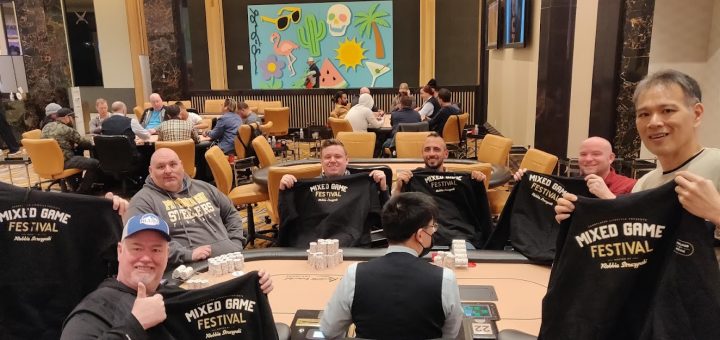
When I’m hosting the festival, I’m usually on-site 14–15 hours per day. Greeting players. Helping games start. Answering questions. Jumping into conversations. Making sure everyone feels welcome.
Add in the many other visits I made just to play, rail Poker Hall of Famer Eli Elezra in his big $300/600 mixed game, or meet friends, and you start to understand why this room became such an important part of my poker life.
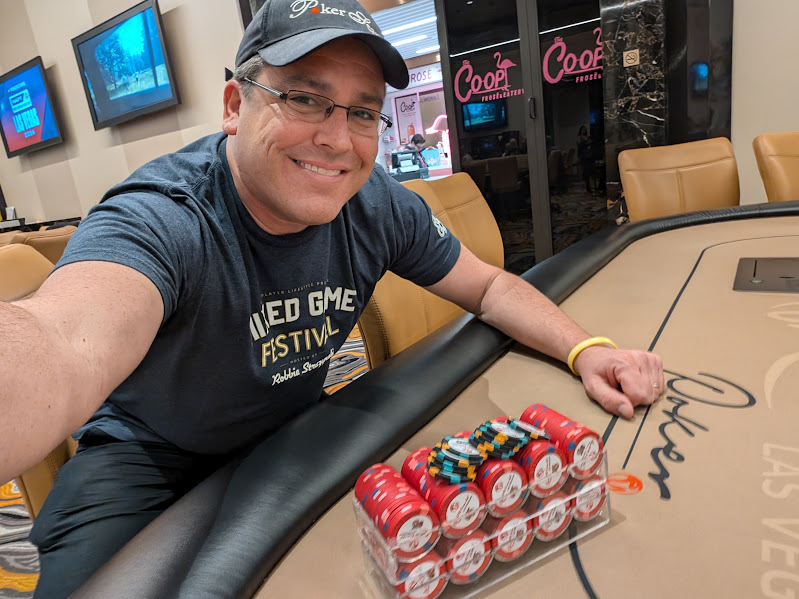
It’s also where I first played in the $80/$160 mixed game — a milestone I’ll never forget.
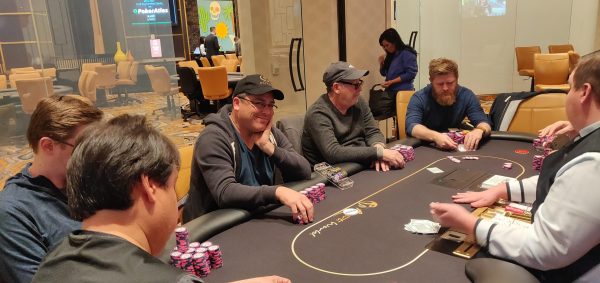
There’s never been a poker room that I’ve promoted anywhere near as much or anywhere near as wholeheartedly.
Resorts World Poker Room: The Mecca of Mixed Games
Every poker room in Las Vegas needs its identity. For Resorts World, that identity became mixed games.
Sure, there were always a couple $1/$2 No-Limit Hold’em tables running. Once or twice a week there was a $5/$5 double-board bomb pot game. Occasionally there was even an “influencer” livestream game.
But what really defined the room were the mixed games.
We are now up to FOUR dealer’s choice tables running here on Day 1 of Mixed Game Festival XII
A GREAT kickoff at @PokerRoomRWLV ???? pic.twitter.com/TCtXNQLCd4
— Robbie Strazynski (@cardplayerlife) November 16, 2025
Regular weekly games became staples of the room’s culture — like tables at a neighborhood café where the same group gathers every week.
Coach’s $8/$16 game.
Ernie’s $6/$12 game.
Raul’s $4/$8 game (may he rest in peace).
And, of course, the big high stakes mixed games, too.
These games ran regularly and created the backbone of the Resorts World poker room community.
A good old $8/16 mix at @PokerRoomRWLV … win or lose, it’s a very happy place, indeed ???? pic.twitter.com/WvrnU4luKR
— Robbie Strazynski (@cardplayerlife) November 10, 2025
Just like a great café, you might have tourists who stop in once. But what gives a place its soul are the regulars. And those mixed games brought them in.
It wasn’t just locals, either. Players from out of state and all over the world would specifically plan to play at Resorts World when visiting Las Vegas because of its stellar reputation for being the world’s most inviting place to play mixed games.
Naturally, the room kept an ample supply of plaques ready for virtually every poker variant imaginable to be spread across multiple tables.

For mixed game players, that kind of attention to detail — and and always reasonable, low rake — meant everything. Plus, the state-of-the-art coffee machine and self-serve soda fountain were pretty awesome, too.
My First Resorts World Poker Room Memories
I distinctly remember my first visit to Resorts World Las Vegas in late 2021. Gary Hager, the room’s first Director of Operations, proactively introduced himself and volunteered to give me a tour not just of the new room, but of the entire property. He spontaneously cleared half an hour on his schedule — just like that — to make me feel like a VIP.

I was with my father on that trip, and it was Dad who suggested that I ask if our (second ever) Mixed Game Festival could be held there. Little could I have known that that moment would be the start of an incredible run, and the harbinger for a bevy of amazing professional and personal relationships I’ve come to treasure.
I soon learned that more than half of the poker room’s initial cohort of dealers and floorpeople had followed Gary across the country to Las Vegas from Encore Boston Harbor to staff the new room. Good, good people, most of whom have been at Resorts World for it’s entire nearly five-year run.
Within a few months, Gary left the room in the incredibly capable hands of Leon Wheeler. I don’t think I’ve ever witnessed a poker community be happier for someone than when news spread of Leon taking the helm at Director of Poker Operations. Similarly, when news of his departure broke a couple weeks ago, I don’t think I’ve ever seen a poker community more heartbroken. Indeed, Leon was tops by every conceivable measure, and from the top down, the Resorts World poker room staff were simply exceptional.

When The Room Was Buzzing, It Was Amazing
The room itself was gorgeous. Spacious. Bright. Comfortable. Modern.
A permanent space for 30 poker tables might have been a bit too ambitious, but on occasions when all those tables filled up? It was incredible.
Everyone in this picture is here at @PokerRoomRWLV because of Mixed Game Festival XII ❤️
Two “beginners” $1/2 ladies A-5/2-7 tables going plus two $4/8 mixes and one $8/16 mix.
And we haven’t even started today’s giveaways yet ????
Come join us for all the fun! ???? pic.twitter.com/JJeQH478u1
— Robbie Strazynski (@cardplayerlife) November 19, 2025
The energy, the chatter, the sound of chips flying across the felt — it created a one-of-a-kind atmosphere that was hard to match anywhere else.
Still, beautiful spaces alone don’t create memories.
People do.
The Dealers and Poker Room Staff Who Made It Feel Like Home
What truly made the Resorts World poker room special was its staff.
The dealers embraced mixed games in a way you rarely see. Over time, ALL of them became incredibly proficient at dealing complex rotations of games; something that rarely happens staff-wide. Some even joined us at the felt after they got off shift!
Dealers rotated through everything from low-stakes games to the big $80/$160 and $300/$600 mixed games. Think about that — the same dealers who handled the massive games with total professionalism were the very same ones dealing our humble $4/$8 mixed game tables at the Mixed Game Festival.
And there was no hierarchy of respect. Everyone mattered equally. Every hand was dealt with the same skill. Every dealer sat at every table with the same friendly smile.
Having a entire staff exude that level of class and professionalism speaks volumes.
Thinking about some special people over the last few days… here are just a few, among dozens. ❤️ pic.twitter.com/CQwkGXIi8e
— Robbie Strazynski (@cardplayerlife) March 15, 2026
Why Casinos Sometimes Close Poker Rooms
Of course, casinos ultimately have to make business decisions.
Poker rooms take up a lot of valuable floor space, and they simply don’t generate the same revenue as slot machines or table games. So, from a business perspective, those decisions are understandable.

Still, part of me can’t help but wonder if there might have been another path — perhaps a smaller poker room rather than closing it entirely.
A cozy 10–12 table room could still have preserved everything that made the Resorts World poker room so special.
But those decisions and calculations are not mine, or the community’s, to make.
The Room May Be Gone — But the Community Isn’t
While the poker room itself may be closing, the people who made it special aren’t going anywhere.
The dealers will find new homes around Las Vegas. The players will gather at other tables. The Mixed Game Festival will continue doing what it does best: bringing people together through poker.
I’m looking forward to seeing many of those familiar faces again, wherever that might end up being.
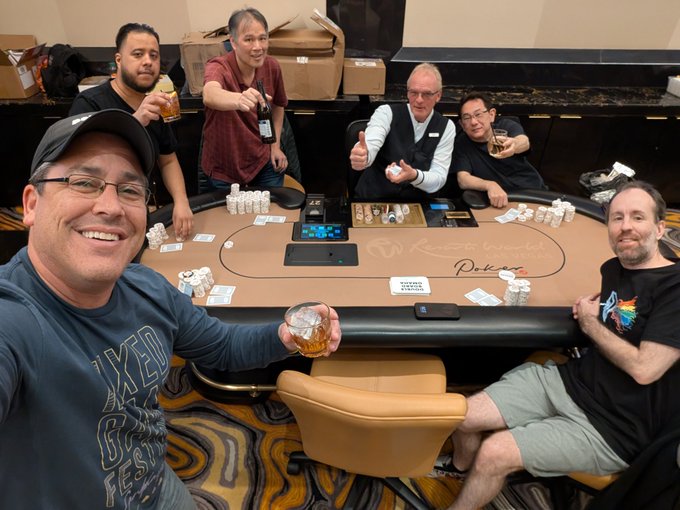
Still, the next time I land in Las Vegas is going to feel a little different.
For more than four years, I’ve had the privilege of walking into Resorts World and heading straight to a poker room filled with friends.
Nothing lasts forever, of course. Poker rooms open and close. Sometimes they even come back again.
Perhaps someday a new Resorts World Las Vegas poker room will rise once more like a desert phoenix.
Until then, all we can do is hold on to the memories.

Because for a wonderful stretch of time on the north end of the Las Vegas Strip, there was a poker room where everybody knew your name.
And every time I walked through that entrance, someone would smile and say: “Hey Robbie! Great to see you!”
And just like the final scene of Cheers, the lights will soon go out on a place that meant far more to its community than square footage or revenue ever could.
We’re really going to miss it.
In just a few decades the online casino sector has achieved truly stratospheric success. Today it’s estimated to be worth around $80 billion a year and is growing at a rate of around 12% a year. So by 2030 it is set to be worth almost $154 billion.
Some markets are growing faster than others and New Zealand is up there with the leaders. By 2029 it’s projected that around 700,000 adults will be playing online and the revenue raised will be $1.64 billion.
In such a vibrant market it’s unsurprising that there’s a great deal of competition among casino operators to acquire new players. There’s also often very little to distinguish among the casinos themselves. They tend to feature the same kinds of games and types of slots, often from the same game developers.
But the one point of difference that they can use to stand out is the range of incentives that they offer to new players. These are generally known as welcome bonuses and they can take various forms. Then, once a player has signed up for a particular casino, there are other promotions designed to keep them playing.

Types of bonuses and promotions
It’s fair to say that every single online casino offers some kind of bonus for new players with the main types listed here. There are others, such as special offers made on players’ birthdays and the chance to play types of Wheel of Fortune games on a daily basis. But these are the exception rather than the rule.
No Deposit Bonuses
These are undoubtedly the most sought-after types of bonus but are increasingly difficult to find. As the name suggests, these take the form of free stake money offered to new players. There’s no requirement for them to put down a single dollar of their own to start playing. But, as online casinos have increasingly found, once the free stake money has been exhausted the player often moves on to another casino to claim another bonus.
Deposit Match Bonus
As a hedge against the no deposit bonus costing them profit, casinos started to introduce the deposit match bonus. In this a player does need to put down some stake money of their own but the casino will match it up to a maximum agreed level. These can be quite generous bonuses offering players the chance to gain hundreds of dollars in what are effectively free bets.
Free spins
Those players looking for something for nothing from their new casino will find there are plenty of options for no deposit free spins in NZ if they visit a site like Casino Guru. It’s by no means unusual to find online casinos offering up to 300 free spins on selected slots games with no need for an initial deposit. Sometimes the free spins incentive is combined with a deposit match bonus offering double the incentive to sign up and play.
Reload bonus
Casinos are all too aware that players are fickle and, once the free stake money runs out, they may start looking around again. This is where the reload bonus comes in. This usually takes the form of a secondary deposit match bonus and offers just enough incentive to carry on playing. It is also often accompanied by a set number of free spins on selected slots games or sometimes the chance to enter into a free prize draw.
VIP and Loyalty Bonuses
Once a player is well-established and is spending plenty of money in an online casino they are often invited to enjoy a loyalty scheme. This tends to have different, ascending levels and the more a player spends the higher they can rise until they reach VIP status. Incentives can include free stake money, gifts and even the chance to attend top sporting events as guests of the casino in question.
Watch out for the wagering requirement
We’ve all heard the expression that there’s no such thing as a free lunch – and there’s no such thing as a free casino bonus either. That’s because all have certain terms, conditions and restrictions to them.
The main one of these is something called a wagering requirement. This is an amount that a player needs to have wagered before they can start to claim any of the winnings they have achieved with their bonuses. It’s expressed as a multiple of the bonus amount, so a 10x wagering requirements would mean that a player who had received a $100 bonus would need to bet a total of $1,000 before claiming any winnings. The nature of free spins means that a wagering requirement does not apply.
Despite the wagering requirement, bonuses are undoubtedly useful for anyone wanting to start playing any game from poker to roulette on a small budget. And the more you search around, the better the bonuses you’re going to find.
Solvers have changed the face of the poker industry in recent years, becoming essential features in serious players’ toolboxes. These poker solver programs are designed to provide you with GTO (Game Theory Optimal) solutions in preflop and postflop spots, allowing you to create a game plan that can’t be exploited.
While there is still a segment of the poker community that doesn’t endorse solvers, a majority of professional players have endorsed them as the next logical step in the evolution of the game. At the highest of stakes, especially online, it has become nearly impossible to win if your game doesn’t have solid solver-based foundations.

With a large percentage of players endorsing this fact, we’ve seen a number of poker solvers debut and gain popularity. All of these programs are similar on the fundamental level, but each of them offers a scope of unique features and functionalities. Which one you should pick depends on your particular needs, the games you primarily play, and your level of experience using poker solvers.
In this article, we endeavor to provide a side-by-side comparison of some of the best and most popular poker solvers out there, which should help you figure out which would be the most useful as far as your own poker study purposes. So, without further ado, let’s dig in.
Top 7 Poker Solvers in 2026: Side-by-Side Comparison
| Solver | Year Released | Pricing | Poker Variant | Best For | USP |
| GTO Wizard | 2020 | From $26/mo (billed annually) | NLHE | Intermediate to advanced players (cash games & tournaments) | Multi-way solutions |
| Octopi Poker | 2023 | $16.67/mo (billed annually) | NLHE | Beginners to advanced (cash games & tournaments) | Vault & interactive hand trainer |
| PioSolver | 2015 | €450.00 one time fee | NLHE | Advanced players (cash games and tournaments) | Deep study capabilities |
| PeakGTO | 2025 | $59/mo (billed annually) | NLHE | Intermediate players (focus on tournaments) | Interactive drills to steer your learning curve |
| GTO Lab | 2025 | $74/mo (billed annually) | NLHE | Intermediate players (focus on tournaments) | Best for studying ICM spots |
| Vision | 2020 | $249.75/mo (billed annually) for full version | PLO/PLO5 | Intermediate to advanced PLO players | #1 Pot Limit Omaha solver |
| PokerSnowie | 2013 | $16.66/mo (billed annually) | NLHE | Beginners and intermediate players | Cheap & easy to use |
#1 GTO Wizard
GTO Wizard is, without any doubt, one of the most established solutions in the poker solver niche. It is one of the first names that come to mind when the word “solver” pops up in a conversation.

The platform offers a comprehensive set of features for anyone looking to master GTO poker strategy, whether they’re just getting their feet wet or they’re an experienced, elite-level pro.
- Study using a massive library of pre-solved spots (10M+) for a variety of stack depths & game formats (cash games, MTTs, HU, SNGs).
- Train with a highly customizable practice tool – play through random scenarios or set up highly specific spots you’re interested in and receive instant feedback on your decisions, street by street.
- Find your leaks with analysis tools that let you upload your own hands and receive detailed GTO reports.
Refusing to rest on its laurels, GTO Wizard constantly comes up with new features. One of the biggest upgrades happened in 2025, when the company introduced the ability to solve for three-way spots – something that most poker solvers are not really able to do just yet.
You have full freedom to input all parameters, and the software does calculations on the fly and returns solutions very quickly, so you won’t have to wait forever to solve these spots. This addition made GTO Wizard even more powerful.
This power doesn’t come without some drawbacks, though. In terms of user-friendliness, this isn’t the easiest platform to master. If you have little to no experience with solvers, you’ll likely feel confused and overwhelmed looking at all the different charts, features, and options.
There are FAQs and tutorials to help you, of course, but it wouldn’t be fair to call GTO Wizard beginner-friendly. It’s not that the team isn’t doing a good job of simplifying things; it’s more that the software itself offers so much that it’s virtually impossible to make it super-simple to use.
That said, this shouldn’t turn you off from using the platform. If your mind is set on it, you’ll be able to figure it out fairly quickly, and – unlike at the actual felt – any mistakes you make along the way won’t cost you anything. So, you can dig in and explore.
GTO Wizard offers several different tiers/pricing packages, depending on what games/solutions you want to study. There is also a free mode that gives you very limited access, but it’s enough to see what this excellent poker solver tool has to offer.
#2 Octopi Poker
Octopi Poker is a relative newcomer to the world of poker solvers, but it has gained a lot of momentum in the time it has been around. While the training platform created by Victoria Livschitz falls into the category of poker solvers, it is more than just that, which is how it stands out from the competition, especially GTO Wizard.
While it maintains a powerful solver engine at its core, Octopi Poker also offers a variety of tools that are aimed more at beginners and even fairly casual poker players. So, it brings together different aspects of the colorful poker world, aiming to become a go-to solution across the board.
On the solver side of things, Octopi Poker offers:
- A huge sims library with millions of pre-solved simulations, with options for even and different stack sizes, ICM spots, and final tables.
- Hand trainer where you can configure different spots to study, playing through scenarios, and having your decisions rated in real time.
- An analyzer that allows you to import your own hands and compare them to GTO solutions.
These three features are common to most poker solvers out there, but Octopi features a more user-friendly interface that’s easier to navigate and fits everything on a single screen. You can easily hover over the game tree and have small pop-up windows with ranges show up without having to switch between different windows.
On top of these solver-specific features, you’ll also find:
- Preflop ranges with the option to compare ranges for different positions, which is perfect for studying, as well as the Range Map, a feature unique to Octopi Poker, that allows you to easily observe how ranges change as you move around the table.
- The Vault – a huge and constantly growing database of actual hands played by top-level pros in some of the biggest live tournaments around.
The Vault is unique to Octopi Poker, and it is an excellent learning tool, as each hand is imported and analyzed, and you can play through the hands, taking the seat of any player to see how your decisions compare to theirs, and what the actual GTO strategy suggests.
Plus, each hand also has a corresponding video clip from the tournament, so you can see how it played out in real life.
All these things put together make Octopi Poker a unique platform that goes beyond what we’d consider required for studying GTO. It also brings some fun elements, which can be appealing to broader audiences and help them ease their way into the world of solvers.
In terms of pricing, Octopi Poker offers a simpler subscription structure, where you can choose between a personal and professional subscription. The latter gives you full and unrestricted access to all platform features.
READ MORE: Octopi Poker – A Thorough Review
#3 PioSolver
PioSolver has a special place in the world of poker solvers. Released back in 2015, it was one of the first real solvers out there, and it was endorsed by more serious players at the time (like Nick Petrangelo, pictured below). Today, even though the competition is strong, it still remains relevant.
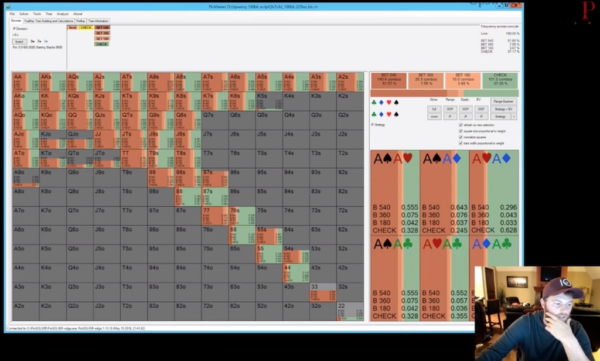
Unlike most modern solvers, this one will actually build custom solutions for you based on the information you input. This means two things:
- You need more computing power for it to run smoothly.
- It is designed for players who are on a pretty high level already and can take advantage of this type of deep analysis.
Being an older poker tool, PioSolver isn’t web-based. You’ll need to download the software locally and run it on your machine. And, it needs to be a solid machine, with at least an i7 processor and about 16GB of RAM, but more is certainly better.
The good thing is that this type of configuration is not hard to come by these days, but it was pretty cutting-edge a decade ago, when this tool first appeared.
If you’re a beginner looking to enter the world of GTO, PioSolver isn’t for you. While you’ll be able to figure out the basics, this software is designed for players who are looking to break down very specific spots and get into the nitty-gritty of the game.
The interface has everything you need, but it does feel a bit “antiquated,” especially compared to modern tools available out there. This is not to throw any shade on Pio – like many tools designed for serious pros (not just in poker, but in general), the focus is on usability and final product.
There is no subscription model here. You’ll buy a license that allows you to use the software on two different computers, and you can choose between two options: Pro or Edge. Edge, which is the more expensive of the two, gives you the highest degree of customization, including custom compiles for your specific hardware.
#4 PeakGTO
Developed by the team behind Pokercoaching.com, one of the largest poker training sites in the world, PeakGTO is another solid alternative if you’re looking for a poker solver that is fairly affordable and relatively easy to use.

In terms of what this tool has to offer, there aren’t any big surprises, but PeakGTO does have a few fairly unique features that make it somewhat unique in this space:
- A library containing millions of pre-solved hands for you to study different situations across various table positions and stack depths (from 10 to 200 big blinds).
- A trainer with 20M+ solutions to train in unique spots and elevate your game.
- Hand-picked drills to help you master some of the common yet difficult spots that you’ll face over and over again.
- Drill of the day to keep you engaged.
- A leak finder that helps you identify areas of your game that may be lacking and suggests what drills to focus on to plug these leaks.
PeakGTO was developed primarily for tournament players, although the solver works just as fine for cash games, as long as you are going over 100 big blind spots. In addition to regular solutions, PeakGTO also offers the ICM module to study spots where there is money pressure and see how your strategy changes in these situations.
The interface is extremely simple and easy to understand, which makes it a great choice if you don’t have much experience with solvers. Things are very intuitive, so you won’t have to spend a lot of time figuring out where certain settings are when setting up the spot – they’re exactly where you’d expect them to be.
PeakGTO offers a free (limited) membership to test things out, after which there is only one subscription model (whether you pay yearly or month by month) that gives you full and unrestricted access to everything this platform has to offer.
#5 GTO Lab
GTO Lab is a poker solver that was built with tournament players in mind. It offers features you’ll find in other solvers, but there are also a few aspects specific to this particular platform that any MTT player will appreciate.

GTO Lab puts a lot of focus on ICM. While other solvers, like Octopi Poker, also offer solutions that take ICM into account, this platform takes a step further, making it an ideal choice for intermediate and advanced tournament players.
Some of the main features of GTO Lab include:
- Over 14,000 preflop solutions, pre-solved for different stack depths.
- Top-tier ICM trainer that lets you play from every position, accelerating your growth.
- Chip EV postflop library that utilizes simplified flop continuation bet trees.
As far as poker solvers go, this one may not be as elaborate as some of the other ones on this list, but this is by design. GTO Lab cuts through the noise and delivers accurate solutions that are made simpler to learn and execute at the tables.
If you play tournaments, there is a lot that you can learn here, especially in the ICM department. GTO Lab isn’t actually built for cash games, and although you could still use it to study some ring game spots, you’ll be better served picking a different solver.
In terms of design and usability, the site strikes a nice balance between nice looks and usability. Graphics are easy on the eyes, but not overwhelming, while all the main features and options are easily accessible, and you won’t have to spend too much time figuring out how things work.
As for the pricing, GTO Lab also offers a free membership that will let you see the platform in action. After that, there is just one subscription model that gives you full access to all the features. For those wanting more, you can also pay for the Pro package, which includes coaching videos from elite players.
#6 Vision GTO Trainer
Rounding up our list of the best poker solvers out there is Vision GTO Trainer from Run It Once, but this one really stands in a category of its own. Unlike the rest, Vision is actually a GTO tool for Pot Limit Omaha, built by Phil Galfond – a man whose knowledge of PLO is undisputed – and Matthias Pum.

The solver covers both PLO and PLO 5, and it is, by far, the best tool of this type available out there. If you are tired of guessing what’s what and want to play solid, mathematically correct Omaha, this solver is all you’ll need.
Inside, you’ll find:
- Preflop ranges for different positions and situations.
- Thousands of pre-solved post-flop scenarios, so you can set up different spots and study them.
- Streak mode, where you are presented with situations and need to offer correct answers (as you learn, you’ll also collect leaderboard points and compete against other users).
While Vision GTO Trainer wasn’t designed for complete PLO beginners, you don’t have to be a super-advanced player to take advantage of what this tool has to offer, either. A very simple and user-friendly interface makes it easy to find your way around and start working on your game.
As PLO is much more complex than Hold’em, the number of solutions in the database isn’t as comprehensive as what you’ll find with NLHE solvers. That said, Vision is still, by far, the most comprehensive tool for studying Pot Limit Omaha, and it is constantly upgraded and improved.
Leaderboards represent a nice touch, especially for more recreational players, as they offer additional motivation to keep working on their game.
Vision offers three subscription options. You can get just regular PLO solver access, PLO 5 solver access, or both. Monthly memberships aren’t cheap, so you probably won’t be buying them if you’re playing micros, but as you venture into the world of mid-stakes, paying what equates to about one buy-in per month is more than justified for what you get from this solver.
READ MORE: Run It Once Vision Trainer – A Thorough Review
#7 PokerSnowie
This comparison could probably do without PokerSnowie, but we decided to include it as an “extra” of sorts, as it represents a quality mid-way solution for those who are looking to get into GTO poker, but aren’t quite ready to go the full-blown solver route.

PokerSnowie isn’t as elaborate as other solvers listed here. Creators describe it as “your AI-powered poker partner,” and that is a fitting description.
This tool lets you play against AI opponents to test your understanding of the GTO strategy, load your own hands to analyze them for leaks, and learn preflop hand ranges for different stack depths. It doesn’t have elaborate game trees and hand breakdowns you’ll find in GTO Wizard or Octopi Poker, but if you’re just starting out, you probably don’t need these anyhow.
PokerSnowie is a quality tool that can certainly help players of all levels, but it is an excellent choice for solver beginners. It will ease you into this complicated world and make your move to more complicated solutions much smoother.
It is also the most affordable of the lot, with the monthly subscription costing you less than an NL20 buy-in. So, you don’t really need to overthink it: it’s easily worth the small investment.
Choosing Your Poker Solver in 2026
If you’re serious about winning in poker in 2026, the reality is that you’ll probably need to get with the program and start using solvers sooner rather than later. At its very core, poker is a game of math and numbers, and modern software solutions are very good at crunching those numbers. Notably, all of the poker solvers we’ve profiled in this piece remain regularly updated, so there’s no need to worry that their value will become dated.
We’ve pretty much reached the point in Texas Hold’em, and arguably in PLO, where we have a mathematically correct play for almost any heads-up spot. That’s as good as it gets if you’re playing against other competent players who don’t make serious mistakes. And now, solvers are expanding to cover multi-way spots, too.
While poker solvers can be intimidating at first, and you might not be certain whether spending money on one of them is the right thing to do, this is where we’re at in 2026. Of course, you can still beat your home games and $2/$5 at your local casino without them, but if you want to beat any serious stakes online, you’ll need some solver knowledge in your poker toolbelt.
As they say, if you can beat them, join them – and then beat them!
I’ve been playing low-limit mixed games for years and years and years, enjoying myself thoroughly nearly every time I play. Over those years, I can’t count the times I’ve seen poker players from other games wander by and visibly recoil at what they see on the table.
But mixed games aren’t anything to be afraid of. They are, after all, just poker. In this article I’m going to show you how they are “just poker” so you can feel at least a little bit comfortable when you muster up the courage to leave your Texas Hold’em table and lock up a seat at a mixed game table for the first time.
Before I begin, I want to stress that this article isn’t for high stakes players. I’m not going to dig deep into strategies and show you how to exploit the narrowest edges. Others do that better than I ever could. No, I am going to relate the game that you’re probably the most intimately familiar with, good ol’ Texas Hold ’em (and a little bit of Omaha, too), to several different mixed games. This will help you take what you already know and apply it several variants that you’d likely find in a mix.

Going Over Texas Hold ‘Em
I bet you can recite the order of standard poker hands backward and forward. I bet you can look at a board and your two hole cards and determine how many outs you have with two cards to go and with one card to go. If you’re a no-limit player, I bet you know bet sizing on the flop and turn to maximize your EV. If you’re a limit player, I bet you know how many bets need to be in the pot to make a call profitable with a gutshot and an overcard.
You know that if a third card of a suit hit the board on the turn, your straight draw is devalued. You know if you get raised on the river your second-nut flush is probably no good. You know how to find hidden outs. In short, you know what to do when you get two cards, based on those cards, based on the players, and based on the action.
But what is good when you get four cards? Or five cards? Or even six cards?
What’s Good in a Non-Hold ‘Em Game?
Well, the best poker hand, of course. But what is the best hand in a game?
First of all, let’s talk about split pot games. In Hold ’em, a pot is split when two players have the same hand. That doesn’t happen often. In many mixed games, a significant number of the games are designed to split the pot. In many of those games, the pots are split between the best high (poker) hand and the best low (poker) hand. If you’re playing in one of those games, half your goal is what you’re used to: getting the highest possible poker hand. Let’s use Hold ‘em as an example of this.
Let’s imagine there was a game called Hold ’em/8. It’s like Omaha/8, only played like Hold ’em. You get two cards face down, there’s a flop, turn, and river, with betting, and the best poker hand and the worst poker hand split the pot. To make this easy, it’s a fixed limit game, like most mixed games are.
Now let’s say you’re playing for the high hand. You were dealt a suited ace and two cards of that suit came on the flop. You’re in the pot with three other players. There are four small bets in the pot (minus the rake), and there has been a flop bet and call, so there are six small bets in the pot. You know what you’d do here in a “normal” Hold ’em game: raise!
In a regular Hold ’em game, you’ve got about a 1-in-3 chance to make your nut flush. Your chances are the same in this game BUT, for probably half of the reward. This changes your odds. Because many mixed variants contain split-pot games, the odds that you’re used to in Hold ’em – even in relatively simple situations such as this – aren’t the same. Even needing to make the strategic adjustment, your overall goal of making the correct decisions remains the same.
What About All The Low Hands?
In many mixed games, one of your goals should be to make a low poker hand, typically the lowest possible. This might be the thing that scares Hold ’em players: How do low hands compare to high hands?
Let’s take the simplest comparison, a lowball-style game. In a high poker game, the highest hand is a royal flush. There are 2,598,960 unique possible poker hands, and among them are exactly four possible royal flushes (the nut hand). Hard to get, right?
In a low poker game, the lowest hand is typically A2345. Of course there are exactly four 5-high straight flushes, also known as “wheels”. But there are also 1,020 5-high straights that are not flushes. In a low poker game, all of these are considered the nuts! Instead of four stone-cold nut hands (royal flushes), there are 1,024. That’s 256 times as likely!
Once you understand what the best hands are in each game, and how easy or difficult it is to make those hands, you’ll start to “get” when you should and should not be involved in hands.
Scooooop!
Because many games in a mix are split-pot games, not only is the strategy different when you’re clearly playing for half a pot, your stack also does not grow as much when you win half a pot. This is why an optimal result is to win both halves of a split pot, known as a “scoop.”
How do you scoop? Hand selection! This is exactly like what you do in hold ‘em, so it should feel very familiar to you. But how do you know what hands to select to voluntarily put money in the pot (VPIP)?
Remember that “Hold ‘em/8” example above? As with most limit hold ‘em games, that suited ace is a good starting hand. You especially like to see that ace-broadway suited hand. But does that have a chance to scoop? It’s going to be hard because only your ace will play for a potential low hand. Ace-low suited would have a significantly better chance to scoop because not only do you have a chance for a nut flush, you have two good low cards that are a good starting hand for low.
The idea is the same when you’re getting four or five cards in an Omaha game or a super stud game or a drawmaha game or a triple draw game. If you’re familiar with Omaha/8, that’s why AA2x double suited is such a strong hand: You have a real chance to scoop the entire pot. So the key is figuring out what types of hands have good chances to scoop. And part of the fun – and challenge – of mixed games is that “good” scoop-potential hands are different from game to game.
Mixed Game Types
As a hold ‘em player, you’re used to one type of game: a game with shared (community) cards. Mixed games have that type of game, but they also have stud games, draw games, and hybrid games (that contain multiple game types). Especially at lower limits, mixed game players are often willing to “experiment” with expanding existing poker variants.
Take drawmaha. Please! Basic drawmaha combines two game types, draw and Omaha, and in its basic form, splits the pot between the best 5-card single draw hand and the best Omaha high hand. Drawmaha has spawned lots of variants that almost always affect the single draw hand. So you have drawmaha 2-7, drawmaha A-5, drawmaha 49, drawmaha 0 (zero), and more.

Draw games are almost always some form of triple draw in limit mixed games. Triple draw games are not at all like the draw games you saw in old westerns. Triple draw games are mostly played trying to get the lowest possible poker hand, but some (e.g., Archie) will also split the pot with the highest poker hand.
Stud games require memory. Because stud games feature face-up cards for every player, each card you see in someone else’s hand can affect the odds of getting the card you need, and cards folded and no longer visible are still unavailable. So the ability to remember what cards were folded and whether they would have helped you or would have helped what your opponents are representing is an important skill.
Flop games are included in mixed games, but rarely with just one board. Double board Omaha and 3-2-1 Omaha are just a couple of variants, and because they are Omaha games, sometimes they’re also played as “Big O” where players get five cards, instead of four. When that happens, big hands usually win. Board reading, especially when there are three flops or three full boards, is an important skill.
There are also variants where poker hands don’t matter. Usually this is in 0 (zero), 21, or 49 games. When a game includes 0, 21, or 49, you are literally counting pips on cards. Face cards (jacks, queens, and kings) have zero pips, aces have one pip, deuces have two pips, treys have three pips, etc., and you simply add the pips in your hand. What’s a good hand? Well, as you might have figured out, the nuts in a 0 (zero) game is five face cards, and the nuts in a 49 game is TTTT9. For the former, especially in a triple draw game, a 0, 1 or 2 will usually win, and a 3 or 4 is generally pretty good unless you’re up against serious action. For the latter, hands in the 40s are hard to get, but one of those will almost always be a winner, and high 30s is strong. Card subtraction is a bit more relevant in 49 than in 0. For example, if you have TTT85 (43), the absolute best possible hand remaining is T9999 (46), but that’s very unlikely. Whereas if you have KKKKA, there are still eight unknown face cards.
What? Counting Pips? How is That Poker?
Well, the short answer is: Poker is what we say it is.
Look at it this way: not all that long ago, poker players asked how sharing cards is poker. Poker was “I have my hand, you have your hand, and whichever one is better wins.” There was no thought of community cards.
Poker, like language, evolves. Part of that evolution is manifested through the emergence of new variants in mixed games. Each of those variants just includes a different way to determine what hand is best, that’s all.
Mixed game players like experimenting with alternatives and ideas. Some work, some don’t. That’s OK. Part of the fun of mixed games is that exploration, and in finding new and interesting ways to enjoy the game of poker.
Mixed Games Are Played Fixed Limit
If you’re a NLHE player, this is probably THE most important thing to know, especially if you’ve never sat down at a limit Hold’em (LHE) game waiting for your NLHE seat. NLHE players often get frustrated in LHE games because they are fundamentally not the same. You cannot apply the same pressure in a LHE game as you can in NLHE.
Mixed games, especially low-limit mixed games, are played almost exclusively with fixed limits. Sometimes you’ll see players agree to add a big bet game in the mix, but when that happens, there is typically a betting cap. Larger mixed games will more often include big bet games. That said, the nature of many game variants allows you to call bets – and even raises – cold, with decent strength hands.
Let’s use 2-7 triple draw as an example. Getting dealt three cards 8 and lower, especially if the other two cards are 5 and lower or 4 and lower, is a hand you’d usually want to raise with. If you look down and also see three cards 8 and lower, a cold call is very reasonable. A 3-bet if you have the chance to get heads up is also reasonable. You won’t be ahead, but you won’t be far behind. Cold calling and drawing three with a hand such as 23 or 24, while speculative, is also reasonable. In all those cases, that first draw will be key. If you don’t improve, the odds are fair that the raiser did, and you can probably fold to action. Also, continuation bets are not as common in fixed limit games, so the raiser’s action can give you a clue. If you do improve on that first draw, you could be in pretty good shape for the last two draws.
Players Will Answer Your Questions and Give You Tips
Low-limit mixed games are well-known for their friendly players. While many have been playing mixed games for years and know them pretty well, they’re usually also just as happy to see a newbie sit down at their table as you are seeing a newbie sit down at your NLHE table. Unlike those NLHE games, however, mixed game players are almost always happy and willing to explain game basics, and even share some strategies.

But here’s the thing: You’re still a poker player. For any game variant, in the first hand or two that you see, you will have a bit of data about what is and isn’t good in that game. Just as you know instantly that if you get dealt 39o UTG in a NLHE game, that’s an insta-fold, you’ll surely quickly come to realize that KKJ97 on the button is a fold in 2-7 triple draw. Because you’re a poker player, you will pick up the basics of each game fairly quickly. From there, it’s all about having fun.
And frustration. I once played in a mixed game where I missed, over the course of several hands, 17 consecutive one-card draws in badugi. It happens!
The point of playing mixed games (besides, to make money), especially low-limit mixed games, is to have fun. I have met some of my favorite people, not just favorite poker players, playing low-limit mixed games. Players are welcoming and smiling, and in any room running a low-limit mixed game, that table is always the noisiest and most boisterous in the room.
Mixed Game Resources
Beyond Cardplayer Lifestyle’s Mixed Game Poker Guide, there are plenty of great resources at your disposal if you’d like to study up. For instance, several poker books explain the rules and mixed game strategies, perhaps most notably Dylan Linde‘s Mastering Mixed Games. The BARGE group has a page on their website that explains rules of many, many poker variants. There is a (private) group on Facebook, Mixed Game Poker in Las Vegas, that contains documents with explanations of several games. Plus, some rooms have game placards with brief explanations of gameplay.
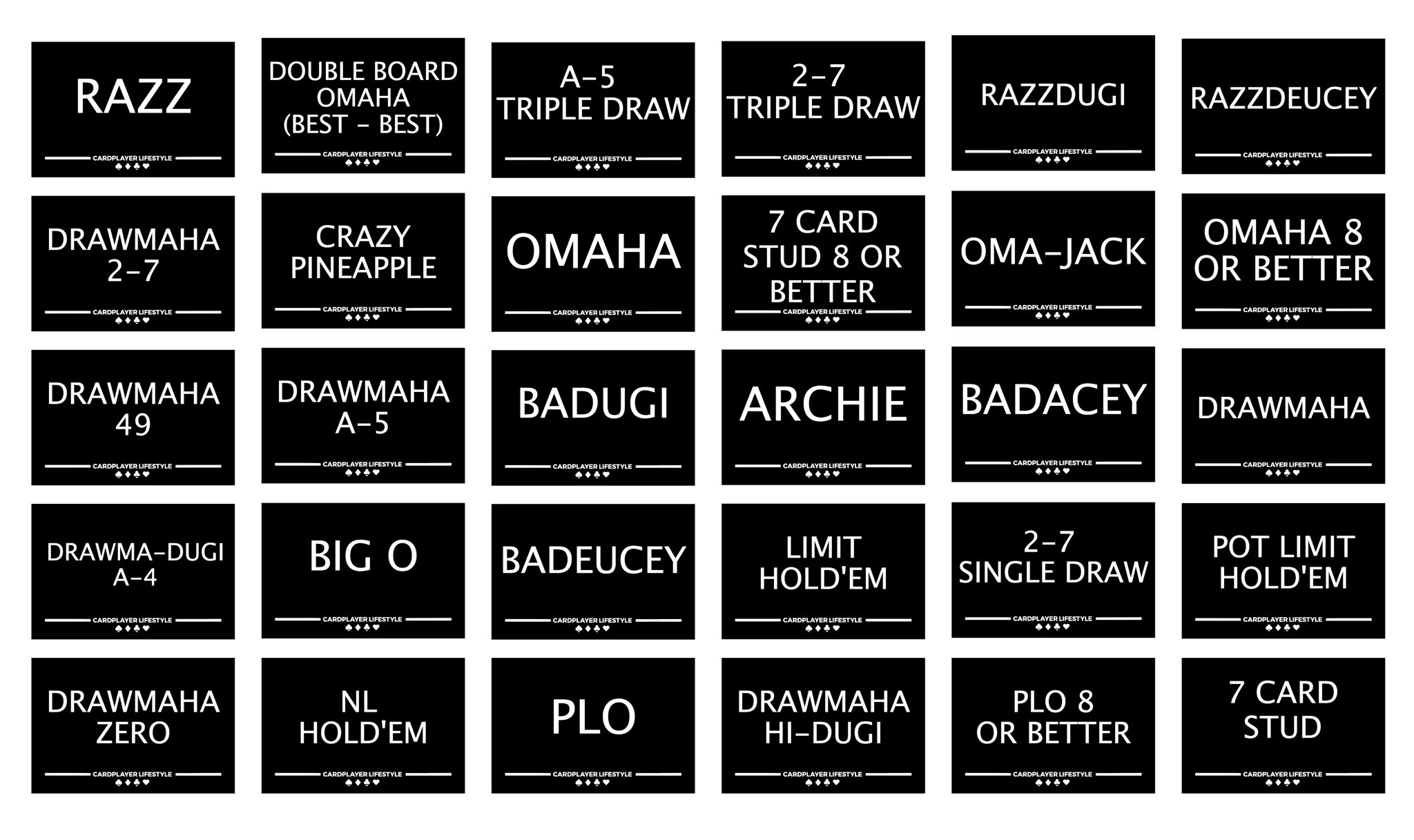
But the best resources are the people playing the game, like those of us who regularly attend the Mixed Game Festival. So pull up a chair, stack your chips, and don’t ever, ever be afraid to ask a question if you’re not sure about how a game works or what to look for in a hand. If you’re willing to sit down, the players will welcome you, and not just for your chips. Sure, you’ll make a few mistakes. I guarantee you that every single mixed game player has made them, from not knowing what’s good to not realizing a game has changed and playing entirely the wrong hand for the game.
So don’t be afraid to take a seat and get dealt four, five, or even six cards. You will be most welcome, and win or lose, you will have fun!
More than a decade after its original launch, SnapShove – the popular tournament poker tool designed to help players make optimal short-stack decisions – is entering a new chapter.
Originally created by professional poker player Max Silver, SnapShove was built with a clear mission to provide an easy-to-use tool that helps tournament poker players master push/fold strategy. Since its release, the tool has become widely used by players looking to sharpen their decision-making in high-pressure tournament spots.
Last week, an announcement made on the SnapShove website revealed that Silver has stepped back from day-to-day operations and handed the future of the platform to a new leadership team made up of experienced poker industry professionals.
While the new team has not yet been publicly named, the announcement made it clear that SnapShove is evolving. Just days later, the team unveiled a full relaunch of the product.
What’s New with SnapShove?
The relaunch introduces several major upgrades aimed at improving both performance and accessibility for users. Key updates include a completely rebuilt SnapShove website, major performance and platform upgrades, simplified subscription options, and lower pricing across iOS, Android, and web access.
The new subscription structure is designed to be easier for users to understand and choose from. There are now three tiers: Starter, Core, and Unlimited Access. Starter is a free subscription that gives users one shove, call, and reshove calculation per day. Core unlocks unlimited shove calculations. Unlimited Access unlocks unlimited shove, call, and reshove calculations. All three subscription tiers give users unlimited training simulations.
Updated SnapShove Pricing
SnapShove is available on both iOS and Android as a monthly subscription:
Core = $3.49 per month
Unlimited Access = $9.99 per month
Users who prefer to use SnapShove on desktop can access the platform through the website, while mobile offers both monthly and annual subscription options.
Core = $3.99 per month or $34.99 per year
Unlimited Access = $9.99 per month or $99.99 per year
These pricing changes make SnapShove more affordable while the new leadership team continues to enhance the platform.

Exclusive March Discounts
To celebrate the relaunch, SnapShove is offering limited-time promotions throughout March.
iOS and Android users can use the code MARCH2026 at checkout to receive their first month free when signing up to an Unlimited Access subscription.
Web users can use the code MARCH50 for the first week of the month to receive 50% off an Unlimited Access annual subscription. Users who miss that small window can use the code MARCH25 for the remainder of the month to receive 25% off an Unlimited Access annual subscription.

What’s Next for SnapShove?
While the new leadership team has not yet revealed its long-term roadmap, the relaunch suggests a renewed focus on improving the product and expanding its capabilities.
Users can likely expect continued improvements to existing tools along with potential new features designed to help tournament poker players refine their strategy and decision-making.
If the relaunch is any indication, SnapShove aims to remain an essential resource for poker players looking to gain an edge in tournament play.

Online poker tournaments have ceased being a niche pastime reserved for hardcore players. Today, they are a global phenomenon attracting millions of participants from every corner of the world. They are not just surviving; they are thriving on a global scale. At the same time, a parallel surge in crypto-native gambling platforms is attracting players who are interested in blending traditional poker with blockchain-based wagering.

According to market research by Data Intelo, the online poker tournament segment alone was valued at approximately $5.8 billion in 2023. It was projected to go above $15 billion by 2033 as digital adoption accelerates globally. Well, online tournament participation continues to outpace live events, bringing in millions of annual tournament entries. In fact, data by ZipDo showed that online tournament entrants grew by 45% from 2020 to 2023.
Meanwhile, a Financial Times reporting indicates that crypto gambling revenues went up to more than $80 billion in 2024. As reported by YieldSec, this was a fivefold increase from just two years prior. Now, more online crypto casino platforms are attracting poker players in a way that had not been envisioned before.
What is the cause of the online poker tournaments boom?
Online poker tournaments have demonstrated remarkable resilience over the last few years. For instance, the sixth edition of the WSOP Online Series for international players featured 33 bracelet events. This 2025 international leg was the largest edition since its debut in 2020, attracting more than 164,000 entrants.
But the biggest question still remains: What is the reason behind this boom?
To start with, mobile adoption continues to support tournament accessibility. The convenience that comes with these devices cannot be compared with any other, since you are able to play from anywhere, as long as you have an internet connection. Industry statistics show that approximately 70-75% of online poker players now access platforms via mobile phones. This has lowered the barriers to entry and also increased the daily participation frequency.
Another thing that has drawn players to online poker tournaments is the prize pools and global events. You see, online satellite qualifiers funnel thousands into major tournaments with lucrative potential wins lurking in the corner. For example, the 2023 Online Main Event drew in a record 6,023 entries with a massive prize pool of $28,609,520. It just makes sense why poker players from all over the world would want to put their bluffing skills to the test!
Additionally, cross-border player pools and liquidity agreements have made it possible for players in various jurisdictions to compete against one another in large fields. You see, industry data reveals that average field sizes continue growing. It has become common to see thousands of entries even in mid-level buy-in events. This is a sign that poker’s competitive appeal is continually becoming stronger in all skill levels.
The meteoric rise of crypto poker
While online poker continues to grow, crypto casinos are continually drawing poker players into their platforms. These platforms attract vast amounts of wagering volume and millions of users worldwide. The extraordinary growth behind crypto platforms can be attributed to the core advantages of crypto-native platforms.
To start with, crypto casinos have dealt with the issue of speed and cost of transactions. Since many casino sites that hold tournaments are global, it has become essential that poker players find the right platforms that can cater to their transaction needs. Traditionally, when using international or offshore casinos, you are required to wait for a number of days in order to complete your transactions, i.e., withdrawals. However, crypto platforms have made it easy as they bypass traditional banking delays and fees. These allow players to quickly access funds.
Secondly, crypto casinos offer privacy and anonymity, something that is much needed in the online poker world. Many players, especially those in regions with strict banking or verification requirements, appreciate the fact that they can gamble with fewer disclosures. For crypto platforms, you only need your crypto address and no more details. You do not need to provide your financial details, there are no strict KYC requirements and best of all, the anonymity can help you navigate the gambling world without being afraid of being targeted by malicious players.
Another reason is that crypto casinos often feature bonus incentives that complement the economic incentives of tournament play. Just combining these with the excitement of fast-paced games offers a diversified gambling experience. For instance, players can grind long poker tournaments but then switch to quick, high-variance games in between sessions.
Convergence and coexistence
Data points paint a picture of coexistence between crypto casinos and poker. Clearly, industry observers are continually seeing a future that has more traditional poker rooms adopting hybrid payment models, including crypto. This will greatly enhance the flexibility of payment without abandoning the core skill-based experience. In fact, some traditional operators have already introduced limited crypto functionality.
Simultaneously, some crypto casinos are experimenting with blockchain-based poker formats. This just shows that strategic competitive play is gaining a foothold even within decentralized platforms. In this evolving environment, players are continually enjoying enhanced financial autonomy, redefining what it means to be a digital gambler in 2026.
Poker and casino gambling are fundamentally similar, but also very different. The main part being competing against other players and not the house, meaning it is possible to play the game so well you have long-term edge and don’t need luck to profit. Which is not true in casino gambling. That doesn’t mean you can’t have winning sessions, of course, especially if you make use of the skills learned from poker, but most card players understand that the house has the long-term advantage in casino play.
Having said that, what elements of poker do translate into casino games? What games are most suited to poker players? How much effect do they actually have? The answers to these questions are complex but interesting. While no strategy can guarantee beating the house long term, lessons learned from the poker tables can reduce volatility, increasing the chances of luck going your way and possibly maximize the benefits when the cards are in your favor.

Understanding Math, Chance and Variance Are Key to Both
The math behind chance in casino games is very similar to poker in many ways. A card shark who can calculate approximate pot odds on the fly in poker should be able to master basic blackjack strategy quickly. This brings house edge down to the very minimum at around 0.5%, increasing the chances of a winning session significantly compared to an unstructured player.
Things like variance or possible bet sizing systems in slots, choosing the right games in video poker or roulette can make a big difference in the long-term results. Regular poker players are used to looking deep into this kind of math, so they should be capable of even applying complex ideas like the financial Kelly Criterion to casino gambling games.
No matter what your bet sizing is though, understanding the math behind chance will stand you in good stead picking games. Some video poker variants (rules do change considerably between games) can have as much as 99% return to player if played correctly.
Games like roulette and blackjack also have variants with slightly different main rules, side bets and payouts. This is a deep topic, but the main point to remember is pick the games with the best odds – for European roulette that means games with only one zero and 3:2 blackjack instead of 6:5 blackjack. These have the lowest house edge of the all the variants, and serious poker players should know to only give themselves the best odds.
Expected Value Applies in Bonuses and Promotions
Regular card sharks should often be thinking of each play on the felt in terms of expected value. Adhering to this over simply following lucky results leads to a better long-term strategy.
Casino bonuses can increase the EV of a deposit considerably. However they are highly variable between different casinos. Players should not be drawn in entirely by headline deposit match numbers, but should instead look for bonuses with the best terms. When assessing bonuses, just some terms that are worth looking out for include:
- The type of bonus
- Wagering requirements
- Game limitations
- Time limits
- Maximum win (if any)
To really find the most potentially valuable bonuses, it’s more than helpful to have all the options in one place. To get that, players increasingly look to online comparative resources. Established review platforms such as Casino.us compile expert analysis and player feedback helping customers vet US casinos for reputation and safety, while ensuring they also have varied game selections – like video poker variants – and fair bonuses.
Emotional Control and Tilt Management Are Essential
All successful poker players should be carefully managing their bankroll. Online casino players should be doing the same. But for slightly different reasons.
Top poker players treat their bankroll – sometimes backed by other people – as working capital for calculated risks. Online casino players should really be looking at their bankroll as entertainment money. Which doesn’t mean you can’t use poker concepts to give yourself a better shot at winning. But, unlike poker, the house has the long-term edge in casino gambling.
Nevertheless, concepts such as session spend or loss caps, take win levels, bet sizing and bankroll segmentation help casino players get the most potential value out of their deposits. Online casinos usually offer responsible gambling tools that can automate some of these limits to levels of players’ choice.
Part of managing bankroll is not going on tilt. Although the term originated in poker, the concept of unlucky results leading to cognitive and emotional dysregulation which can spiral into worse decisions that effect future outcomes is now well studied by science.
This is especially true when it comes to loss streaks and variance in casino games. Upping your bet size after a streak of losses might win it back, but it could just as well deplete your bankroll faster. In a similar way, getting unlucky in a blackjack hand and the making a sub optimal play will definitely effect your long term results.
Poker regs who have played tens or hundreds of thousands of hands and have seen many one-outer losses on the river or other bad beats will be well equipped to deal with the variance without busting your entire bankroll on a losing session.
Poker used to reward gut feel and table chatter. Now it rewards prep. The edge often shows up before the first hand is dealt, in your database, your solver work and the site you choose to play on. Sit down unprepared and you are already behind.
Online poker did not start with solvers. It started with chat boxes, forums and people arguing about whether Ace-King is a drawing hand. Back then, edge came from feel. Today, you open a laptop and you are staring at hand histories, HUD stats and solver outputs before you even click “join table.” The game looks the same on the surface. Underneath, it runs on data.
From Forum Tables to Early Online Communities
Before tracking software became normal, poker players learned from each other. Online forums replaced cardroom railbirds. Annual gatherings such as BARGE, which began in the early 1990s through the rec.gambling newsgroups, show what that era looked like. Players met in person, shared stories and tested ideas at the table.
Strategy lived in discussion threads and handwritten notes. You adjusted because someone seemed aggressive, not because a HUD showed a 32% VPIP. There were no solver charts to download. You watched showdowns and made mental notes. That culture built strong instincts, but it was still guesswork compared to what you have now.
Participation Numbers Show a More Competitive Pool
The player pool today is larger and sharper. In the UK, online poker participation moved from 5% in 2021 to 10% in 2024. That is a doubling in three years. You are not battling the same casual mix that logged on during the early boom.
The age split is tight. 44% of online poker players are aged 35 to 54. 43% fall between 18 and 34. But gender based, this is a male-dominated game. More than 75% of players are male.
Staking patterns tell another story. 57% of players wager between £1 and £100 per month. 28% stake between £101 and £500. 15% are above £500 monthly. A meaningful slice of the field is putting serious money into the game.
Solvers, AI and the Benchmarking of Decision Quality
Modern study is built around measurable decision quality. The PokerBench project created a dataset of roughly 11,000 critical poker scenarios covering pre-flop and post-flop spots. Large language models were tested on these spots. Base versions underperformed against optimal solutions. After fine-tuning, performance improved and correlated with stronger simulated win rates.
That matters for you at the table. Strategy is no longer judged by opinion. It is judged by alignment with equilibrium outputs. You run a hand through a solver and compare your line with an optimal baseline. Deviations are not philosophical debates. They are percentages.
AI research has moved from novelty to benchmarking tool. Even when models fall short, the exercise sets a standard. The gap between instinct and theory becomes visible. That visibility changes the way players prepare.
Where Casino Ecosystems Intersect With Modern Poker Study
Edge today includes platform selection. Rake structures, traffic levels and bonus mechanics all influence long-term results. Canadian players researching options often consult Online Casino Canada to compare regulated platforms, promotional structures and payment frameworks before committing to a site. Serious players also pay attention to licensing details, withdrawal timelines and regional availability. That extra layer of research reduces friction once you are playing real money games. You are not scrambling to check terms mid-session. The groundwork is done, and that stability supports sharper focus when decisions start to stack up.
That behaviour ties into strategy. A softer player pool at one site can outweigh a marginal rake difference elsewhere. A reload bonus can offset variance during a downswing. Game selection tools become part of your preparation, not an afterthought. Data-driven poker extends beyond hand charts. It includes informed choices about where you sit.
Strategic Study in the Modern Era
Study culture now looks organised. Players review hand histories, filter databases and drill specific positions. Dedicated strategy hubs collect analysis, coaching material and tactical breakdowns in one place. That reflects the way preparation has changed.
You do not rely on memory alone. You tag hands. You calculate frequencies. You compare river lines against solver outputs. The gap between amateur and serious regular often shows up in study discipline, not table talk. In terms of study and preparation, Poker these days have more in common with chess than with just “playing the luck of the draw”.
However, online poker still rewards feel. Reads still exist. Live tells still matter in mixed formats. Yet the backbone of modern strategy is numerical. Participation rates have doubled in key markets. 15% of players are staking more than £500 per month. Research datasets include 11,000 defined decision points. Those are hard numbers.
When you sit down now, you are stepping into a game shaped by tracking software, equilibrium models and benchmarking studies.
The cards have not changed.
The way people prepare for them has.
I don’t think I’ve ever hated having to write and publish an article more than this one. I have very unfortunately had to make the decision to cancel Mixed Game Festival XIII.
For those who don’t know, I live in Israel. As of this writing, our skies are closed “indefinitely” due to the ongoing situation in this part of the world. British Airways cancelled my ticket almost immediately. Even our national carrier, El Al, which always flies (even during wartime), is not currently allowing people to purchase new tickets as it focuses its operations and resources on bringing citizens stranded abroad home to their families.

But the Show Must Go On, No?
As events have continued to unfold over the last 2+ days, I have been scrambling to try and make contingency plans, find substitute hosts, and envision Mixed Game Festival XIII continuing without me on-site. Throughout all that, and despite the incredible kindness and good intentions of many wonderful people who offered to step in and assist, a number of things just didn’t feel right.
If we attempt the aforementioned “Plan B” (or even “Plan C”, which would be cancelling Week 1 and waiting for further developments in order to make a decision re: Week 2), I’d be doing a disservice to our players, to Resorts World Las Vegas, and to our festival’s sponsors – Faded Spade, RunGoodGear, D&B Poker, and Pokercoaching.com. I always make a COMPLETE commitment to every event I put together. If I’m precluded – for whatever reason – from providing that FULL effort, it would be unfair (in my view) to everyone else involved who expects “Robbie’s Mixed Game Festival”.
Moreover, if the festival were to proceed without my being on-site, that would just add unnecessary stress to my life that I frankly don’t need more of while a war is waging here at home. Of course, added to all that would be the inescapable melancholy of watching my festival unfold from afar without being able to partake in all the fun.
When It Comes to Family, Poker Takes a Backseat
My wife, Miriam, has been unbelievably supportive throughout these last couple days. Multiple times, she said “Robbie, you should go” and has spent an inordinate amount of time kindly listening to me as I wavered back and forth in my decision-making while incessantly refreshing for updates about potential exit routes. “And you want to keep a good name and a good reputation with your sponsors, with Resorts World, and with the people who attend,” she added.
She said this, mind you, as we’re hearing dozens of sirens each day, as she, my kids, and I spent an inordinate amount of time together in our bomb shelter, including sleeping there.
But even if I could somehow manage to find a way out of Israel and make it to Las Vegas, the bottom line is that it would just be wrong to leave my family under these circumstances.
Believe it or not, I actually found myself in a similar situation just last summer during Mixed Game Festival XI. There’s an important difference though; last summer, I was already in Las Vegas when war suddenly broke out mid-festival. This time around, I’m home.
It’s one thing to be stranded; it’s another thing to “abandon ship”.
The Fallout Sucks
I feel horrible towards you guys, the players. So many of you made travel arrangements, booked hotels, took time off from work, and had other plans in place.
I feel horrible towards the Resorts World poker room staff. We’ve held eight past Mixed Game Festival there, and they’ve always been so wonderful and accommodating.
I feel horrible towards our sponsors. When sponsorships for anything in the poker industry are increasingly difficult to come by, you guys nonetheless stepped up and offered your full-throated support.
I’m so sorry, everyone.
For whatever it’s worth, I still want to encourage you all to patronize D&B Poker, Pokercoaching.com, RunGoodGear, and Faded Spade. They’re great companies in our industry. Please give them your business.
And if you don’t end up cancelling your Las Vegas travel plans, please stop by Resorts World to play some poker. Check PokerAtlas; you might even find a mixed game running.
Now What?
Make no mistake about it, running Mixed Game Festivals has become a significant part of my business. There’s a very real financial hit I’m taking by cancelling.
And, my Gd, do the hundreds of hours I’ve invested into organizing everything, making my own travel arrangements, and promoting the festival feel in retrospect like a MASSIVE exercise in futility.
But it’s OK.
My family and I will be OK. We’ll be together. We’ll ride out this war as a family. That’s what matters most.
No matter how hard they try to extinguish our flame, Am Yisrael Chai! ????????
I’ll end off on a resoundingly positive note: Gdwilling, Mixed Game Festival XIV will proceed as scheduled this summer. You can mark your calendars: May 31-June 11 at Bellagio Las Vegas. I hope to see you there!
Entering the world of online poker for the first time can be a thrilling adventure, and for new players in regulated U.S. states BetMGM Poker has quickly become one of the top places to learn the ropes and play. The site provides a safe and easy-to-use interface, but like any new software, it may take a small amount of time to find your way around.
This guide has been created to assist new players in navigating the BetMGM Poker software in 2026. We will take you through the process of getting started, from learning about the lobby to finding the right games for your level of play and with a little instruction, you will be seated at the best virtual tables and taking part in the action in no time.

Getting Started: The Software and Main Lobby
The first thing you need to do is download the BetMGM Poker client onto your computer or smartphone and note that the software is available in regions where online poker is legal, such as New Jersey, Michigan and Pennsylvania. After you have downloaded the software and set up your account, you will be presented with the main lobby and this is your home base for everything on the site.
The main lobby is very clean and easy to navigate as you will find a series of tabs or filters that enable you to sift through the various game types that are available. The BetMGM poker lobby makes it very easy to find what you are looking for because you can filter by game type (such as No-Limit Hold’em or Pot-Limit Omaha), by stakes (from micro to high), and by table size. Take some time to click through the various filters and see how they affect the list of games that are available as this will help you to feel more comfortable navigating the site and finding the action you want.

Finding the Right Game
BetMGM Poker has many different types of games, but as a beginner, the two types of games that are most relevant to you are cash games and tournaments.
Cash games are the easiest type of poker to play as you pay a buy-in amount and the chips in front of you are worth a direct amount of cash. The blinds are fixed and do not go up so you can sit down at a table, play for as long as you like and cash out at any time with the payout you have in front of you. For new players, cash games are a great way to learn the basics of the game without the time constraints of a tournament as you can play for very low stakes to get a feel for the game.
Tournaments are a whole different animal. In a tournament, you pay a buy-in fee and are given a certain number of tournament chips and the objective of the game is to be the last player remaining. As the tournament unfolds, the blinds go up at certain intervals and players are forced to act. The prize money is paid out to the top players, with the biggest prizes going to the last few players remaining and tournaments provide the opportunity for a large return on a small investment and the rush of making a deep run.
Understanding the Different Tournament Types
In the tournament tab, you will see a variety of different types of tournaments. “Sit & Go” (SNG) tournaments are a good place for beginners to start as these are small tournaments that are held at a single table and begin as soon as a certain number of players (usually six or nine) have signed up and they are a good way to get a feel for playing in a tournament.
Further to this, “Multi-Table Tournaments” (MTTs) are the big leagues. These tournaments can have hundreds or thousands of players competing for huge prize pools and as such, BetMGM Poker is famous for its big online tournaments, which have huge guaranteed prize pools.
Features to Look For
The BetMGM Poker software comes with a number of tools that are meant to improve the gaming experience. Use the note-taking tool for starters and if you realize that a player has a certain playing style, you can create a note about that player that will appear the next time you are playing at the same table.
The software also has a hand history tool that enables you to check the hands that you have played. This is a very useful tool that can help you improve your game and you can go back to a hand that you were not sure about and check it without the pressure of being at the table. Lastly, look for the responsible gaming tools. These tools enable you to control your deposits and playing time so that you are always able to enjoy the game in a safe and controlled way.
Hitting the Felt
While playing on a new online poker site may appear to be a little intimidating at first, BetMGM Poker software is player-friendly. By taking a few minutes to get to know the lobby, learning the difference between cash games and tournaments and learning about the useful tools that are available, you will be well on your way to a fun and rewarding experience, so begin with low stakes play, learn the games and most importantly, have fun. Welcome to the exciting world of online poker.
In the highly competitive and often lucrative landscape of online casinos, sign-up bonuses, also known as welcome bonuses, have become a fundamental way for online casino operators to attract new players. These bonuses come in many different shapes and sizes, and they can enhance your gaming experience and offer the opportunity to win without risking your own funds.
However, to ensure you are getting the most out of these offers, it’s essential to approach them with a strategic mindset. A thorough gaming analysis can help you understand the ins and outs of these bonuses, leading to a more rewarding experience.
With that said, here’s everything you need to know about online casino bonuses to ensure you get the most out of them each time you claim them.

Read the Terms and Conditions Carefully
The key to truly maximizing your online casino sign-up bonus lies in understanding the terms and conditions that always come attached. Each bonus will have specific stipulations that dictate how and when you can use the bonus funds.
For example, some bonuses may require a deposit before they are unlocked, while others may not. Make sure to check how much you need to deposit to claim the bonus, as well as the maximum cashout value associated with it.
Additionally, the Ts and Cs will specify exactly which games you can and cannot use your bonus money on. Some casinos limit bonus use to specific games, which can affect your strategy if your preferred games aren’t included.
It’s also crucial to find out whether the bonus is available on mobile devices or if it is exclusive to desktop users. Understanding these important factors will ensure you don’t miss out on opportunities to get the most out of your bonus.
Choose Bonuses That Align with Your Preferences
It’s not uncommon for players to claim free offers and bonuses out of sheer necessity, but this strategy can lead to poor experiences. Instead, focus on bonuses that are worthwhile based on your individual preferences and favorite games.
Whether you prefer slots, table games, or live dealer options, some bonuses may be more suited to your interests than others. For example, blackjack players should pay close attention to how bonuses apply to table games, as contribution rates and wagering terms can differ significantly from slots. Reviewing expert gaming analysis can help identify reputable blackjack platforms that offer competitive sign-up incentives and fair game conditions.
Don’t hesitate to dismiss bonuses that don’t match your gaming habits. It’s easy to get caught up in the pull of a significant sign-up bonus, but if it doesn’t suit your playing style or preferred games, it could lead to a frustrating experience.
Know the Wagering Requirements
Another crucial aspect, and possibly the most annoying and frustrating for online casino players throughout the world, is the wagering requirements attached to the bonus. These requirements dictate how many times you must play through the bonus amount before you can withdraw any winnings.
A bonus with low to medium wagering requirements (e.g., 0x to 30x times the bonus amount) is generally more advantageous for players. Finding out the exact wagering requirement amount ahead of time will help you determine whether the bonus is worth claiming based on your gaming preferences.
It’s equally important to note the time constraints associated with completing these requirements. Players must get their wagering requirements completed within the specified period outlined in the terms and conditions.
If you commit to a bonus that you cannot meet the requirements for in time, you risk forfeiting the bonus and any potential winnings.
Always remember the following when it comes to wagering requirements:
- 0x to 5x times the bonus amount – considered excellent, extremely low wagering requirements
- 10x to 20x times the bonus amount – considered low
- 30x to 50x – considered average
- 60x to 70x – considered high, most players avoid
- Above 70X – considered unfair and unrealistic – avoid at all costs
In other words, look for bonuses with low to medium wagering requirements attached. The lower the number, the better it is for you.
Payment Method Considerations
Also, be aware that not all online payment methods are created equal when it comes to claiming bonuses. Some online payment methods, such as certain e-wallets or prepaid cards, may be excluded from qualifying for the bonus.
Therefore, it’s important to review the list of eligible payment options to ensure your chosen method is accepted. If you are using a method that is excluded, you might miss out on being able to claim a generous bonus.
Final Thoughts
Navigating the world of online casino sign-up bonuses can be complex, but with a focused approach, you can ensure that you get the most out of your offers. Always take the time to read the terms and conditions.
Doing so can help avoid any unwanted disappointment. Consider the wagering requirements, choose bonuses that align with your gaming preferences, and make sure you are using an eligible payment method.
By keeping these factors in mind, you will elevate your online casino experience and make the most of every sign-up bonus you claim.
The world of online poker has always been a target. As virtual card games have grown into a multi-billion-dollar industry — global online gambling reached a market valuation of $127.3 billion in 2025, up 14.2% from the previous year — the stakes for cybersecurity have never been higher. And the numbers tell a sobering story: 78% of gambling operators reported at least one successful security incident in the past 12 months, with an average recovery cost of $4.2 million per breach.

The threats are varied and relentless. Operators face constant pressure from account hacks, bonus abuse, and data theft. Poker, as a player-to-player game, presents even more fraud-related challenges: collusion, chip dumping, and the use of AI bots at the table. In 2024, Bloomberg uncovered a massive Siberian bot farm — officially calling itself Bot Farm Corporation — that had evolved into a fully structured company with investors, programmers, and hundreds of people providing “clean” accounts for bot use. Security in online poker, in short, is no longer just about keeping financial transactions safe. It’s an arms race.
Expanding Security Standards Beyond Traditional Poker Platforms
While much of the focus has traditionally been on securing real-money poker environments, similar security expectations now extend to alternative gaming models. Sweepstakes-based platforms, which operate under promotional frameworks rather than direct wagering systems, have grown in popularity across several U.S. states. Technologies developed to protect online poker are increasingly influencing how these platforms structure their security infrastructure — and players searching for a sweepstakes casino in PA will find that leading options now implement the same encrypted payment processing, identity verification protocols, and fraud detection systems used by top-tier poker operators.
Encryption: The Foundation That Everything Else Depends On
At the core of every secure platform is encryption — the process by which sensitive data is securely transmitted over the internet by converting it into a coded format that only authorized parties can read. Modern poker platforms use TLS 1.3, the latest transport layer security standard, which not only provides stronger protection against interception but also delivers faster load times — a meaningful advantage in real-time gameplay where latency matters.
If you see “https” in the URL or a padlock icon, that’s a sign the site has a valid SSL certificate. Encryption turns everything you do on the site into code that outside parties can’t read — even if hackers try to intercept it, they’ll just get scrambled nonsense. On top of that, two-factor authentication (2FA) adds a critical second layer of identity verification, and biometric login options such as Face ID and fingerprint scanning are now increasingly standard on mobile apps.
AI: From Defense Tool to Front-Line Sentinel
Artificial intelligence has quietly become one of the most important weapons in the security arsenal of online poker platforms. The industry’s response to growing threats is a shift toward layered defences: biometrics at login, AI scanning play patterns in real time, and fraud triggers firing before the damage is done.
Machine learning systems track behavioral patterns continuously. If a player’s behavior suddenly changes — new device, unexpected IP address, or a suspicious spike in win rate — the system flags it for review. Most fraud detection tools run quietly in the background, and if something triggers a red flag, the site can freeze chips, pause accounts, or require extra verification.
This level of surveillance would have been unthinkable a decade ago. Today it’s table stakes.
Fair Play and the RNG Question
Technology improves security not just against external threats, but against manipulation from within the game itself. Advanced Random Number Generator (RNG) algorithms ensure that card shuffling and dealing are statistically random and impossible to predict — the foundation of fair play in any game, from beginner tables to high-stakes Texas Hold’em tournaments.
RNG certification remains non-negotiable, but players now want more transparency. Some platforms are experimenting with blockchain-based verification, so anyone can independently verify shuffles and outcomes — a move that could soon become a regulatory requirement in high-standard markets. That shift from trust to verifiability represents a meaningful evolution in how the industry approaches fairness.
The Challenges That Remain
Progress is real, but the threats keep pace with the defenses. The 2025 Gambling Security Index reports a 42% increase in successful account takeover attempts compared to 2024. The average compromised gambling account results in $3,750 in fraudulent transactions before detection, and credential stuffing accounts for 67% of successful account compromises.
Operators are responding with investment: the average gambling company now allocates 14.7% of its operational budget to cybersecurity compliance, up from 9.3% in 2024. But smaller platforms face a structural disadvantage — the same report found that 32% of small and mid-sized operators cannot fully meet all current security requirements without significant additional investment.
The human element remains the most persistent vulnerability. According to Verizon’s 2025 Data Breach Investigations Report, 60% of breaches involved a human element, including human error, social engineering, and privilege misuse. No algorithm, however sophisticated, fully eliminates that risk.
Looking Ahead
The trajectory is clear. Biometric authentication, blockchain-based transparency, and AI-driven real-time monitoring are moving from differentiators to baseline expectations. Regulation without technology is a paper tiger — truly sustainable online poker needs both robust compliance frameworks and cutting-edge security infrastructure.
For players, the practical takeaway is straightforward: the platforms making serious investments in security are identifiable. Look for TLS encryption, independent RNG certification, transparent ownership, and licensed operation in regulated markets. The technology is there. The question is whether the platforms — and the regulators — choose to use it.