One of the purest and most enjoyable ways to play poker is around the kitchen table with your friends and family. Home games are how many poker players learned the rules got their start. Whether you are playing for pennies with your aunts and uncles, or a sit-and-go tournament with friends, there is nothing like the atmosphere of a home game. Playing a home game with your loved ones isn’t about the money; it’s about coming together and sharing an experience.
There comes a time though when poker becomes a bit more about the money. Playing with friends is always a great time but as you and your circle get more involved in poker, those home games can become larger and more serious. If you find yourself with a network of poker players looking for a game, you may want to consider hosting a home game. If you do, you’re going to need three things: cards, a table, and chips.
Cards are easy to find, you can go with a classic Bicycle deck or find some more high-end plastic cards online from a great outlet like Faded Spade. A premium poker table from BBO Poker Tables would enhance the overall experience but at the end of the day, any run-of-the-mill table you have in your house will suffice. It doesn’t need to be something fancy; a kitchen table with a roll of felt will do. You can also find cheap foldable poker tables online or at large department stores. The chips, however, make a big difference.
Poker Chip Denominations
First, you need to answer an important question: how many poker chips do you start with? To answer this question we need to know what the stakes are. If you are playing a $0.25/$0.50 home game, most players will want to start with $50 or 100 big blinds. At a home game, you have more variation in chip denominations than at a casino. Casinos typically carry $1, $5, $25, and $100+ chips, so there aren’t a lot of options. This is fine, however, since the dealer is there to manage the game and make change. Home games don’t usually have a professional dealer, so giving your players a variety of chip denominations will keep the game running smoothly.
In a $50 buy-in game with $0.25/$0.50 blinds, you should have $0.25, $0.50, $1, and $5 chips. If stacks get deep you can consider adding a $10 or $25 chip but that won’t be necessary in the beginning. Each player should start with a decent amount of small chips so they can pay the blinds, but enough $5 chips that they don’t have piles in front of them. You want to make it manageable to have a big stack while not needing to make change constantly. For this game, I would suggest the following breakdown: 12 $0.25 chips ($3), 14 $0.50 chips ($7), 15 $1 chips ($15), and 5 $5 chips ($25). Each player will start with 46 poker chips total of varying denominations. This is easy enough to make a stack without worrying about it spilling over or encroaching on your neighbors.
If your home game plays a little larger, let’s say a $1/$2 game, you can model your denominations after most casinos. Stick to $1, $5, and $25 poker chip denominations. While casinos have thousands of chips at their disposal, most poker chip sets are limited. Rather than giving everyone all $5 chips like a casino, include more $25 chips and make sure everyone starts with enough $1 chips to avoid constantly making change. If everyone is buying in for $200, I would suggest giving each player 15 $1 chips ($15), 17 $5 chips ($85), and 4 $25 chips ($100). You’ll still likely need to make change throughout the night for the $25 chips, but giving everyone 15 $1 chips makes paying the blinds much easier.
Poker Chip Values: Colors
While casinos have the value of each chip printed on them, you likely will not at your home game. Most poker chip sets come in four colors. The most common are white, red, and green. The fourth color varies between black and blue. There are two approaches you can take to the chip denomination colors: the casino version or low to high.
Poker chip denominations in casinos are fairly constant, whites are $1, reds are $5, greens are $25 and blacks are $100. You will find some casinos or areas where this is different. Los Angeles poker rooms, for example, favor blue $1 chips, yellow $5 chips, white $100 chips, and a spectrum of colors for $25 chips. Almost anywhere else will follow the white, red, green, and black structure.
If you have a home game with players who frequent casinos, it may benefit you to keep denominations the same where you can. Let’s say you are playing the $50 buy-in game with a group of friends who regularly visit casino poker rooms for $1/$2. Your best bet would be to keep the white chips at $1 and the red chips at $5. Use the greens and blacks/blues as your $0.25 and $0.50 chips. There may still be some confusion since these players are used to casino colors for green and black, so it helps to print out a small sheet that shows the denominations.
The other method you could use is going low to high using the structure casinos do. In this case, your white chips are the smallest denomination, then red, green, and black/blue. There is no exact science to this as it is based on preference, but whatever will help you and your players remember the denominations is the best structure.
Poker Chips: Which Chips Are Best?
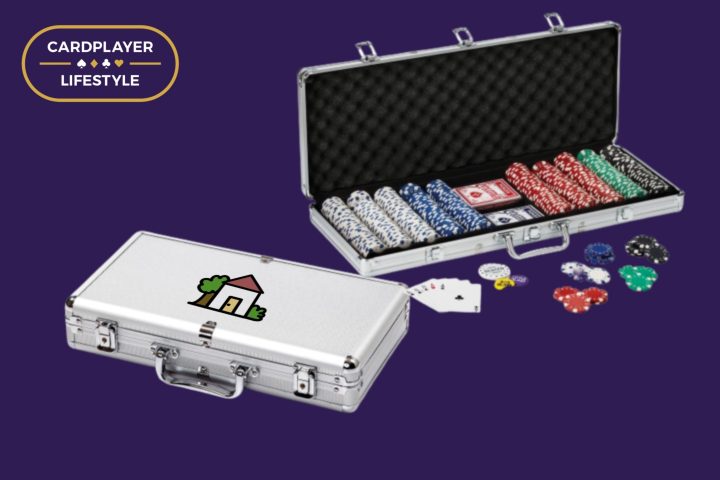
There are a variety of poker chip sets on the market. If you go to any of the mega stores like Walmart or Target, you will find a few options for poker chip sets. There is one standard set that always makes it on the shelves. The chips are white, red, green, and black and it usually comes in a metal case with a deck of cards and dealer, small blind, and big blind buttons. This is the classic home game poker chip set. It’s hard to find a house that doesn’t have this set, so your players will be used to it. The chips have a nice weight to them and make a satisfying sound while shuffling them. There is no writing or markings on the chips, so any denominations will have to be remembered or written down. Overall, this chip set is a great value. You have enough chips for a home game at a fraction of the price compared to custom chips.
If you want to step your game up a bit, you can go online to find some home game chip sets. These sets tend to be higher-end than the store-bought set. From a gaming supply website, you can find a variety of chip sets that have the denominations pre-printed and some with designs as well. If you’ve been to a few home games with a dealer and host, you’ve probably seen the Monte Carlo poker chips. These are used quite frequently at home games, and for good reason. They have a nice weight to them, they are easy to shuffle, they come in a nice clear carrying case, and the standard set comes with more than enough chips to run a successful $1/$2 or even $2/$5 cash game. There are a variety of other options with poker chip values printed on them. Some have names of old casinos like the Monte Carlo set and others may have a brand logo on them. Typically, a set that has the poker chip values printed on them will be good quality.
If you really want to stand out from the crowd you can get custom poker chips. These will run you more than the online or in-store sets, but they can really spruce up your home game. Some long-running home games and underground rooms have their own name and logo. Getting chips with your club/game name and logo is a great way to stand out from the crowd. Not only does it make your game seem more legitimate, but it can also protect you. If you run a larger home game where people are invited who you don’t necessarily know, having the standard chip set leaves you open to cheating. It isn’t hard for an unethical player to buy the same chips you have and bring them to the game for an easy cashout.
If you are just running a game with friends and family, you can still have fun with the custom chip sets. In my home game group, we pass the deck and there is no rake or fee, just a fun way to get together and play. Our host, and good friend, thought it would be fun to get custom chips with pictures of us on them. Of course, he chose ridiculous pictures of us so we had a lot of fun when he first broke these out at our semi-regular game.
Poker Chip Setup
Once you’ve secured your poker chip denominations and know how many chips you are starting with, it’s time to set your game up. While many chip sets come in a large case not many come with chip racks for your players. You can find some chip racks online which will really step up your game. Not many players are used to having their chips given to them in a rack when playing in a home game. If there is a set buy-in amount and you know how many players are coming, you can set up chips at the table so players can simply grab an open seat once they arrive.
If you have a single dealer for the night it is important to find a poker chip set that comes with a dealer button. This will make the game run much more smoothly. Sometimes games will use a different color chip or the box that the cards came in, but having an actual dealer button is much more official.
If you do not have denominations on the chips, I would suggest keeping the chips in separate stacks by color. This makes it easier for your players to see how many chips they will start with at your poker game. Once the poker chip denominations are explained, it is on them how they keep their stack, but the separation to start is a nice touch.
Poker Chip Security
We touched on this previously, but if this is a bigger game with people you don’t know outside of poker, it is generally smart to keep the chips secure. Any chips that a player hasn’t paid for should be kept in a separate, preferably locked room. This way, when a player does buy in the host will go get the chips and there is no possibility someone is taking more than they paid for.
If you want to go above and beyond with security, you can buy a black light stamp for your chips. This stamp will be invisible to the naked eye, but under a black light, you can see it. At the end of the night, you can run the black light over all your fanned-out chips to make sure they are from the set you bought. Any chips without a stamp could have been brought in by another player which means they are stealing from you. While this isn’t common, if you want an airtight game this is a good precaution to take.
Home games are a wonderful way to kill time with friends and family or make serious cash at a bigger game. Regardless of your reasons for playing, they are a lot of fun! If you want to host your own game, making sure you have the correct poker chip denominations and setup is key. A little bit of flair with the custom chips is always a nice touch, too!
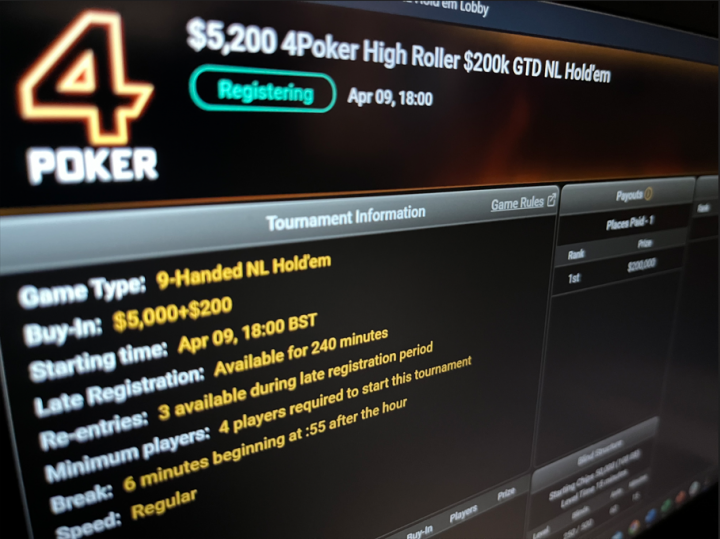
Much has been said about the new online poker site, 4Poker. Well, on second thought, scratch that. Not too much has actually been said about the site within the poker media sphere or as part of water cooler talk on social media, and that’s kind of puzzling to me. Rather, much has indeed been said in recent months about the site’s founder, Bryn Kenney. Naturally, there is a lot to say about the longtime poker pro, and rumor has it that there’s even a documentary in the pipeline about him. But the online poker site that he founded, 4Poker, is much more than just a product for him to be the front man for.
As I noted in a recent op-ed, a very talented, experienced team of professionals in the online poker space have collaborated to produce a first-rate online poker offering, and that – for some reason – doesn’t seem to be generating as much buzz as it ought to be.
For a closer look at the online poker site itself, I invite you to check out our 4Poker room review. But that’s not what this particular op-ed is about. I wanted to know more about the people who’ve “made the site happen” and their approach to running an online poker site.
4Poker: Making a Name for Itself
The challenge of any new operator trying to become one of the best online poker sites, especially in a crowded field that includes numerous household names and legacy operators, is to distinguish themselves and stand out from that aforementioned crowd. Pointedly, over the last few months, the team at 4Poker has produced a dozen top-quality videos that demonstrate what the site is about, how it will operate, and the unique selling points (USPs) that make it different than the other online poker sites out there. I believe those videos are quite instructive as to the team’s overall approach, and they go a long way towards demonstrating the extent to which 4Poker is about far more than “just” Bryn Kenney.
A Model of Openness and Transparency
The first video in the “Inside 4Poker series” features an interview with the company’s CEO, Heath Cram, as well as a shorter secondary chat with their Director of Marketing Tom Lenihan. At almost nine minutes long, that’s about a third of the total length of the 12-part video series. It’s also the most must-see of the lot.
The video series began being released six months ago and on camera they’re talking about how the company started its journey two years prior. So, while they’re a just-launched online poker room, their team has been working on creating 4Poker for 2.5 years now. More than half a dozen of the company’s key employees, from CEO on down to the Directors of Marketing, Legal Affairs, Regulatory Affairs, Customer Experience, Payment Processing, and others feature in the interviews, which were conducted by veteran poker broadcaster Matthew Broughton.
4Poker’s Founding: Going Retro but with a Modern Twist
To bring a good idea to life, it takes enough people who believe in it enough to put their money where their mouths are. Kenney recruited “30-40 professional poker players” as the site’s initial investors. The team of poker industry professionals they recruited has “a combined over 150 years of experience” among them.
4Poker is based out of the Isle of Man, and — perhaps fittingly — the outfit is staffed by a number of ex-PokerStars employees. These are primarily folks who used to work at PokerStars way back in the days when it was a private company owned by the Scheinbergs; i.e., what veterans of our industry call and fondly remember as “the good old days.” Many of those folks took breaks from working in poker, and it would seem that to a degree “they got the band back together” to launch 4Poker.
Much like the 4Poker site has a classic look and feel, so does the team behind it; and they’re working towards propelling the site into prominence with today’s technology. Unlike the early days of Wild West online poker, the industry is now a mature one and there are plenty of excellent sites out there. Thus, the 4Poker team are seeking to distinguish themselves at first primarily by being the most generous with rakeback and deposit bonuses.
4Poker’s Overarching Promise: Players First, Always
It’s no secret that when it comes to online gambling on the whole, the money to be made (by a company) from offering online poker pales in comparison to what they could make from other verticals such as online casino and sports betting. It’s “only natural” then that, as the years have ticked by, more and more online poker sites have become part of a greater online gambling megabrand. The purity of a “poker first” focus and mentality has steadily been eroded, and that’s something I dearly miss from “back in the good old days.”
4Poker, as a standalone online poker site, is by definition different. Its sole focus is poker, and everyone working for the company plays poker and is genuinely passionate about the game. How lovely it will be to not incessantly be cross-sold to other gambling verticals!
The 4Poker team has the luxury and opportunity to “do things right” and truly develop a site that’s “by players and for players.” And that’s precisely what they’re promising to do in a number of key ways that set them apart as an extremely player-friendly site, including:
- A commitment to never charging for making deposits or withdrawals, with ultra-quick transaction processing
- Players will have a voice via the 4Poker 4Forum; this establishes a two-way communication channel where the company can directly respond to and cater to what the players want
- They have a player advisory board acting as the unofficial ombudsman, ensuring that management will staying true to player values
- Enhanced responsible gaming features, including offering self-imposed deposit limits, format exclusion, and self-exclusion periods. Players can also track their spending as they’ll have access to their own profit/loss data.
- They’re launching their flagship 4Poker Series of tournaments with ambitious guarantees and full knowledge they’re likely to miss. The team realizes: if you build it, they will come — and in the meantime, “early adopters will have a sweat at some free money.”
Conclusion
Having watched the Inside 4Poker video series, I couldn’t help but be reminded of when PokerStars released their Inside PokerStars video series about eight years back. It represented the first time an online poker operator took us behind the scenes to give players a greater and fuller understanding of how they operate and their approach to poker.
Reviews of the Inside PokerStars video series were universally positive, and those videos served to win many hearts and minds among poker players. It’s a wonder that no other online poker operator ever produced a bespoke video series about their own brands.
Until now.
But perhaps most notably and admirably, 4Poker produced their Inside 4Poker series and shared it with the public before even launching! They’ve realized their main challenge that lies ahead, of trying to lure poker players in a mature market. They realize they need to stand out, be transparent, and be crystal clear about what their site will offer players, and the company’s modus operandi.
And the folks behind the scenes have clearly understood the recipe for success. There’s no need to reinvent the wheel. There’s already a formula for what will work. Should they stick to this formula and stay true to their stated principles, I have no doubt that legions of online poker players will find themselves competing at the 4Poker virtual felts in the not too distant future.
Poker is a game of skill that requires more than just dealing cards. Players must possess a sharp mind to outsmart their opponents in this game of wits and cunning. Understanding the psychological principles that govern poker is essential to achieving this. Mastering the game’s psychological intricacies increases a player’s chances of winning. Also, poker players should observe their behavior and that of their opponents. Doing this allows them to better control their emotions and make wise decisions.
This article aims to explore the fundamental ideas behind poker psychology. These include identifying common psychological traps and honing the ability to read opponents. You’ll also learn how to apply specific psychological tactics to improve gameplay.
Common Psychological Traps in Poker
Recognizing the mental pitfalls that can undermine your poker strategy when playing is critical. One of the most frequent psychological pitfalls you’ll face when playing a poker is tilt. This trap happens when a player experiences a bad hand or goes on a losing streak and starts acting emotionally and irrationally. You might make hasty decisions that hurt your finances when you’re on tilt while playing poker.

Overconfidence can also be a trap, leading players to underrate their rivals and place rash bets. Although it’s critical to have faith in your abilities, it’s also crucial to recognize your limitations and play within your means.
The gambler’s fallacy is another typical behavioral trap. It happens when a player thinks an event is more likely to happen because it hasn’t happened in a while. This is a risky mentality because it can cause gamblers to place irrational wagers based on untrue assumptions.
Maintaining composure and concentration throughout the game is critical to avoid these traps. To refresh your mind and refocus your attention, take breaks as needed. Be mindful of your emotions and set limits on your betting.
Using Psychology to Read Opponents
| Indicators of Opponent’s Behavior | Description |
| Facial expressions | Indications of anxiety or confidence |
| Body language | Relaxed or tense postures |
| Tone of voice | Signs of nervousness or confidence |
| Betting patterns | Consistent raising or hesitation |
| Reaction to previous hands | Confidence or uncertainty |
| Demeanor | A relaxed or tense overall behavior |
One of the most important poker skills is the ability to read your opponents. Understanding your opponents’ behaviors and tendencies can help you make better decisions. It’ll also increase your chances of winning and avoid costly mistakes.

Facial expressions, body language, and even tone of voice are useful in poker gaming. They provide valuable information about an opponent’s hand and their level of confidence. For example, a nervous player may show signs of anxiety, such as fidgeting or sweating. Conversely, confident players may exhibit more relaxed body language. These include leaning back in their chairs or crossing their legs.
According to gambling studies, other indicators of a player’s behavior include their betting patterns. There is also their reaction to previous hands and their overall demeanor. For instance, a player who consistently raises before the flop may have a strong hand. Also, a player who hesitates before calling a bet may be unsure about their hand’s strength.
You may better understand your opponent’s strategies by noticing these subtle cues. Thus, this will allow you to make more informed decisions at the table. So, next time you sit down to play, keep a keen eye on your opponents’ behavior factors and use psychology to your advantage.
Applying Psychological Techniques in Poker
Applying specific social psychology techniques can also give players an edge in online gambling. Bluffing, for example, is an excellent example. It’s a well-known technique where players try to deceive their opponents into thinking they have a stronger hand than they do. This can be an effective way to win pots even when a player’s hand is weak. But, it’s important to use bluffing judiciously and not rely on it too heavily, as experienced players can easily detect it.

Reverse psychology is another technique that can be used in gambling situations. This involves deliberately giving off misleading signals to opponents to make them act in a way that benefits the player. For instance, players might act like they’re excited about their cards when they have a weak hand. Most gamers do this to encourage their opponents to bet more.
The art of persuasion is also important. Players use their communication skills to influence opponents’ behavior. For example, a poker player might try to convince an opponent to fold by saying they have a strong hand, even when they don’t. Alternatively, a player might encourage an opponent to keep betting by appearing uninterested in the game.
Balancing Psychology and Strategy
While understanding human behavior is an essential poker component, balancing psychology with strategy is equally important. Good players must know when to rely on their psychological observations and when to stick to their strategic plan. Being too reliant on psychology can lead to making impulsive decisions. Also, ignoring the psychological aspect leads to missing opportunities to gain an edge over opponents.

Balancing psychology and strategy is about finding the sweet spot between the two. A player should always have a strategic plan in mind. They must also be mindful of their opponents’ behavior and adjust their strategy accordingly. For example, if players notice their opponent is playing overly aggressively, they adjust their strategy by playing more defensively to take advantage of their opponent’s mistakes.
FAQ
What is some common psychological bias that can negatively impact my poker game?
Some common psychological bias in poker includes tilt, overconfidence, and the gambler’s fallacy. Tilt is an emotional state where a player becomes frustrated or angry and begins to play poorly. Overconfidence can lead players to take unnecessary risks and make poor decisions. The gambler’s fallacy is the belief that past outcomes affect future outcomes. Thus, this may lead players to make incorrect assumptions about the odds of winning.
How can I improve my mental game and avoid making emotional decisions at poker?
One way to improve your mental game is to practice mindfulness and focus on the present moment. It’s also important to recognize and control your emotions to avoid going on tilt. Take breaks when your emotions get the best of you. Another way is to keep a positive attitude, stay focused on your strategy, and be patient.
Is it worth watching experts in this niche, and which ones?
Yes, it’s worth watching experts in the poker niche improve your game and earn huge money. Many pro players have achieved great success in the game. Thus, studying their strategies and techniques may help you improve your game. Some include Daniel Negreanu, Phil Ivey, Jonathan Little, and more. But it’s important to develop your playing style and strategy. Consider this because what works for one player may not work for another.
For decades, poker was a game played based on instincts. Players would play the opponent, not the cards. To many, the game was purely about deception, either by creating it or reading it. However, statisticians and math wizards have used complex algorithms and simulations to find theoretically sound approaches to poker. The two mindsets often clash, some defending the old-school ways, others pointing to the numbers to explain the game. Regardless of your stance, it has been made clear that calculating poker equity and basing decisions on those quick calculations is an efficient way to make decisions on the felt.
Luckily, you don’t need a PhD to understand calculating poker equity.
Poker equity is your percentage likelihood to win the hand. Another way this is represented is the amount of the pot that is “yours” based on your equity. For example, if you are playing a $200 pot and you have an 80% chance to win (80% poker equity), then your hand equity is $160. There are a few applications of poker equity, but first, let’s figure out how to calculate poker equity.
How To Calculate Poker Equity
The first step to determining your equity is finding how many “outs” you have when you are drawing, or how many you need to fade when you have a made hand. Once you know your outs or what cards to fade you can apply some quick poker math to find out how much equity you have.
For example, let’s say you have AK of spades and the flop is Js6s2h. Right now you just have AK high, but if another spade comes you will have the nut flush. Additionally, you may count an ace or king as an out since it gives you top pair top kicker. In this case, you have nine spades you can hit and another six outs from the remaining aces and kings. You now have a total of 15 outs. On the flop, your chance of hitting your card by the river is your outs multiplied by four, so in this case 15 X 4 = 60. You have a 60% chance of hitting a card that improves you and therefore gives you 60% equity. If the pot is $100, your equity is worth $60.
This may look familiar if you read how to calculate pot odds and make decisions based on that. That’s because the basis for finding equity and making decisions based on pot odds are the same.
Let’s continue this example to the turn. Let’s say the turn is another jack. Since the jack of spades was on the flop we know the flush didn’t come in, but this card changes more than your odds. If you think your opponent might have a jack, now you have to remove your aces and kings from your outs. So your 15 outs went down to nine. Since there is only one card to come, instead of multiplying your outs by four you multiply by two. So, 9 X 2 = 18. You now have an 18% chance of hitting your flush and winning the pot. If there was a bet and call on the flop, bringing the pot to $180, your equity is now worth only $32.40.
One important consideration is that you can’t always be certain your outs will give you the best hand. For instance, in the previous example where you had AK of spades on the J62 flop. While we initially were counting aces and kings as outs, if your opponent has 66 for a flopped set you only have the non-board-pairing spades as outs. Of course, there is no way to be certain if you have “dirty” outs (outs that won’t actually give you the best hand). Some players may mitigate this by counting half of those outs. For example, instead of adding six outs for the three aces and three kings, a player might only add three outs to account for the times when an ace or king won’t give them the best hand.
While this is a quick way to determine your poker equity, there are poker equity calculators and poker equity hand charts that go further in depth.
Poker Equity Calculators
When you have all the information needed, you can use poker equity calculators online to see the exact equity hands have against one another. Previously we spoke about calculating equity while in the middle of a hand. Of course, you cannot know what your opponent has while at the table. However, when you do have all the information you can use these poker equity calculators to learn hand equities in common scenarios.
Every no-limit hold’em player has heard at one point “We are flipping” or “I lost a flip”. A flip in poker is when each hand has 50% equity, meaning each hand has the same odds of winning as heads vs tails in a coin flip, hence the term. Commonly, a pocket pair vs two overcards is considered a flip. When you look at this spot with a poker equity calculator, you see it isn’t actually that simple.
For instance, let’s look at pocket pairs vs. AK. When the two red queens get all in against a black AK off-suit, the pair has a 57% chance of winning. If the AK is suited with a suit other than the two queens, QQ’s equity decreases to 53.5%, and when the AK is suited with the same suit as one of the queens, QQ now has 53.9% since the AK has one less card of their suit for a flush.
However, let’s change the pair from queens to fives. In all variations of suits for the AK, the pocket fives have lower hand equity than the queens. This is because 55 can be counterfeit. If the board runs out 99882, AK is the winner against 55 but would lose to QQ. The best 55 will ever have against AK is when the AK is off-suit with different suits than the pair, giving 55 just under 55% equity, a 2% difference than the best QQ will get.
While the difference in equity in these spots is minimal, over the long run that equity will come into play. At this point it should go without saying that having a good grasp of poker math is a critical component of mastering overall poker strategy.
Poker Equity Chart
There are many poker equity charts available for players to see the equities of two hands without having to input information into an online calculator. These charts outline common scenarios and give the equity two hands have against each other both pre and post-flop.
By looking at one of these charts, you can see that when your top pair is against a dominated top pair (AK vs. A5 on an A-high board) you have only 12% equity on the flop and less than 8% on the turn. These charts have taken scenarios that come up often in no-limit hold’em and created poker hand equity charts or tables to show how each hand does against the other.
Whether you use some quick math, a chart, or a calculator, now that you know how to calculate your poker equity you can apply that information to improve your game.
Applying Poker Equity
When you know how to calculate your poker equity based on the cards you have seen, you can make certain decisions to give yourself favorable odds of winning money. To do this, you need to apply the quick calculations we talked about earlier. You also need to make certain inferences as to what your opponent has. By constructing a range of hands your opponent can have you can make these inferences.
For example, if you notice there is a player at the table who doesn’t play many hands, shows down strong starting hands like AK and JJ, and doesn’t play big pots without the nuts, you can assign them a smaller range. If there is another player at the table who is limping a lot, playing most hands and is happy to call down with weak showdown value, you can assign them a wide range.
If one of these players raises from early position to $7 in a $1/$2 cash game and you 3-bet to $25 from late position with KQ of spades, these opponents will have different calling ranges. The tight player may only be calling with hands like AK, JJ, and TT, while his QQ-AA will likely 4-bet. The loose player will still likely 4-bet QQ-AA, but they will call with much more hands than the tight player. They could be raising a hand like QJ, 44, and 89 suited and still make the call.
If the flop is JT5 with one spade, you need to calculate your poker hand equity. Your poker equity will be different depending on which player you are up against. For example, if you are against the tight player, you likely only have the straight outs (four aces and four nines) to make the best hand. With eight outs, you have 32% equity going to the river, making your poker equity $16. The loose player will have a wide variety of hands you are beating and losing to, so you may want to count your pairs as outs, giving you another six outs for the remaining kings and queens. If you add all these cards to your outs, you have 14, bringing your equity to $28.
Against the loose player, you can likely get them to fold hands that beat you like pocket pairs under 99 (other than 55) and a variety of ace-high holdings. However, the tight player won’t have many hands other than AK that will fold to a bet. In this case, you may want to bet against the loose player but check back against the tight player. Choosing to check back against the tight player means you are trying to “realize your equity”.
Realizing Poker Equity
Realizing your equity in poker refers to the likelihood that you will make it to the river and get to realize your poker equity. For instance, if you have 30% equity in a $200 pot, your raw equity is $60. However, if you are up against an aggressive player and you are out of position, you may not always get to the river. Being out of position, it is harder to win the pot and aggressive opponents will bet large on multiple streets, so it may not be worth it to keep calling. With this in play, you may only have a 50% chance of making it to the river, meaning your $60 in equity is really only $30 since you realize it 50% of the time.
In our example of the tight and loose players, it may be better to check back and try to realize your equity against the tight player since a large portion of his range is strong. By betting on the flop, you open yourself up to a check-raise or are making the pot too big to continue on the turn against a lead or check-raise. By going to the turn, you only need to put money in on one more street to get to the river and realize your poker hand equity. Since you can get many better hands to fold and have more poker hand equity, you may want to bet against the loose player.
If the turn is a 3 of spades, you did not hit your draw but you did pick up more poker equity. You now have the three non-spade aces and nines plus the other nine spades to give you either a straight or a flush, bringing your number of outs to 15 against the tight player. This equates to 30% poker equity or $15 since the pot is $50. If your opponent bets, you can use pot odds to determine if your 30% equity is enough to call, and if they check you can likely bet since you are so close to realizing your equity. Against the loose player, this is a great card to continue betting. You originally had 14 outs against the loose player, and with the addition of the seven extra spades (not counting the nine and ace of spades since they are in the staight outs), you now have 21 or a 42% poker equity. If the flop bet was $20, the pot is $90 making your poker hand equity worth $37.80.
When calculating poker hand equity, make sure you are adjusting your outs as the board changes and accounting for different opponent ranges. The skill of calculating poker equity, realizing equity, and using pot odds will help you stick to the numbers and play mathematically sound poker.
The 2023 World Series of Poker is almost upon us. Players will soon be descending upon Horseshoe Las Vegas (formerly Bally’s) and Paris for the summer to play in over 100 WSOP bracelet events. Although it’s considered the marquee tournament series of the year, almost every other poker room in the city will host their own events that coincide with the WSOP. If you are a fan of playing poker, there will always be a game when the WSOP is in town.
Of course, it is important to consider every part of your trip before heading to the WSOP, including “poker taxes.” In this article, we will cover best practices and provide a few updates regarding changes that could impact you tax-wise after cashing a WSOP event. Specific topics we’ll address include ITIN issues, selling and swapping action between U.S. residents, the importance of tracking results, and more.

No More Lammers
If you have been to the World Series of Poker in the past, you are probably familiar with tournament lammers. They were awarded to winners of most satellite events and were (we believe) a cause of tax issues in the past. While they had “no cash value”, each lammer could be redeemed for $500 of tournament buy-ins. Without an assigned cash value, the WSOP would not issue any W-2Gs to satellite winners.
This year, the WSOP has ended single-table satellites and with that, has ended the issuance of lammers. Instead, there will be more mega satellites, awarding casino chips or direct-entry seats to select events.
There is a lot to unpack about this development from a tax side of things, so I encourage you to read this post that outlines the payout structure and tax consequences of cashing a satellite.
Individual Taxpayer Identification Number (ITIN) Issues
The 2022 WSOP marked the first year the event was held on the Las Vegas Strip. Moving an event of this size came with a lot of logistical issues, all of which, if you ask most people who attended, were handled quite well. However, neither Bally’s nor Paris was able to become a Certified Acceptance Agent (CAA) with the IRS throughout the duration of the event. This meant that they could not help nonresident players apply for ITINs with the IRS.
As a result, the World Series of Poker was required to withhold 30% tax from any nonresident without an ITIN who cashed for more than $5,000 (less buy-in). This applied to all nonresident players, including those residing in a tax treaty country.
This was a big issue in 2022, as the WSOP attracts a large field of international players. It is expected that this will no longer be an issue in 2023, but it is something to monitor and confirm before your trip. Assuming the WSOP can process ITINs, here’s what you need to know:
- The WSOP can only issue ITINs for players residing in a tax treaty country. If you do not live in one of the following countries, you will not be able to apply for an ITIN at the WSOP and will automatically have 30% tax withheld:
Austria, Belgium, Bulgaria, Czech Republic, Denmark, Finland, France, Germany, Hungary, Iceland, Ireland, Italy, Japan, Latvia, Lithuania, Luxembourg, Netherlands, Russia, Slovak Republic, Slovenia, South Africa, Spain, Sweden. Tunisia, Turkey, Ukraine, United Kingdom
- You will be required to prove your residence using a passport or other supporting documentation (utility bill, foreign ID card, etc.). This documentation can be presented to the cage prior to claiming your winnings. If you are unable to verify your residency in a treaty country, the WSOP will withhold 30% tax.
- You do not need to claim your winnings right away. If you do not have the proper documentation to prove your residency, you can return to the cage and present your proof of residency when you have it. This could prevent withholding and a lengthy tax refund process.
Swapping, Selling or Buying Action: Poker Tax Implications
The most important thing to remember before swapping action: always produce a paper trail. When making any deal, send a text message or email that confirms the event and amount of action sold. When paying out backers, pay them via bank transfer or through a third-party payment processor.
READ MORE: Everything You Always Wanted to Know about Selling Action but Were Afraid to Ask
If you must pay someone in cash, have them sign a statement or send a text verifying the payment was received. It is extremely difficult to prove cash transactions in an audit, so the more evidence you have, the better. This will not only help verify each backer is paid the correct amount, but will also provide substantial documentation for your tax records.
However, before any payments are made, it is necessary to understand the tax requirements of backing agreements. The ramifications of such agreements depend on the residency of each player.
U.S. Resident Sells Action to U.S. Resident
If a U.S. resident pays more than $600 in net profit to another U.S. resident, it must be reported on Form 1099-MISC. You should obtain a completed Form W-9 from your backer before you remit payment. This form formally requests their Social Security Number, address and signature to confirm that all information is accurate.
Form W-9 must be kept for your records (it is not submitted to the IRS). You can then use the information provided on the form to file a 1099-MISC at year-end, transferring the poker tax burden of the net yearly profit from you, to your backer.
U.S. Resident Sells Action to Nonresident
If the nonresident is a resident of a tax treaty country and has an ITIN, the process is relatively simple. The nonresident will complete Form W-8BEN, citing the correct treaty exemption, and include their ITIN. Once your backer gives you completed form, you can pay the nonresident 100% of their winnings.
If the nonresident is a resident of a tax treaty country, but does not have an ITIN, you must withhold 30% of the winnings and remit it to the IRS on the nonresident’s behalf. This must be done using the EFTPS website. The nonresident can then file Form W-7 and Form 1040NR at the end of the year to apply for an ITIN and claim a treaty exemption to receive a tax refund.
If the nonresident is not a resident of a tax treaty country, you will follow the same procedure outlined above, withholding 30% of the winnings and remitting it to the IRS (this applies if they have an ITIN or not).
In each of the three instances above, you will also file Form 1042, Form 1042-S and Form 1042-T to denote payments to a nonresident. These forms are filed separately from traditional income tax returns to the IRS.
Nonresident Sells Action to U.S. Resident
If the nonresident is a resident of a treaty country and has an ITIN, they will receive 100% of the winnings and you will not have any issues. However, if the nonresident does not have an ITIN, or is not a resident of a treaty country, they will only receive 70% of the winnings. Since 30% was withheld for taxes, it would be up to the players to decide how to split the winnings based on the lesser payout (or the pending tax refund the following year). I recommend including the payout structure in your original backing agreement to lessen issues after the fact.
If you are a U.S. resident, this is something to consider before buying the action of a nonresident without an ITIN or residing in a non-treaty country.
If you plan on buying or selling action during the WSOP, I highly recommend becoming familiar with the above processes and forms. The WSOP is hectic, and players often have little downtime to address important tax deadlines between tournaments. Some of the required actions, such as remitting tax payments via EFTPS, have time-sensitive deadlines, so it is important to stay in compliance.
Track Everything You Do
Whether you are an amateur or professional gambler, track the net result of every cash game session and tournament played. This is always critical, but with the number of games available during the World Series of Poker, players can rack up sessions quickly and easily forget their results.
As a quick refresher, each tournament is considered its own session. If you enter a tournament multiple times, each buy-in is considered a unique session. For example, if you buy-in four times to a $500 event, ultimately cashing for $4,500, it will result in gross winnings of $4,000 and gross losses of $1,500.
For cash games, each continuous period of play at the same game type (NLHE, PLO, etc.) is considered a session. If you leave for dinner and return to the same table or change tables within the same game type, you do not need to start a new session. However, if you change game types, or move from one casino to another, that is considered a new session.
Poker-Related Expenses
In addition to tracking your session results, professional gamblers have the additional task of tracking all their business-related expenses (and keeping proper documentation). But which expenses are deductible?
As with all self-employed individuals, professional gamblers can deduct all ordinary and necessary expenses related to their business. This includes, but is not limited to, hotel, airfare, ground transportation and meals while traveling (note: there is no longer a deduction for entertainment expenses).
Since many players are in Las Vegas for an extended period, it is important to contemporaneously track expenses each day. To do so, I would recommend using one credit card (preferably a business card) for any business-related expenses and minimizing cash payments. If you do pay for an expense in cash, you must keep the receipt, which can get burdensome.
So, you’re saying I can deduct my entire trip to Las Vegas as a business expense?
Maybe, but probably not.
You can only deduct the expenses from days you conducted business-related activities. If you travel to Las Vegas for 20 days, but only conduct business (poker-related activities) for 10 of those days, you will only be able to deduct 50% of your aggregate expenses (hotel, airfare) and only meals on the days you conducted business. There is a bit of nuance when weekends get involved, so it is best to track all activity and days played to ensure you are deducting the correct percentage of your expenses.
As evidenced by what we’ve covered in this article, there are a lot of poker tax issues that can arise during the WSOP. However, if you are aware of them, and know the steps to mitigate their impact, you will have a less stressful (and hopefully more profitable) summer.
Using a poker cheat sheet can be invaluable if you’re a beginner poker player trying to learn the ropes. A poker cheat sheet is essentially a chart of hands that rank in order from highest to lowest value and gives you an idea of how strong your hand is in comparison with others at the table.
To make sure you get the most out of your poker cheat sheet, it’s important to understand the basics and fundamentals behind reading one below:
Different Types of Poker Cheat Sheets
When you’re looking at a poker hands cheat sheet, there are several different formats that can be used. Online versions, such as a poker cheat sheet for beginners, will often be presented in a table format, with the hands listed along the left side and their rankings on the right side. The same type of format is used for physical poker cheat sheets as well, but they may also feature additional information like how to play different types of hands, odds and chances of success, or basic poker strategy tips.
More detailed poker cheat sheets may also feature a more in-depth look at the ranking hierarchy. In addition to listing the highest-ranking hand first and then going down from there, these cheat sheets will also feature symbols next to each hand so that you can quickly identify the value of a particular card combination without having to read each one individually. Other features may include notes about face cards or suit rankings that provide an even more comprehensive overview of your hand’s value.
Finally, some poker cheat sheets also offer an artificial intelligence element that allows them to give you advice based on certain scenarios. By entering specific data into the cheat sheet (like what all players have already bet), it can use complex algorithms to determine your best possible move in any given situation. This can help take your game up a notch by giving you real-time feedback while playing.
Strategies for Reading a Poker Cheat Sheet
Reading a poker cheat sheet is an important part of becoming a successful poker player. While the chart itself may seem simple on the surface, there are a few strategies to keep in mind when using it that can help you become more familiar with the rankings of hands and make better decisions during gameplay.
First, familiarize yourself with the symbols used on your poker cheat sheet. This will ensure that you can quickly identify your hand’s relative strength compared to your opponents. Once you know what each symbol means, practice comparing different combinations and remembering the values that go with them so you don’t have to always look at the reference materials.
Next, pay attention to any changes in ranking based on the type of game being played. Different variants of poker use slightly different rules for ranking hands, so it’s important to recognize how these changes might impact your strategy and which hands become more or less valuable in certain scenarios. Knowing this information by heart can give you a huge advantage when playing against others who haven’t taken the time to learn these nuances.
Finally, try to spot patterns in play styles throughout your session and use those insights to make better decisions, though following your cheat sheet closely will certainly improve your chances at success!
Interpreting a Poker Cheat Sheet Within the Context of the Game
It is important to remember that there is much more to the game than just reading the cheat sheet. In order to truly become a successful poker player, you must also be able to interpret the rankings and symbols within the context of the game.
For starters, it’s important to remember that poker is not just about having the highest-ranking hand at all times. Sometimes, you may need to bluff or bet strategically in order to throw other players off or make them think you have a better hand than you do. You should also consider your position at the table when deciding how strongly you want to play each hand; those in early positions often have less information than those in later positions and therefore may need to be more aggressive with their betting strategies.
Furthermore, remember that poker hands are often won by whoever can read their opponents best. Pay attention to betting patterns and keep track of which cards have been exposed so far in the order for the round so that you can narrow down what your opponents might be holding and decide if they are bluffing or not. As long as you take these strategic elements into consideration when reading your poker cheat sheet, you should be able to maximize its effectiveness during gameplay.
Tips for Using a Cheat Sheet Poker Hands as a Beginner
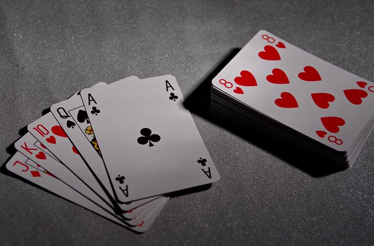
Finally, here are some tips to help you use a poker guide sheet as a beginner:
- Start by familiarizing yourself with the symbols used in the poker cheat sheet and how they correspond to different rankings of hands.
- Pay attention to any changes in ranking based on the type of game being played, as this can impact your strategy significantly.
- Understand that basic poker strategies are just as important as reading a cheat sheet correctly; try to spot patterns in play styles throughout your session and use those insights to make better decisions.
- Remember that bluffing is part of playing successful poker, so take into account not only your own hand but also what you think other players may be holding when making bets or folding during gameplay.
- Take into consideration your position at the table when deciding how strongly you should play each hand; those in early positions often have less information than those in later positions and therefore may need to be more aggressive with their betting strategies if they want to succeed long-term against experienced opponents!
- Finally, practice! The more you play and use your poker cheat sheet to inform your decisions, the better feel for the game you will develop over time.
Wrapping it Up
These tips should help any beginner get comfortable using a poker cheat sheet in order to gain an advantage over their opponents while playing the game. By understanding how these symbols relate to different rankings of hands, as well as being able to interpret them within the context of gameplay, you can become a successful poker player in no time!
Artificial Intelligence is one of the most sought-after pieces of intelligence today. Businesses all over the world are seeking to use AI to revolutionize business analytics and lead to a better business strategy. Poker is no different than the rest of these businesses. Poker players all over are turning to AI to revolutionize their game, and poker AI is certainly as cutting edge as it gets.
Poker AI: The Beginning
Poker AI, or solvers as most players refer to them, are computer programs that simulate thousands of hands to determine the optimal strategy. These poker AI programs will simulate hands against themselves using game theory optimal decision-making to determine the best strategy with the given information. It is essentially poker AI playing poker against AI. These programs can analyze massive data sets and different situations in an instant.

According to researchers at Carnegie Mellon University, heads up No Limit Holdem has 10^161 different situations that can occur. That is a 1 with 161 zeros following it. A poker player can’t consider a fraction of those possibilities, but AI has the power to analyze far more than the human mind can.
The early versions of these AI poker bots came from universities. Professor Tuomas Sandholm and his graduate students at Carnegie Mellon University developed Claudico, the name comes from the Latin word for “I limp”. The AI poker bot learned how to play Texas Hold’em through statistical analysis, analyzing different possibilities and playing hands against itself to recognize patterns to find the optimal strategy. This is the basis for GTO solvers, studying the results of AI poker bot vs. AI poker bot. As development continued, Claudico competed against other university and freelance poker AI bots to see who had developed the most effective poker AI software. Then, Claudico was put to the test.
Professional Poker vs. AI Bot: Round 1
From April 24 to May 8, 2015, Claudico competed against four professional poker players, Doug Polk, Dong Kim, Jason Les, and Bjorn Li at the Rivers Casino in Pittsburgh. Each player would play 20,000 hands heads up against Claudico. To account for variance, while one player played on the main casino floor, another would be in a back room playing the same hands with the hole cards flipped. This way the results wouldn’t be skewed by a streak of run good.
Throughout the match, the poker players noted the bot doing some strange things. There were instances where it would bet incredibly small, or bet 20x the pot size. These are not typical of human poker players. As Doug Polk said “Betting $19,000 to win a $700 pot just isn’t something that a person would do,” but that didn’t stop Claudico. While the poker AI fought hard, the humans ended up victorious. Playing 50/100 blinds, the collective results had the humans ahead by 732,713 chips, roughly a 9.15BB/100 win rate.
Despite the poker pros coming out ahead, this was still an amazing feat for poker AI. Claudico was able to learn during the match and make adjustments based on their opponent. Professor Sandholm and his students went back to campus with their results and continued working to improve poker AI.
Poker AI Hits the Open Market
Shortly after Claudico’s match against the pros, solvers hit the open market for players to work on their game. One of the most notable, PioSolver, was released in March 2015 and it cemented itself as the premier poker AI. Professionals at all levels were turning to solvers to improve their game. The AI poker solver could quickly solve heads-up postflop situations, giving players the optimal strategy.
The basis for GTO and poker AI is to be unexploitable. You will often hear players say there are two strategies to poker, a GTO approach or an exploitable one. There is no argument, you will make more money if you can effectively exploit your opponent’s weaknesses.
For example, if you notice someone always bets large when they have a good hand and always bets small when they are bluffing, you can exploit that by raising their small bets and folding to their large bets. Another example is in a live $1/$2 game players typically open raise with the same sizing every hand. Some players will open to $6, others to $10, but typically if they are opening the pot (without limpers) they will use the same size with every hand. If you notice a player usually opens to $7, then all of a sudden opens to $15 and shows down AA, they may be using larger open sizes with premium hands. If they continue to do this throughout a session, you can adjust to 3-betting their smaller raises more and playing tight against their larger opens.
Poker AI gives you multiple options at different frequencies so you cannot be exploited like those previous examples. For instance, a solver may give you four options for a postflop spot like this: Check 35%, bet ¼ pot 45%, bet ¾ pot 15%, and bet full pot 5%. Players can look at this and see they should be betting a majority of the time, and the preferred sizing is ¼ pot. But to truly be unexploitable, you can’t always go with the preferred option. These frequencies are not used to find the best option and stick with it all the time, you should adhere to the percentages. With an outlier like the 5% full pot, some players will remove that strategy and add it to a closer, more common one.
Players will often use a “randomizer” to determine what they will do. If someone knows they should be checking 35%, betting small 45%, and betting big 20%, they may look at their watch. If the second hand is in the first 20 seconds they check, if it is in the last 10 seconds they bet big, anything in between they bet small. This is how poker players strive to be unexploitable, by using poker AI solvers to find the optimal frequencies and using some sort of randomizer to choose what they will do.
PioSolver and other poker AI software revolutionized the poker world. While studying used to be done by talking with other players in person or online in forums like 2+2, it could now be done using poker AI. Players don’t need to rely on other players for advice, or simply play over and over to recognize patterns and strategies themselves. Now, players can have the AI play itself and study the findings. The old-school poker pros had to get better by outthinking and out learning others over years of practice on the felt. Then online poker came and players could see the same amount of hands in one year that a live player could in 10, allowing for rapid improvement. With poker AI, players don’t even need to play to get better. They can use solvers to run simulations, study common scenarios, and use the computing power of AI to improve their game. AI has completely revolutionized how poker is studied and played.
While these AI poker bots were incredible, there are so many possibilities in each hand that the early versions could take a while to develop optimal solutions. It would take a significant amount of time to study and learn from these solutions, so no human player would ever be able to learn enough to play a completely unexploitable GTO theory. However, back at Carnegie Mellon professors and students were working on another poker AI bot, something that could analyze thousands of scenarios in the blink of an eye.
Professional Poker vs. AI Bot: Round 2
In 2017, the heads-up poker vs AI match was brought back, this time the bot challenging professionals was called Libratus. The poker pros brought in to take down poker AI were Jason Les, Dong Kim, Daniel McAulay, and Jimmy Chou. This time they elected to play 120,000 hands instead of 80,000. The format stayed the same where one player would be on the floor and another in a back room with the hole cards flipped to account for luck. Unlike its predecessor, Libratus would not taste defeat.
The poker bot took the professionals for over 1.7 million chips. With a win rate of 14.7BB/100, it was clear poker AI had come out on top. There were significant improvements to the software as Libratus was able to adapt much more effectively to its opponent’s strategies. While the players would relax and get some sleep after a match, Libratus would analyze the hands played, recognize patterns in the human’s play, and develop solutions to beat their strategy.
This is the significant advantage poker AI has over humans. Professionals have other things to deal with, family, sleep, exercise, entertainment, etc. We are humans after all, we can’t do one thing our entire lives. Poker AI, however, has one sole purpose: to play the best poker. With the brain power of millions (or billions) of humans, poker AI can learn more about the game in one day than most of us can in a lifetime. And unlike humans, the machine will not forget. The speed at which poker AI can develop optimal strategies does cause some concern in the poker community.
Real-Time Assistance with Poker AI
As poker AI advanced, many players were worried about poker bots playing online, and they were right. There have been multiple accounts flagged and banned from leading online sites because they aren’t players at all, but poker bots designed to play a near-perfect GTO strategy. The makers of these bots can create an account, load their bot, and watch it rake in pots. Security teams on these sites are adapting and getting much better at recognizing and banning bot accounts, but it is not perfect.
Additionally, some players have been accused of using poker AI to give them real-time assistance. Using a solver, or dream machine, that can compute the optimal strategy in real-time without a long delay would give players a significant edge. Poker AI this strong isn’t commercially available to the public. There are some sites with fast solvers, but you will find they use a database of pre-solved spots, so they cannot have the solution to everything. However, there may be some private poker AI bots available to a few that can do this. Poker AI is a wonderful tool that helps players get better, but as displayed by the grudge matches, AI has conquered poker players and can be a threat to online games.
While these are concerning, poker sites are constantly investing in security to remove any potential bots or players using RTA (real-time assistance). Overall, most games are safe. Poker AI bots are not easy to come by, they either require a lot of money or a high level of coding ability. Between the security and barrier to entry for poker bots, the majority of online games will not have one. However, if you are in a game with a bot, it will not be easy to win. While Libratus proved AI can defeat poker players heads up, another bot decided to show humans they can conquer more than heads up.
Professional Poker vs. AI Bot: Round 3
In 2019, another AI poker bot from Carnegie Mellon challenged professional poker players, only this time it wouldn’t be a heads-up match. Pluribus, the newest bot, challenged five professionals to play in a 6-handed NLH game. As noted, heads up NLH has an astronomical amount of possible situations, but 6-max has even more. With four more players in the mix, there are a seemingly endless amount of situations that can occur. In short, the more players in the game the harder it is to solve. Many assumed that AI wouldn’t be strong enough to solve a 6-max game in real-time. They were wrong.
Darren Elias helped test the bot by playing a 6-handed game with himself and five versions of the bot. The bot proved successful in this format. To test its strength further, Pluribus then played against five professionals at once. The poker AI bot crushed the field over 10,000 hands with a win rate of 5 chips per hand or 1000/hour.
This was the nail in the coffin. With decisive victories both in heads-up and 6-max play, it was clear AI conquered poker. Elias stated “There’s no going back. The bots will always be better than us.”
AI poker bots have proven their ability to effectively beat humans at the game. The computing power and ability to recognize optimal strategies are unmatched. While players may be concerned about online integrity, this revolution in poker is something to be celebrated. With the power of poker AI software, players can learn effective strategies much faster than before. There has never been more information about poker, and with the enhancements in AI, the information will continue to grow and expand, giving players everything they need to become unstoppable at the table.
Ed. note: Ashley is working on a book of his poker travels entitled Poker in 50 States (and 26 countries). He has agreed to publish a few of his chapters here first. This is the fourth in what will be a six-part series. Be sure to also check out his first, second, and third installments.
I was playing poker in a great weekly game one evening in my home state of Massachusetts, and mentioned that I was planning a trip to New Orleans, Louisiana. The other players asked me if I was going for Mardi Gras, or Jazz Week, or to sample the great Cajun food, seafood, or other epicurean delights of the area. I told them no. Though I would surely take in the cuisine, the architecture, the museums, and the fantastic music; I was not going to New Orleans for any of those reasons. I shocked those guys by telling them that I was chiefly going for the poker!
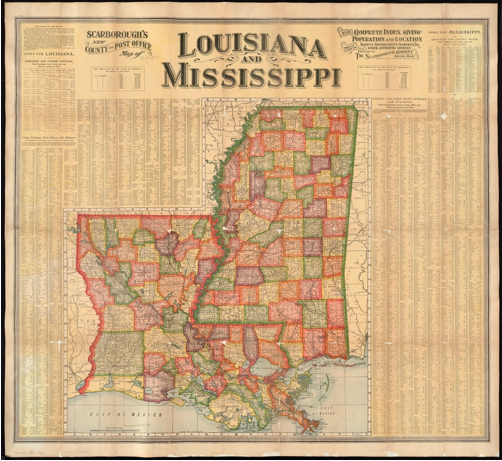
What they didn’t know was that New Orleans and the area around it in Louisiana and Mississippi has many places to play poker. And it should. It’s the birthplace of the game!
Poker History
There is no agreement on the origin of poker. Some attribute it to the Arabic predecessor game of As Nas. Others say it is really just the child of the British game of Brag. But there’s little doubt that it was first called “poker” in New Orleans, Louisiana in the early 1800s, as an offshoot of a French gambling card game called Poque. Historians believe that “Poker” is just an American-accented pronunciation of that game. They also agree, that from whatever game it was derived, by the early 1800s the game of poker was first being played on riverboats traveling up and down and on the shores of the mighty Mississippi River in New Orleans, Louisiana.
It was with this 19th Century gambling in mind that the legislatures of both Mississippi and Louisiana decided, in the early 1990s, to make another go of gambling by legalizing “Riverboat Gambling”. Today between the two states of Mississippi and Louisiana, 18 casinos are spreading poker. My travels have taken me to all of them, at one time or another. Most recently, in January 2023, I visited 10 of them. My first stop was New Orleans.
New Orleans
New Orleans is quite a place – the largest city in this region, with 375,000 souls. It’s a bustling port city and crossroads, at the intersection of the Mississippi River and the Gulf of Mexico. Jazz was born here. Unlike other parts of the United States, that have English or Spanish roots, New Orleans was at the heart of French territory, and is now the heart of that surviving French-American culture, known as Cajun. It’s also a 24-hour city. Along with Las Vegas and New York City, you can eat, drink and listen to music around the clock.
New Orleans is perhaps known best for Mardi Gras – a multi-day, street-filling party, in early February, that features parades, floats, music, and the closest we come in the United States to a bacchanalia.
It is also home to the colossal gathering of jazz musicians, known as Jazz Fest, held annually at the end of April and beginning of May.
New Orleans is a great place to visit. It has great music, with jazz and blues available in hundreds of venues and out on the city streets (especially Frenchmen’s Street). There are walkable neighborhoods with many shops, restaurants, bars, and beautiful historic buildings. It’s served by a large international airport (with a re bus from the airport that takes you to the heart of the city for under $3). And there’s a delightful trolley line and urban bus system that take you throughout the city for short money as well.
Aside from the ubiquitous music, food, and scenic beauty, New Orleans has many tourist attractions including the massive World War II Museum, the Jazz Museum, the Jewish Museum, and many art museums and galleries. It’s also a place you can gamble!
Harrah’s New Orleans
New Orleans is home to Harrah’s Casino, right in the heart of downtown. Stay anywhere in the city and you can walk or take a quick cab ride to this full-service casino, with 10 restaurants, over 1,000 slots, 100+ table games, and a 20-table poker room. You can also stay there if you wish, as it has hotel.
Harrah’s New Orleans Poker Room
This is the biggest poker room in the region, with 20 tables. On my most recent trip they had between 5-10 in action, typically a few $1/3 no limit hold’em games, a couple of $2/5 games, and one or two limit games, usually a $4/8 hold’em game or a mixed game of $8/16 hold’em and Omaha 8.
The room has a busy feel to it, as there are no walls separating it from the rest of the casino. There are lots of people walking by with drinks, some stopping in to play. This is both good and bad. It’s noisier than a separate room. But it also means that there’s plenty of traffic from the sports book and the slots, livening up the game with gamblers and action junkies.
The poker runs 10 AM-to 4 AM Sunday through Thursday; staying open until 6 AM Friday and Saturday.
I played in both the $1/2 and $2/5 no limit games, finding them soft, though not particularly juicy, with tables filled with relatively tight and timid tourists and a few nitty regulars. I did not play in any of the daily tournaments, though they went off regularly with at least three tables filled each of the three days I stopped in.
Boomtown Casino
You can also find poker at the Boomtown Casino, just south of downtown New Orleans. Though I didn’t visit this trip, I’ve been a couple of times in the past. It’s a place that often has some lower limit hold’em, filled almost exclusively with regulars – typically senior citizens. If you’re looking for a friendly slower-paced game, you might want to head down there. It’s about a 15-minute drive, across the Mississippi River to the south.
East of New Orleans
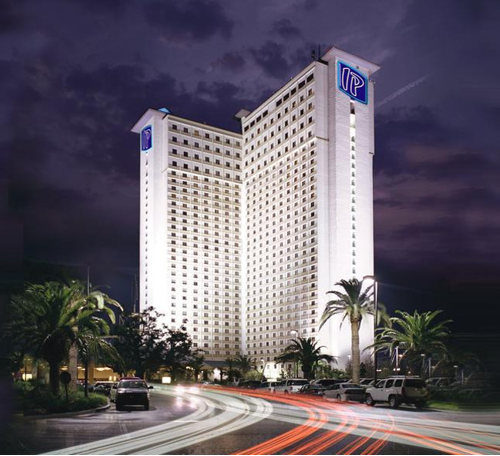
My travels took me east of New Orleans, along the shore of the Gulf of Mexico, to the southern Mississippi tourist towns of Gulfport, Bay St. Louis, and Biloxi. There are about half a dozen casinos, a few with poker rooms. I stayed and played poker in Biloxi, at the largest and most elegant of the casinos in the area, the Beau Rivage. I also visited and played at the nearby IP (formerly known as the Imperial Palace).
Beau Rivage
The Beau Rivage is a beautiful casino. It’s poker room is spacious, nicely appointed, and with extremely comfortable chairs. Its overall ambiance seems, like the casino as a whole, meant to attract high rollers.
I stayed at the Beau Rivage a couple of nights and played poker there for about 12 hours during my three days in the area. The $2/5 game I frequented was quite beatable, I found, with a few players throwing probability and poker statistics out the window as they gambled it up. Of course, I can’t be sure that my hours of play are indicative of the quality of games in general. But I can say that the place had a friendly vibe, seemed very well run, with gamblers welcomed with a smile, vacant seats quickly filled, and game lists clearly maintained. I recommend it highly for any who visit the area.

IP Casino Resort & Spa
On the other hand, I found the nearby IP Casino much less inviting, with the poker room run by a dour gentleman, who seemed to resent being spoken to or asked any questions. The games (when they had them) were chiefly filled with easy-to-read grinders and locals – making the games tight and only marginally profitable for the disciplined player. Many seemed to be playing just to kill time, hanging around hoping to hit one promotion or another. The floor seemed largely disinterested; and the game often wasn’t going when I stopped or called in.
Biloxi and nearby Gulfport are not nearly the tourism hubs that New Orleans is. But they can serve as a nice one or two-day side trip. There is a beautiful beach, decent fishing, some excellent restaurants, and a few museums to check out if you get tired of poker and other forms of gambling.
West of New Orleans
I also traveled west of New Orleans, to the capital city of Baton Rouge, through Lafayette (the self-described heart of Cajun Country), and to Lake Charles. I highly recommend getting off the interstate highway and driving on some of the secondary roads. You will be driving through the bayou, filled with cypress trees, swamp, and many rice paddies that also serve as crayfish farms. It’s a part of the United States that you can’t see elsewhere.
The native culture, known as Cajun, is derived from the French not the English. The Cajun food is characterized by a unique spice blend of black pepper, white pepper, cayenne pepper, chili peppers, mustard, cumin, onion powder, garlic powder and paprika. Many of the dishes are made from the ample seafood of the area, especially shrimp, crawfish, and redfish (also known as drum). While I was there, I also ate a lot of Andouille sausage – a deliciously spicy pork sausage found in many dishes.
While stopping in Lafayette, about halfway between Baton Rouge and Lake Charles, I had a delightful breakfast at Dwyer’s, a very popular restaurant, known for their Cajun food!
Baton Rouge L’Auberge Casino Resort
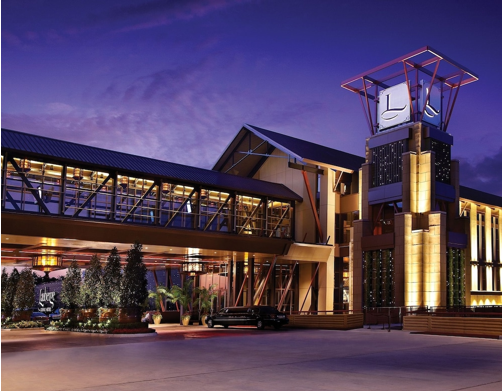
The highlight of the trip to rooms west of New Orleans was surely playing at the luxurious L’Auberge Casino, on the banks of the Mississippi in Louisiana’s state capital of Baton Rouge.
This is a gorgeous property, overlooking the Mississippi River. It has very high ceilings, wooden beams, and feels like an enormous country lodge. There is a long class enclosed skyway between the ample parking garage and the main part of the casino. The walk in gives you time to think about playing your best game once you hit the tables.
I stopped in four times – on Saturday and Sunday and Tuesday and Wednesday. It was busy early and late on those days. I recommend calling ahead and getting your name on the list when you head over. And bring a book, just in case you have to wait. Though the typical wait was no longer than 15 minutes, I once waited over an hour for a seat.
The casino is on one floor. Though there are extremely high ceilings, and though the tables are amply sized and the chairs comfortable, the poker room feels a little cramped at one end of the floor. I was surprised the tables weren’t more spread out. As it was, there were often four tables going much of time I was there. They had two fixed limit $4/4/8/12 O/HE split and two $1/3 no limit hold’em tables.
I found the $1/3 games beatable but tough. Of all the rooms I played in during this trip, this room had the highest concentration of solid aggressive no limit hold’em players. The limit game was filled with a good mix of loose soft and predictably tight players. It was profitable to me, though like most low and middle stakes games in public rooms these days, the rake is tough to beat.
Lake Charles, Lousiana
Harrah’s and Horseshoe Casinos
A couple of hours or so west of Baton Rouge, an hour past Lafayette, is Lake Charles, the last city in Louisiana before entering Texas. Back before Covid, when legal public poker was almost completely shut down in Texas, the casinos in Lake Charles Louisiana provided a destination for Texas poker players and other gamblers. There are two poker rooms there now, the Golden Nugget and the Horseshoe that draw chiefly local players. I played briefly in each of them and didn’t come to any conclusions about the level of play. For the hour or so that I was there, between midnight and 2:00 AM, I did not see any strong players. Both rooms were spacious and well appointed.
After playing in Lake Charles, and spending the night, I traveled north about two hours to the town of Alexandria. It is home to the Jena Choctaw Casino.
Jena Choctaw Casino, Alexandria
This is a nicely appointed, modern, small casino with a small poker room. They have five tables but never spread more than two games at a time. I played in both games for a few hours each. One game had three or four serious players, with everyone drinking water, coffee, or Red Bull. It was a tough game! The other game had a bunch of good ol’ boys laughing it up, with a lot of drinking and laughing. It was a fun place to play – and proved much more profitable (at least for me).
Other Poker Rooms
There are more poker rooms throughout Louisiana and Mississippi that I didn’t visit on this trip. An hour or so north of the Gulf of Mexico are the two Indian casinos in Louisiana: the Paragon and the Coushatta Casino. I stopped at each, but neither poker room was open when I stopped by. There are also rooms up in Bossier City and Shreveport. I didn’t visit them. In the past they were bustling with refugees from anti-poker Dallas and Houston, Texas. Now that Texas is filled with dozens of quasi-legal poker clubs, I’m not sure what the action is like.
I did not make it to some other rooms in Mississippi. There are a few in Bay St. Louis, Gulfport, and Biloxi with part-time schedules that didn’t have poker when I stopped by. There’s also a room on a gambling boat in Vicksburg, a room in Philadelphia, and still a room or two left in Tunica up north, just south of Memphis, Tennessee. I’ll have to go back to sample them as well.
Conclusion
New Orleans and the Gulf of Mexico to the east in Mississippi and to the west in Louisiana, is a region rich in history and culture well worth a visit from any traveler. It’s also an ideal place for a tourist looking to play some poker. You might even call it the perfect destination for a poker roots trip – as this is where the game began.
“Poker is war. People pretend it is a game.” – Doyle Brunson.
As blasphemous as it may be, I would amend the great Doyle Brunson’s words here: poker is a psychological war. It may be funny to hear the game that millions of people use to relax, catch up with friends, or bond with family described as a psychological war, but it is. In fact, I can’t think of a better explanation for the game.
The psychology of poker has incredible depth. Not only can players use psychology to read their opponents and gain an edge, but it also must be used to look inward. To truly get in the mind of a poker player you need to have some basic understanding of human nature and poker.

Psychology of Poker: Reading Your Opponent
Experts have applied behavioral analysis to poker for years. The results of this analysis can be used to read your opponents and gain a significant edge over them at the table. In order to examine the psychology of poker, you need to look at human nature and how it manifests itself physically.
Mike Caro, author and poker player, is one of the most recognizable names when it comes to the physical psychology of poker. His book, Caro’s Book of Poker Tells, is a bestseller among live poker players looking to gain an edge on the competition. This is a top choice for poker psychology books. Caro delves deep into the vast amount of information a poker player’s body language conveys. You can use this to label a player in a general category or get a specific read on one hand.
General Categories
Body language can tell you a lot about a person. If you see someone sitting straight up with good posture, attentive and alert, that person is likely responsible and has a game plan. This player is more likely to be conservative with their chips and play stronger starting hands. This may open more opportunities to bluff, but be weary when they are putting chips in the middle. On the contrary, if you see someone slouched over with heavy eyes, they are likely not going to be very focused. This player, more often than not, doesn’t have much of a game plan and will likely play looser. They could be at the tail end of a long session, or maybe they had a few too many drinks. Either way, if you are paying attention to their body language you can exploit them by calling more and bluffing less.
Another tell you can use to categorize players is their level of comfort at the table. A player who is relaxed with smooth movements while getting chips or folding cards has likely played more poker than a player who is tense and fumbling around with their chips. Maybe the latter player has only just learned how to play Texas Hold’em! While experience doesn’t always equate to skill, the experienced player is usually better than the novice.
Creating general categories for your opponents may not be perfect, but it can help you make slight adjustments based on who is in the hand
Specific Poker Tells
One of the most fascinating aspects of the psychology of poker is identifying and exploiting physical tells in a specific hand. Unfortunately for fans of the movie Rounders, you are unlikely to find an opponent who breaks and eats a cookie when they have a strong hand. However, humans have unconscious physical reactions to situations. These reactions can be used to get into the mind of poker players and read their hand strength.
Experts like Joe Navarro (former FBI agent) and Mike Caro (poker pro) have identified many tells you can spot at the table. One of the most common tells is the chip glance. The chip glance is when a card comes out and the player glances at their chip stack. Another form of this is when a player sees a card and their hand moves to actually touch their chips, standing at the ready for a bet or call. The psychology behind this is simple: the player sees a card that is good for them so they subconsciously look at or move towards their chips since the next step is to bet. When recognized, this tell can save you money by stopping you from bluffing.
Another common tell is a sudden change in posture, usually when a player goes from slouching to upright. This is another tell that conveys strength. A player may be leaning back in their chair or have a bad posture. If the flop comes out and they suddenly perk up, moving closer to the table or straightening out their back, they likely have a good hand. This is an involuntary engagement with the hand. The player sees cards they like and are interested in continuing with the hand, so they engage more.
Human psychology dictates how many players interact with each other and themselves. Noticing these slight changes and involuntary movements can help make or save you a great deal of money.
The Psychology of Table Talk
Table talk is one of the most creative uses of poker psychology. Many players fear they will give off information if they talk during a hand. If you watch the professionals play today, you’ll notice most remain silent during a hand. Speech patterns, points of inflection, and the actual words being spoken may give away information as to the player’s hand strength. Some knowledgeable poker players out there understand the psychology of poker and use table talk to their advantage.
There is no greater example of how table talk can be effective than Jamie Gold’s 2006 WSOP Main Event win. 2006 saw the largest field and greatest prize pool in WSOP Main Event history. With 8,773 players entering, the prize pool ballooned up to $82,512,162. Among the field were the world’s best No Limit Hold’em players, but Jamie Gold, a former talent agent and TV producer from Los Angeles, topped them all to take home a record-breaking $12,000,000 first-place prize along with the coveted WSOP bracelet. Many players and reporters who witnessed Gold’s run attribute his win to one thing: table talk.
READ MORE: A closer look at Jamie Gold’s charity poker work
This was an era where table talk was at its height. Poker rooms had never been so packed as online poker was booming and the market was flooded with hopeful recreational thanks to the Moneymaker effect. Due to this increase in popularity, poker TV shows were all over the place. These featured colorful characters like Mike Matusow, Phil Hellmuth, Daniel Negreanu, and many others who don’t shy away from table talk.
Many recreational players wanted to be like professionals, so they tried to use table talk to gain information. This is the typical use of table talk. Players will try to engage their opponents in conversation so they can gain insight. Jamie Gold, however, took a different approach. Gold used table talk to convince his opponents to act exactly how he wanted.
Jamie Gold regularly convinced players to call when he had a strong hand and fold when he had a weak one. He would tell players his cards, guess their hands, and outright tell them to call or fold. His use of table talk to convey information gave him such an edge he used it to get all the way to the final table. His talk was so extensive that the WSOP implemented a new rule because of it. It is now against the rules to tell an opponent what your cards are, whether you are lying or not since Jamie did this so regularly during the 2006 Main Event.
What Gold understood was human psychology. Humans, at our base, prefer to tell the truth. Lying is unnatural and therefore when asked a question our gut instinct is to tell the truth. Criminologists use this to their advantage during interrogations since people give off unconscious tells when they lie. Gold also used this to his advantage, by confidently speaking about his hand. When he was weak, he smoothly told his opponents he had strength. When he was strong, he would tell his opponents he was bluffing and they should call. If he thought a player wouldn’t believe him, he would say his exact hand. Gold used his knowledge of human psychology to get in the minds of the other 8,772 poker players and take the tournament down.
Most seasoned poker players will tell you to be quiet during a hand. Whether you mean to or not, you could be giving away information. Being cautious and remaining quiet is the right decision for many players, but if you can master the psychology of poker, it could lead to a big payday.
In the Mind of a Poker Player: How to Think like a Professional
While psychology can be used to manipulate or gain information from your opponents, there is another important aspect: personal psychology. Poker is a mental game. In order to be successful, you need to have control over your emotions and be in tune with your own psychology. It’s not just about mastering pot odds!
Professional poker players need to have a certain level of insight into their own minds. They need to be in tune with their emotions and be able to control them. Many poker players practice meditation, hire a life coach, do yoga, and do other mindful activities. This is all in an effort to be relaxed and keep emotion out of their decision-making so they can avoid going on tilt.
There are many ways to manage tilt. Players might take a walk, meditate for a few minutes, talk to a friend, play a certain song, or all of the above. The most attentive players will know when it is time to walk away from the table, and in many cases realize that is the smartest decision. The ability to walk away from a session when you are emotional is what sets apart professionals from recreational. Everyone goes on tilt, but managing it is a major key to success.
Books on Poker Psychology
As previously mentioned, many experts have studied humans’ unconscious actions around poker tables. There are countless psychology-oriented poker books available, and here are some of the best in no particular order.
Caro’s Book of Poker Tells — Mike Caro
This book from legendary poker player Mike Caro details many common poker tells and what you should do when you see them. With real pictures and examples, this is a classic introduction to the psychology of poker.
Reading Poker Tells — Zachary Elwood
Elwood’s book is almost like an expansion of the work Caro did. This poker psychology book is broken up into three sections: the history of poker tells, specific tells, and how to deceive opponents using tells. This is a great read for those looking to gain an edge by both picking up on tells and fooling others using false tells.
What Every Body is Saying — Joe Navarro
Navarro, an ex-FBI agent, uses his specialized training in interrogation to analyze the body language of poker players and identify tells. It’s a great work by a non-poker professional, but clearly an expert on poker psychology and body language.
The Mental Game of Poker — Jared Tendler & Barry Carter
Tendler and Carter’s book delves into the mindset needed to be a successful poker player. It will help even the most seasoned veteran learn how to manage their mental status and excel at poker.
Positive Poker — Dr. Patricia Cardner & Jonathan Little
Dr. Carter, who holds two PhDs (Psychology and Criminology) teamed up with poker pro and coach Jonathan Little to delve into the mental game that is poker. Both experts in their fields, the two came together to deliver an excellent book for aspiring, or current, professional poker players.
Psychology of Poker
Poker is, at its core, a mind game. It is also an ever-expanding, complex game. Much like the human mind, there is an infinite amount of information left to learn about poker. By understanding the psychology of poker, you are getting just a little bit closer to infinite.
Poker books are great sources of useful and profitable strategies.
But people don’t get the most they can out of the poker books they read.
This is probably due to:
- Reading for entertainment and not really trying to use books as a tool for learning.
- Reading in hopes the information is absorbed into our mind so we can use it all in-game.
- Reading about strategies, but not getting concrete ideas on how to use them in-game.
I want to help you get more from the poker books you read with this 4-step process.
Step 1: Poker Books are Tools for Improvement
There’s an idea I heard a long time ago, and it’s that people read a book… just to read a book. It’s an activity that helps to pass the time or to allow one to say, “I read that book!”
They don’t necessarily read books in order to improve their life, learn something new or be exposed to fresh ideas.
With the next poker book you choose, I want you to commit learning from it. Say out loud, “I’m going to use this tool to improve my game.”
You’re not just going to read the book, you’re going to use it as a tool for poker improvement.
Step 2: Take Notes in Your Poker Journal
Yep, you’re going back to your high school and college days and you’ll actually take notes on the important things you learn as you read.
The physical act of writing things down increases the chance of remembering and using them. You probably do this already with a simple daily task list, right? You already know you’re more likely to get stuff done if you right it down.
Well, you’re more likely to remember and use the strategies from the book if you write them down.
Plus, your notes are a great pre-session warm-up to help you focus on the strategies as you play.
And of course, feel free to underline, highlight and write notes in the margin of the book you’re holding. You bought it after all, and it’s your book. It’s okay to tag it up with anything that will help you revisit the important lessons in the future.
To help you take notes, get my free Poker Journal in Word format by clicking here.
*Pro Tip* – Keep your journal open as you play and reference them frequently. If you’re playing online at home, this is easy. If LIVE in a cardroom, put your notes in Evernote, take a picture with your smart phone, or use the Poker Notes Live app. Nobody will know what you’re looking at between hands.
Step 3: Create Action Steps
If you’ve read any of my books or heard my Smart Poker Study Podcast, you know I give challenges and Play with Purpose and Study with Purpose tasks that help you to practice the strategies I teach. We learn best through action, not by reading, so practicing what you’re reading is the best way to learn from books.
“Action is the greatest teacher.”
This means you’ll have to create your own action steps based on the strategies you read. This gets easy with practice. Let’s test you out.
Imagine you read in a book that great hands to 3-bet bluff are suited and connected Aces, hands like A5s and ATs (straight and nut flush potential, plus they block your opponent from holding AA, AK and AQ). So, how can you use this information in-game to make better 3-bet bluffing decisions?
Well, when you play tonight and are dealt one of these hands, and you have the opportunity to 3-bet, you’ll consider making the play before you click CALL or FOLD. If it seems like a great opportunity to 3-bet bluff, you’ll do it. If it seems like folding or calling is better, you’ll do that.
It’s a simple way to practice a strategy you learned in a book, right?
*Pro Tip* – Take it one chapter (or even one section within a chapter) at a time. As soon as you learn something important and useful, like the suited Aces idea above, practice it before you continue forward in the book. Sometimes, in a single chapter, an author can give ideas for 20+ strategies to practice. It’s easier to implement these 20 ideas one-at-a-time instead of trying to focus on all 20 at once.
Step 4: Take Action!
So, you read and took notes and created some action steps. It’s time to take action!
Dedicate at least one play session to doing each action step and using the strategies. Find every opportunity to use them when it seems like it’s profitable to do so.
Make sure to note the hands where you made the plays and the ones where you chose not to. These are great hands to study in your upcoming study sessions.
And if you fold and exit the hand? Continue paying attention and look for opportunities that other players have to use the strategy you’re focused on this session. If you were Bob, who remained in the hand after you folded, and you had his opportunity bluff-raise here, would you do it? Is his opponent likely to fold? What size raise would get his opponent to fold?
It’s not the books that you read, nor the order that you read them in. It’s what you do with the information that counts. So, use this 4-step process with the next poker book you read, and treat the book as a tool you can use to improve your game.
Poker books are great, but there’s a sub-niche within that I’ve come to greatly appreciate, namely poker biographies. Over the years I have read several of them, and what I specifically like about them is that they are based on real events, they are very entertaining, and they allow us to know personal aspects of the protagonists.

The top 10 poker biographies that I enjoyed reading the most are:
“One of a Kind: The Rise and Fall of Stu Ungar” – Peter Alson & Nolan Dalla
It is without a doubt the best poker biography I have read about one of the best players in history. Ungar is the only player to have won the WSOP Main Event three times in its freezeout format. The authors describe Stu’s incredible life chronologically from his childhood, where he grew up among mobsters, until his death in the Oasis motel in Las Vegas.
“Life’s a Gamble” – Mike Sexton
The legendary commentator of the World Poker Tour passed away in September 2020 and in his biography you can read funny anecdotes with Doyle Brunson, Stu Ungar, Chip Reese, Billy Baxter and Jack Straus, among other legends. He also details the creation of partypoker and the birth of the World Poker Tour.
“Poker Brat” – Phil Hellmuth
Phil is the king of the WSOP with 178 cashes, 13 second place finishes and 16 bracelets. His biography has 49 chapters in which he recounts his difficult adolescence, his first trips to Las Vegas, his relationship with his wife, his life goals and all his triumphs in the World Series of Poker.
“Pulling The Trigger” – Eli Elezra
The Poker Hall of Famer has been playing for 30 years in Las Vegas and has 72 cashes and 5 WSOP bracelets. In his biography — translated from Hebrew into English by Cardplayer Lifestyle founder Robbie Strazynski — you can learn about little-known aspects of his life: his experience in the Israeli army, his first business in Las Vegas and anecdotes of the High Stakes Poker games with Doyle Brunson and other legends.
“Check-raising the Devil” – Mike Matusow
The temperamental Matusow, nicknamed “The Mouth”, has 92 cashes and 4 bracelets at the World Series of Poker. His book features a foreword by Phil Hellmuth and in 29 chapters we can read about his life, his addictions to drugs and his achievements at the tables.
“The Godfather of Poker” – Doyle Brunson
Doyle needs little introduction: two-time WSOP Main Event champion, winner of 10 bracelets, Hall of Fame inductee and author of poker’s first best-seller: “Super System”. His excellent biography has 52 chapters and is divided into parts: Texas, Las Vegas and More Adventures.

“Blood Aces: The Wild Ride of Benny Binion” – Doug J. Swanson
Benny Binion is one of the most interesting characters in the history of poker and Las Vegas. The gangster created an empire in Texas and moved to Las Vegas where he was the creator of the World Series of Poker in 1970. The excellent book is divided into three chronological parts: 1904-1946, 1947-1953 and 1954-1989.
“Moorman” – Chris Moorman
Chris is fourth in the ranking of players with the highest online earnings with $21.5 million as of this writing. On the live circuit he has earned $6.5 million with titles at the WPT and WSOP. In his biography we can read about his beginnings with bridge and pool, his experiences with staking and his trips to Las Vegas, including a night in jail.
“For Richer, For Poorer” – Victoria Coren
Vicky Coren was the first woman to win an main event on the European Poker Tour as well as the first player to win two European Poker Tour Main Events. Her memoir has 25 chapters and is divided into four parts. Though she’s out of poker now, it’s still a great, highly entertaining read. The digital edition costs only $1.99.
“Once a Gambler” – Miikka Anttonen
We close our top 10 list with a very entertaining biography that relatively few know about in the poker world; that of Finnish pro Miikka Anttonen, who has won $2 million online and over $286,000 live. There he tells about his beginnings in online poker where he won millions when he was very young. It is a trilogy that has the first two parts published, while we still await the third part.
Honorable mentions
If you have already read our top 10 poker biography recommendations, or if you are looking for more to check out, you might naturally consider using your leisure time for a different activity, such as playing at tax-free online casinos without registration. Alternatively, there are some “honorable mentions” of other poker biographies that you can read:
- “Geeking, Grifting and Gambling Through Las Vegas” – David Sklansky
- “Molly’s Game” – Molly Bloom
- “Amarillo Slim in a world of fat people” – Amarillo Slim
- “Devilfish” – Dave Ulliott
- “Johnny Moss: Champion of Champions” – Don Jenkins
- “4 Bullets” – Tyler Nals
- “The Hand I Played: A Poker Memoir” – David Spanier
- “Poker Tilt” – Dutch Boyd
- “Volatile” – Simkha Blank
- “4 Bullets” – Tyler Nals
- “All In” – Jerry Yang
- “Pizza, Pasta and Poker” – Vince Burgio
- “Confessions of a Winning Poker Player” – Jack King
- “Kingkrab: From Homeless to Poker Pro” – King Krab
- “From Feeding Tube to Final Table” – Jim Petzing
- “Cowboys, Gamblers & Hustlers” – Byron “Cowboy” Wolford
- “Hats & Eyeglasses: A Memoir” – Martha Frankel
- “Poker Face: A Girlhood Among Gamblers” – Katy Lederer
- “The Game of Life and Poker” – Noah T. Watry
- “Forty Years a Gambler on the Mississippi” – George H. Devol (you can download it for free on Amazon)
Moreover, former poker journalist and now player Kristy Arnett Moreno is currently writing a book about her story that will talk about risk, love and poker.
***Thanks for reading! Consider RT if you liked it 🙂
This story is part of my book which is a memoir about risk, love, and poker. Trying desperately to finish the first draft (it’s been years). I’m thinking about doing a prop bet of some sort. Contact me if interested 🙂
— Kristy Arnett Moreno (@KristyArnett) October 10, 2022
Of course, there are also plenty of people in the poker world whose life stories would make for great biographies. These haven’t yet been written, but if they were to be, we’re sure they’d be fantastic.
Players:
- Daniel Negreanu: The world’s most popular player with live earnings of $49.5 million
- Erik Seidel: Successfully playing and winning on the live circuit for 34 years
- Phil Ivey: Long considered to be the best player in the world
- Jennifer Harman: Winning player for 25 years and was part of the consortium that faced banker Andy Beal
- Huck Seeed: Winner of the Main Event 1996 and holder of 4 WSOP bracelets
- Antonio Esfandiari: The magician who won the inaugural $1 million buy in Big One For One Drop
- Scotty Nguyen: 1998 Main Event Champion and 5-time bracelet winner
- Billy Baxter: Stu Ungar’s backer who owns 7 WSOP bracelets
- “Miami” John Cernuto: Holds the all-time record with almost 600 live tournament cashes and counting!
Industry:
- Jack Binion: Benny’s son witnessed almost all of WSOP history
- Eric Drache: He was the creator of satellites and introduced great innovations in live tournaments
- Linda Johnson: Player, journalist, consultant, Card Player Cruises owner and one of the founders of the WPT
- Mori Eskandari: Producer for 20 years of the most popular poker TV shows
- Jack McClelland: Executive and tournament director for 40 years
If you made it this far you now have several book recommendations for your next read. I invite you to put social media and Netflix aside for a while and immerse yourself in the pages of a good poker biography, which is one of life’s little pleasures in my opinion.
If you’ve been following the early stages of 4Poker, the online poker site founded by high roller poker professional Bryn Kenney, then you’ll know that it went live with a self-proclaimed ‘rolling beta’ last month. It opened the doors to players globally (where their licenses apply) to try out cash games and sit-and-gos, without too much fanfare.
We’ve opened our doors wider across the globe giving even more players the chance to join our rolling beta. Bag your favourite username, try the 4Poker software and give your feedback on the 4Forum as we build towards full launch.
Read the latest here: https://t.co/VyT9LF2Qce pic.twitter.com/uy9B6GDMMu
— 4Poker (@WeAre4Poker) March 23, 2023
It’s had very modest traffic, as would be expected for a quiet beta testing that was building towards a tournament launch. And that’s where they appear to be right now. Just a couple days ago, 4Poker hosted its first ever MTTs: two freerolls and a $11 buy-in $500 guaranteed event. Then more of the same on Friday with a slightly larger $55 buy-in with a $1k guarantee. Small events.
Tournament at @WeAre4Poker are now just days away. We will announce our first high roller event soon! Until then, I’m sure grateful for everyone who has come to the site already and to say thank you, we’re giving away cash every day in April at our 4pm ET happy hour. pic.twitter.com/VI7qYDgDcQ
— Bryn Kenney (@BrynKenney) April 3, 2023
True to their word, 4Poker then announces that today they’ll be running $1k and $5k buy-in tournaments with $75k and $200k guarantees. It’s quite a statement that they’re laying big buy-ins on their first weekend tourneys. By all accounts, it would seem like like Bryn and 4Poker are putting their money where their mouth is.
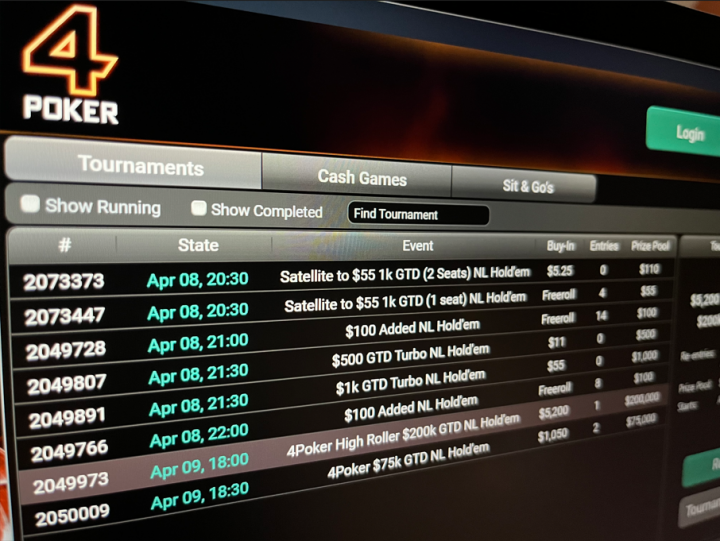
These big online buy-ins are taking place today, on Sunday starting at 1pm and 1:30pm Eastern Time. It’ll be interesting to see whether they’ll hit their guarantees or if, by contrast, there will be large overlays. A lot of people have been quietly waiting to see what 4Poker can do. Will they challenge the market leaders? How long it will take 4Poker to build up momentum? Will it live up to its public promises about low rake, high rewards and no deposit fees?
Beyond Bryn: A Roster of Experienced, Professional Talent
Time will tell on those questions, but if you look closely, you can see what folks at the company have been up to behind the scenes. They appear to have built a very experienced team, leaning heavily upon former PokerStars staff based in the Isle of Man, to create a poker site that has every chance of making an impact. The most notable PokerStars alumni are the well-respected duo of Heath Cram as COO and Serge Bourenkov as CTO, but there are also a number of key personnel installed across poker room management, payments, and marketing departments. At least, there seem to be if my LinkedIn searches are anything to go by.
Heath Cram leaves Flutter to join 4Poker as COO #4Poker#WeAre4Poker#GoodNews4Poker#4PokerCommunityhttps://t.co/QbIKTNkd0F
— 4Poker (@WeAre4Poker) August 1, 2022
Moreover, 4Poker’s YouTube Channel has proven quite instructive as to what players and the industry as a whole can expect from them. Over the past half year they’ve released a dozen excellent, well produced videos totaling about half an hour in length laying the groundwork for what the company is all about (modus operandi), how the 4Poker online poker site will relate to and protect player security and game integrity, and a number of other interesting topics.
As our longtime fans and followers know, we tend to stay far away from any sorts of controversies, scandals, and other gossip happening in the poker world; that’s not what Cardplayer Lifestyle is about. As such, up until now — in the wake of the accusations from Martin Zamani — we haven’t dedicated any space to saying much about 4Poker. Moreover, 4Poker still felt like a faraway concept. It was a train down the track that you could see but not really hear. That train is now a lot closer.
Wherever you stand on Bryn Kenney as far as his on-felt poker exploits, from a business side of things he seems to have set 4Poker up for success based on the management team he’s assembled and their combined years of professionalism, expertise, and execution in the online poker sphere. The 4Poker site is regulated in Malta and they’re working on getting approval from the Isle of Man as well; those are gaming operations licenses that are hard earned.
Bryn’s challenge is of course to try and win over the high stakes community — but even if he should manage to do so, that community alone cannot sustain an online poker site. For 4Poker to succeed, it needs to be much bigger and reach far further.
Will they succeed? Time will tell, of course. Let’s see what happens, and judge the 4Poker team by their actions over the weeks and months to come.